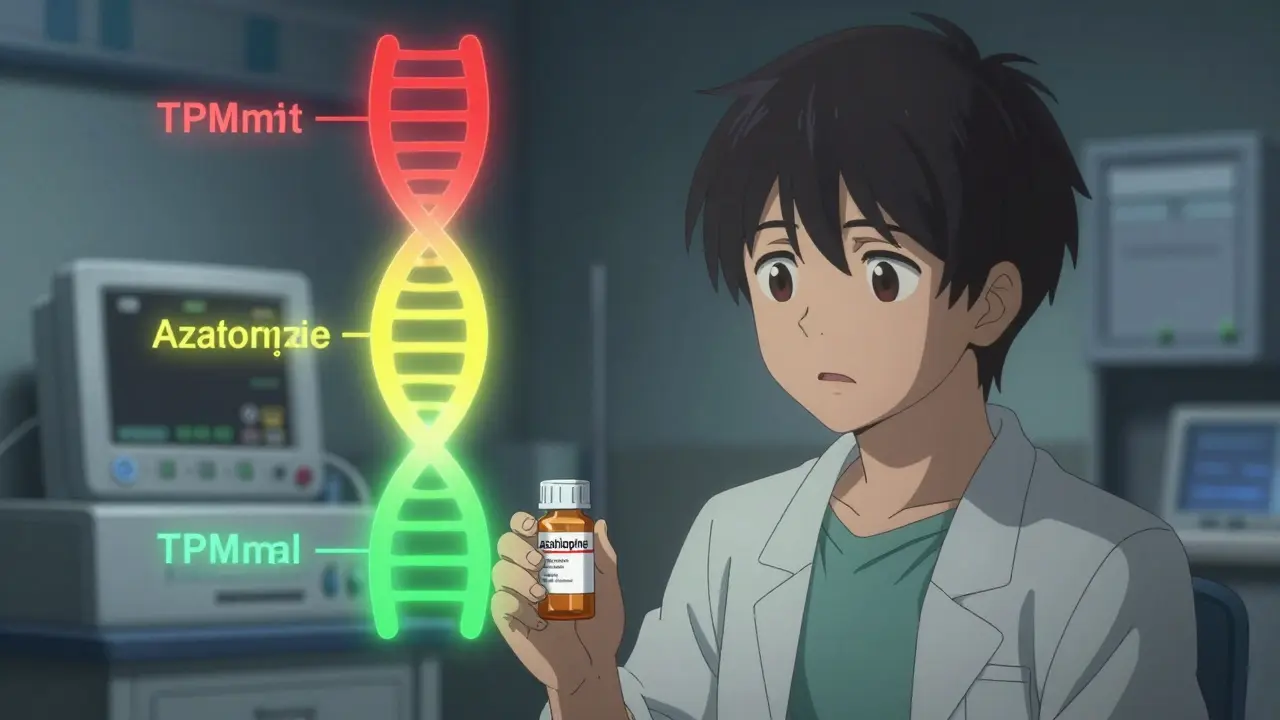
Azathioprine Dosing Calculator
Calculate Your Safe Azathioprine Dose
Select your TPMT status and standard dose to determine the safe dosage range based on genetic testing.
When you’re prescribed azathioprine for Crohn’s disease, lupus, or after an organ transplant, you’re not just taking a pill-you’re trusting your body to process it safely. But here’s the thing: for some people, that pill can turn deadly. Not because of a mistake, but because of their genes. That’s where TPMT testing comes in. It’s not optional. It’s not just a checkbox. It’s the difference between staying healthy and ending up in the hospital with dangerously low blood counts.
Why Azathioprine Can Be Dangerous
Azathioprine has been around since the 1960s. It’s cheap, effective, and used widely for autoimmune diseases and transplant patients. But it’s also a minefield if you don’t know how your body handles it. The drug breaks down into active compounds that suppress your immune system-great for stopping inflammation, terrible if your body can’t clear them properly. About 1 in 300 people have a genetic variation that makes their TPMT enzyme almost completely inactive. TPMT is the enzyme that breaks down azathioprine. If it’s not working, the drug builds up in your blood. That leads to myelosuppression-your bone marrow stops making enough white blood cells, red blood cells, and platelets. The result? Severe infections, extreme fatigue, uncontrolled bleeding. In the worst cases, it’s fatal. Even people with partial TPMT activity-about 10% of the population-are at higher risk. They might not crash immediately, but they’re far more likely to develop low blood counts within weeks of starting the drug. One study found that 10% of patients on azathioprine had to stop because of side effects. Leukopenia, liver damage, pancreatitis-these aren’t rare. They’re predictable if you test.What Is TPMT Testing and How Does It Work?
TPMT testing checks your genetic code for specific variants that reduce or eliminate enzyme activity. The most common ones are called *2, *3A, *3B, and *3C. These aren’t guesses-they’re well-documented mutations linked to drug toxicity. You can get tested with a simple blood or saliva sample. Results come back in 3 to 7 days. There’s also a phenotyping test that measures enzyme activity directly in red blood cells. But it’s unreliable if you’ve had a recent blood transfusion. That’s why genotyping is now the gold standard. It tells you what your body is built to do, no matter what’s happening right now. The results break down into three groups:- Homozygous deficient: Less than 0.3% of people. TPMT activity is near zero. Azathioprine is dangerous here. Avoid it entirely.
- Heterozygous: About 10% of people. TPMT is reduced by 50-70%. You can still take azathioprine-but at 30-70% of the normal dose.
- Normal activity: Most people. Standard dosing is usually safe.
Why Testing Isn’t Enough-And What Else You Need
A lot of people think TPMT testing is the whole story. It’s not. In one study, only 1 out of 13 patients who had to stop azathioprine because of side effects had low TPMT activity. That means 90% of the toxicity came from something else. That’s where monitoring comes in. Even if your TPMT is normal, you still need regular blood tests. A complete blood count (CBC) every week for the first month, then monthly. Liver enzymes too. Azathioprine can cause liver damage even in people with perfect genetics. One study showed 7.4% of patients developed hepatotoxicity, especially when a metabolite called 6-MMP got too high. And then there’s allopurinol. If you’re taking it for gout, and you’re on azathioprine, you’re playing Russian roulette. Allopurinol blocks the same enzyme pathway. It doesn’t matter what your TPMT says-you’re at high risk. Doctors need to know about every medication you take. There’s also NUDT15. This gene is just as important as TPMT, especially for people of Asian descent. Up to 20% of East Asian populations carry variants that make them extremely sensitive to azathioprine. In some groups, NUDT15 defects cause more toxicity than TPMT. That’s why guidelines now recommend testing for both. A single test panel can check both genes at once.
Cost, Coverage, and Real-World Access
Azathioprine costs $20 to $50 a month. TPMT testing? $200 to $400. At first glance, it seems expensive. But consider this: one hospital stay for severe neutropenia can cost $20,000. Lost workdays, emergency visits, blood transfusions-those add up fast. Most private insurers in the U.S. cover TPMT testing. Medicaid coverage varies. In Europe, testing is routine in IBD clinics. In the U.S., it’s common in academic hospitals but patchy in community practices. If your doctor hasn’t mentioned it, ask. Don’t wait for them to bring it up. Some clinics now offer multi-gene panels that include TPMT, NUDT15, and even other genes like GST variants. These are pricier but give a fuller picture. For people with family history of blood disorders or those of Asian ancestry, it’s worth it.What to Do If Your Test Shows Low TPMT
If you’re homozygous deficient: don’t take azathioprine. Period. There are safer alternatives-methotrexate, mercaptopurine (at adjusted doses), or biologics like adalimumab. Biologics cost more-$1,500 to $2,500 per dose-but they’re not metabolized by TPMT. For many, they’re the better long-term choice. If you’re heterozygous: your doctor should start you at 30-70% of the normal dose. That means if the standard is 2 mg/kg/day, you might start at 0.6 to 1.4 mg/kg/day. Weekly CBCs for the first month are non-negotiable. If your white blood cell count drops more than 20%, your dose needs to be lowered or stopped. And if your test is normal? Don’t get complacent. Still get your blood checked. Still tell your doctor about every new medication. Still watch for nausea, fatigue, fever, bruising. These aren’t just side effects-they’re warning signs.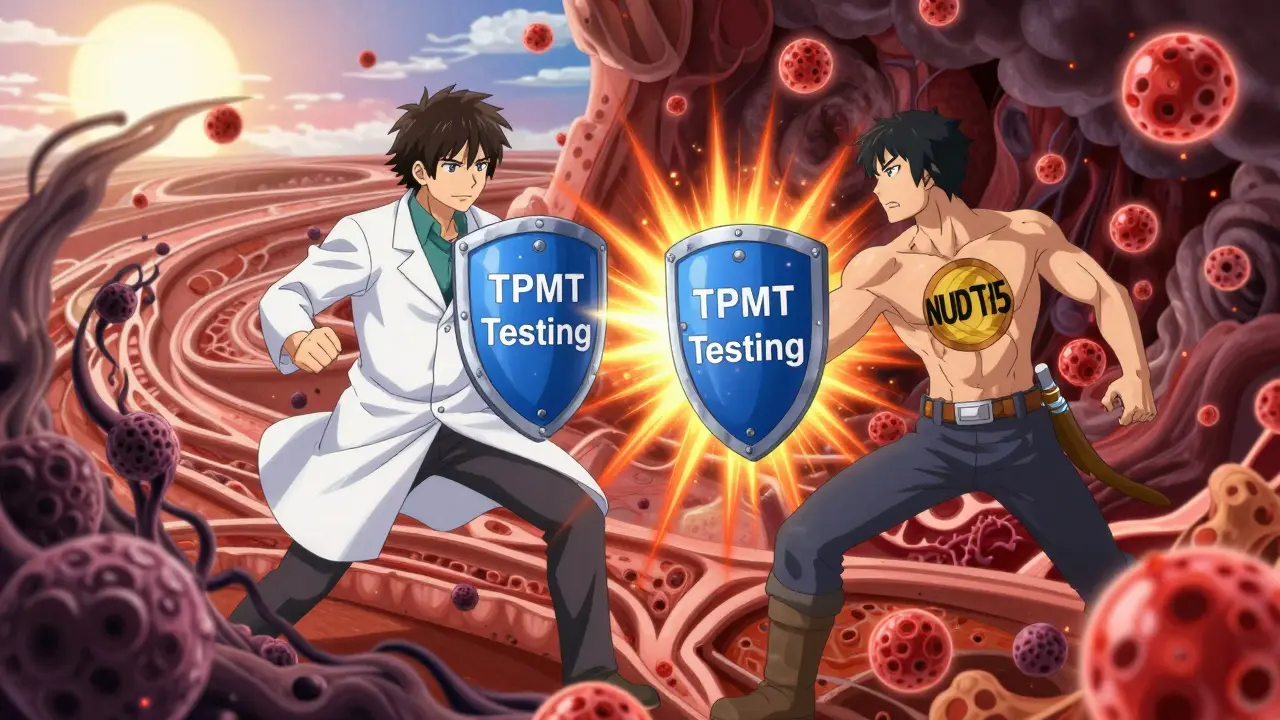
What Patients Are Saying
One IBD patient in New Zealand shared: “My TPMT test showed I was heterozygous. My doctor cut my dose in half. Six months later, my blood counts were perfect. My friend, who didn’t get tested, had to stop after three weeks because her white cells crashed.” Another wrote on a patient forum: “I had normal TPMT. Still got liver damage. Testing didn’t save me-but it didn’t hurt either. At least I know why.” These stories aren’t outliers. They’re the reality. TPMT testing doesn’t prevent every bad outcome. But it prevents the worst ones. The ones that land you in ICU. The ones that could have been avoided.The Bottom Line
Azathioprine isn’t going away. It’s too useful, too cheap. But it’s not a one-size-fits-all drug. Your genes matter. Your other meds matter. Your blood counts matter. If you’re starting azathioprine, ask for TPMT and NUDT15 testing. Make sure your doctor knows your full medication list. Get your blood checked regularly. Don’t assume normal results mean you’re safe. And if you’re of Asian descent? Push for NUDT15 testing-it’s not optional anymore. This isn’t about fear. It’s about control. You have the power to avoid a life-threatening reaction before it starts. All you need to do is ask for the test.Is TPMT testing required before taking azathioprine?
No, it’s not legally required, but it’s strongly recommended by major medical groups like the American Gastroenterological Association and the Clinical Pharmacogenetics Implementation Consortium. Many doctors skip it due to cost or habit, but skipping it puts you at risk for severe, avoidable side effects. If you’re starting azathioprine, you should insist on testing.
Can I take azathioprine if I have low TPMT activity?
If you have homozygous deficiency (both copies of the gene are faulty), you should not take azathioprine. The risk of life-threatening bone marrow failure is too high. If you have heterozygous deficiency (one faulty copy), you can take it-but only at a reduced dose (30-70% lower) and with close blood monitoring. Always follow your doctor’s guidance.
Does TPMT testing replace regular blood tests?
Absolutely not. TPMT testing tells you your genetic risk, but it doesn’t predict all side effects. Liver damage, pancreatitis, and drug interactions can still happen-even with normal TPMT. You still need weekly CBCs and liver function tests, especially in the first few months. Testing and monitoring work together.
Why is NUDT15 testing important?
NUDT15 is another gene that affects how your body breaks down azathioprine. In Asian populations, NUDT15 variants cause more toxicity than TPMT variants. Up to 20% of people in some Asian groups have variants that make them extremely sensitive. If you’re of Asian descent, testing for both TPMT and NUDT15 is now standard. Ignoring NUDT15 can lead to dangerous underdosing or severe side effects.
What if my TPMT test results are normal but I still have side effects?
You’re not alone. Many patients with normal TPMT still develop nausea, liver issues, or low blood counts. That’s because other factors play a role-like drug interactions (especially with allopurinol), kidney function, or other genetic variants. Your doctor should adjust your dose, check for other meds, and monitor your blood counts closely. Normal TPMT doesn’t mean zero risk.
How long does it take to get TPMT test results?
Results typically take 3 to 7 days. Some labs offer faster turnaround. If you’re starting treatment urgently, ask if your doctor can order a stat test. In the meantime, don’t start azathioprine without knowing your status-unless your doctor has a clear reason to proceed without it.
Is TPMT testing covered by insurance?
Most private insurers in the U.S. and many public systems in Europe cover TPMT and NUDT15 testing when ordered for azathioprine use. Medicaid coverage varies by state. In New Zealand and Australia, testing is often covered under public health programs if you’re diagnosed with IBD or an autoimmune condition. Always check with your provider before testing.
Can I get tested before I’m prescribed azathioprine?
Yes, and it’s a smart move if you have a family history of blood disorders, autoimmune disease, or if you’re of Asian descent. Some clinics offer preemptive pharmacogenomic testing. If you know your status ahead of time, your doctor can choose the safest drug from the start-avoiding trial and error and preventing serious harm.