
When you’re over 65, your body doesn’t just look different-it processes drugs differently. What was once a safe dose of blood pressure medication or painkiller might now be too much. This isn’t about being frail or weak. It’s about biology. Your liver and kidneys, the two main organs that clean drugs out of your blood, change as you age. And those changes can turn a routine prescription into a hospital trip.
Think about it this way: a 70-year-old taking the same dose of a drug as a 30-year-old isn’t getting the same effect. Their body might not break it down fast enough, or clear it out at all. That’s why nearly 10% of hospital stays for people over 65 are caused by bad reactions to medications. And it’s not because doctors make mistakes. It’s because the science of how aging affects drug metabolism wasn’t built into the system.
What Happens to Your Liver as You Age
Your liver doesn’t shrink quietly. It loses about 30% of its mass between your 30s and 80s. Blood flow to the liver drops by 40%. That means drugs don’t get to the enzymes that break them down as quickly. The tiny channels inside the liver, called sinusoids, also change shape-turning into something less efficient at letting drugs pass through. This isn’t just theory. Studies using real patient data show these changes are consistent, measurable, and predictable.
There are two kinds of drugs when it comes to liver processing: flow-limited and capacity-limited. Flow-limited drugs-like propranolol, lidocaine, and morphine-depend on how much blood reaches the liver. Since blood flow drops 40%, clearance of these drugs drops about the same. That means they stay in your system longer. You’re at higher risk for side effects like low blood pressure, dizziness, or slowed breathing.
Capacity-limited drugs-like diazepam, theophylline, and phenytoin-are different. They’re broken down by enzymes, not blood flow. Surprisingly, many of those enzymes stay active even in older adults. So clearance only drops 10-15%. But here’s the catch: some drugs are prodrugs. They need the liver to turn them into their active form. Perindopril, an ACE inhibitor, is one. If the liver’s slower, the drug doesn’t activate properly. You might think it’s not working-but it’s not that the drug failed. Your liver just can’t do its job fast enough.
Your Kidneys Slow Down-Even If Your Blood Test Looks Fine
Your kidneys filter about 125 milliliters of blood per minute when you’re young. By age 80, that number often drops to 60-80. That’s a 30-50% decline. But here’s what trips up doctors: your serum creatinine-a common lab test used to measure kidney function-stays normal in many older people. Why? Because muscle mass declines with age. Less muscle means less creatinine is made. So even if your kidneys are failing, the test says you’re fine.
Drugs that leave the body mainly through the kidneys-like digoxin, metformin, and many antibiotics-are especially risky. If your kidneys can’t clear them, they build up. That’s why someone on a standard dose of metformin might end up with lactic acidosis, a life-threatening condition. The Cockcroft-Gault equation was once the gold standard for estimating kidney clearance. Now, the CKD-EPI equation (without race adjustments) is preferred because it’s more accurate for older adults.
And here’s a newer, less-known fact: when your kidneys decline, your liver can suffer too. Studies show that kidney failure reduces the activity of liver enzymes called cytochrome P450. So even drugs that are supposed to be cleared by the liver might not be broken down properly. It’s a domino effect.
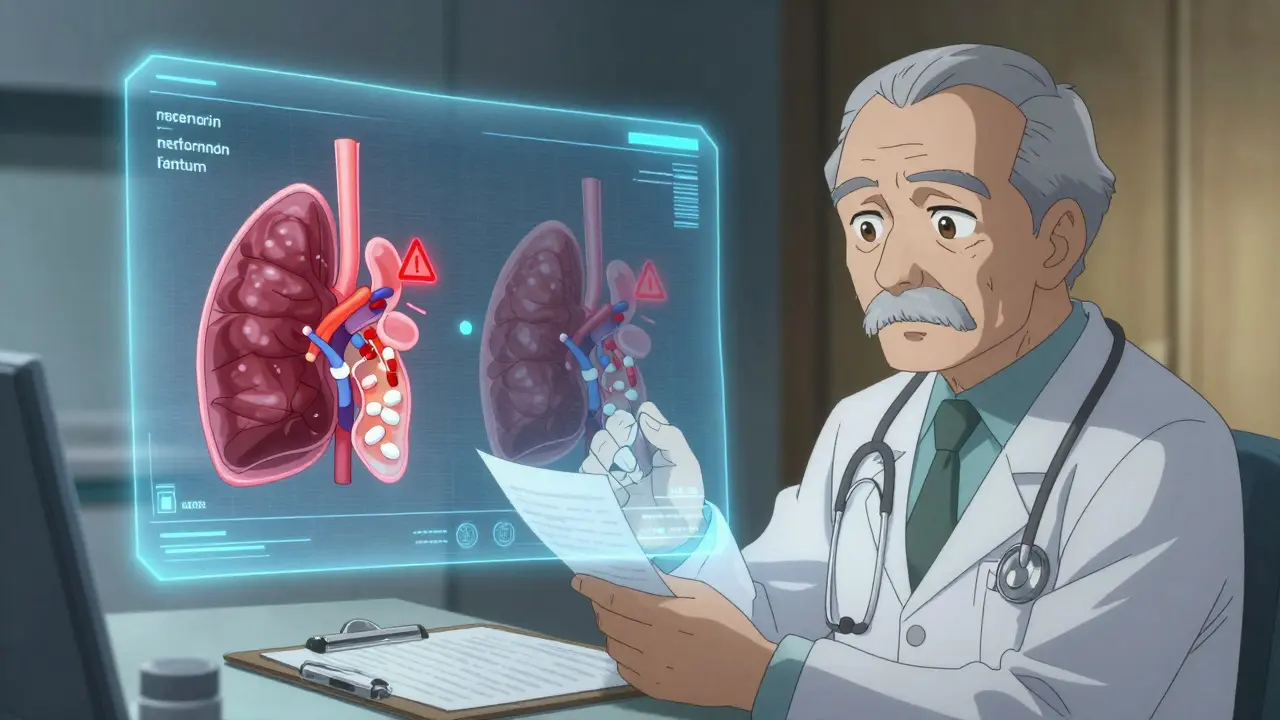
Why Some Medications Are Riskier Than Others
Not all drugs are created equal when it comes to aging. Some are like landmines. The Beers Criteria®, updated in 2019, lists medications that should be avoided or used with extreme caution in older adults. These include:
- Anticholinergics like diphenhydramine (Benadryl)-linked to confusion and falls
- Benzodiazepines like lorazepam-increase fall risk and dementia-like symptoms
- NSAIDs like ibuprofen-can cause kidney damage and stomach bleeding
- Antipsychotics like haloperidol-raise stroke risk in dementia patients
Even over-the-counter drugs are dangerous. Acetaminophen (Tylenol) is the leading cause of acute liver failure in people over 65. Why? Because liver enzymes that break it down become less efficient, and many seniors take it daily for arthritis pain. The recommended maximum dose for older adults is often lower than what’s printed on the bottle.
Another hidden risk? Polypharmacy. The 2017-2018 NHANES survey found that 41% of seniors take five or more prescription drugs. Each new drug adds another layer of risk. A drug that’s safe alone might become toxic when mixed with another that slows liver metabolism. Take amitriptyline, used for nerve pain and depression. One Reddit user, ‘CaregiverInMA,’ described how their 82-year-old mother started on a standard dose and ended up in the ER with severe dizziness and confusion. Her doctor later realized her liver couldn’t clear the drug. The dose was cut in half-and she improved within days.
How Doctors Should Adjust Doses-And Why They Often Don’t
The fix isn’t complicated: start low, go slow. For drugs cleared by the liver, initial doses should be 20-40% lower in adults over 65. For those over 75, drop even more. For kidney-cleared drugs, calculate clearance using the CKD-EPI formula, not just creatinine. But many doctors still use age as a proxy. They see 78 and assume “old” means “slow.” That’s not enough. You need numbers: liver enzymes, GFR, drug levels in blood.
Therapeutic drug monitoring-measuring actual drug levels in the blood-is underused. A 2022 case study in the Journal of the American Geriatrics Society showed how adjusting vancomycin doses based on real-time kidney function prevented kidney damage in a 78-year-old. That’s precision medicine. And it works.
Tools like the START and STOPP criteria help. START tells you what drugs to prescribe. STOPP tells you what to stop. A 2020 meta-analysis found using these tools cut adverse drug events by 22%. Yet, most primary care offices don’t use them. Why? Time. Training. Lack of systems.
The Bigger Picture: Why This Matters Now
By 2050, nearly 1 in 5 Americans will be over 65. Globally, the number of people over 65 will double-from 703 million to 1.5 billion. Right now, the U.S. spends $30 billion a year on hospitalizations caused by inappropriate drug use in older adults. That’s not just money. It’s lost independence, broken hips, dementia-like confusion, and early death.
The FDA is starting to wake up. Their 2019 guidance now requires drug makers to include older adults in trials and analyze results by age. But only 38% of participants in new drug trials are over 65. That means we’re still guessing how drugs work in the people who need them most.
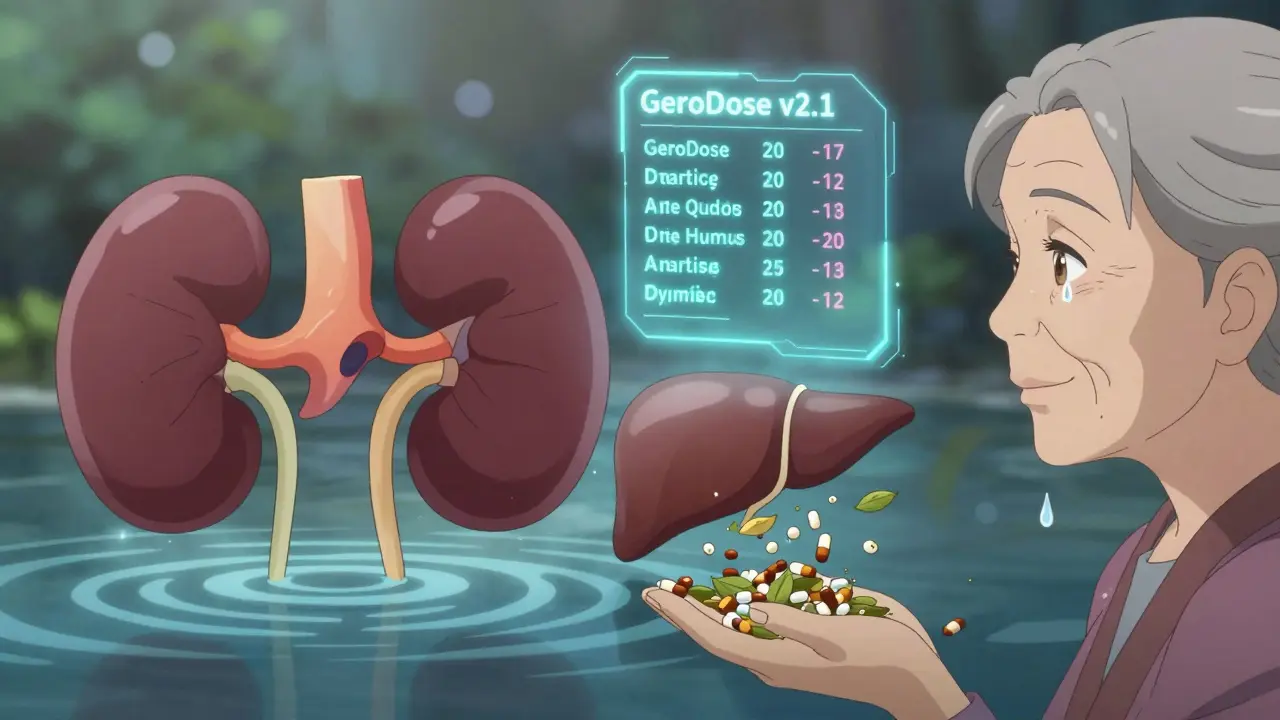
New tools are emerging. In 2023, the FDA approved GeroDose v2.1-a software that simulates how a drug behaves in an individual based on age, liver enzymes, kidney function, and weight. It’s not perfect, but it’s a start. The National Institute on Aging is investing $150 million into precision geriatric pharmacology. Researchers are now looking at epigenetics-how gene activity changes with age-to predict who will metabolize drugs slowly.
One 2022 study in JAMA Internal Medicine even found that when you control for other health problems, CYP2D6 enzyme activity doesn’t decline with age. That contradicts older assumptions. It means we can’t just blame aging. We have to look at the whole picture: diet, other illnesses, genetics, and drug interactions.
What You Can Do
If you or a loved one is over 65 and taking multiple medications:
- Ask your doctor: “Is this dose based on my liver and kidney function-or just my age?”
- Request a creatinine clearance test using CKD-EPI, not just serum creatinine.
- Review all medications, including supplements and OTC drugs, at least once a year.
- Keep a list of every pill you take, including dose and reason.
- Watch for signs: dizziness, confusion, fatigue, nausea, falls. These aren’t “just getting older.” They’re red flags.
There’s no magic pill. But there is better science. And better dosing. The goal isn’t to stop treating older adults. It’s to treat them right.
Why do older adults need lower doses of medication?
Older adults need lower doses because their liver and kidneys don’t process drugs as efficiently. Liver blood flow drops by about 40%, liver mass decreases by 30%, and kidney filtration (GFR) declines by 30-50%. This means drugs stay in the body longer, increasing the risk of side effects. Even if lab tests like creatinine look normal, kidney function may still be reduced due to loss of muscle mass.
Which drugs are most dangerous for seniors?
Drugs like benzodiazepines (e.g., lorazepam), anticholinergics (e.g., diphenhydramine), NSAIDs (e.g., ibuprofen), and antipsychotics (e.g., haloperidol) are especially risky. These can cause confusion, falls, kidney damage, or stroke. Over-the-counter acetaminophen (Tylenol) is also a major cause of liver failure in older adults due to reduced liver metabolism. The Beers Criteria® lists these and other high-risk medications for seniors.
Can blood tests accurately show kidney function in older adults?
Not always. Serum creatinine often stays within the normal range because older adults have less muscle mass, which means less creatinine is produced. The real measure of kidney function is glomerular filtration rate (GFR), best estimated using the CKD-EPI equation-not just creatinine. Many doctors still rely on outdated methods, leading to underdosed or overdosed medications.
How does polypharmacy increase risk in older adults?
Taking five or more medications increases the risk of adverse drug reactions by 88%. Each drug adds potential interactions. For example, one drug might slow liver metabolism, causing another drug to build up to toxic levels. A 2017-2018 survey found 41% of seniors take five or more prescriptions, making careful review essential. Tools like STOPP/START criteria help identify unnecessary or dangerous combinations.
Are there new tools to help doctors dose medications correctly for seniors?
Yes. In 2023, the FDA approved GeroDose v2.1, a software tool that simulates how a drug behaves in an individual based on age, liver enzymes, kidney function, and weight. Researchers are also using epigenetic markers to predict how a person’s genes respond to drugs as they age. These tools move beyond guessing based on age alone and toward truly personalized dosing.
There’s no reason older adults should suffer because their bodies changed. With better testing, smarter dosing, and more research, we can keep them safe-and independent-for longer.