
HPV infections are the most common sexually transmitted infection in the U.S., affecting nearly 80% of people at some point in their lives. Most infections clear on their own, but some types - especially HPV 16 and 18 - can stick around for years and lead to cancer. These two types cause about 70% of all cervical cancers, and they’re also linked to cancers of the anus, throat, penis, vulva, and vagina. The good news? We have powerful tools to stop this before it starts: vaccination and regular screening. Together, they’ve already cut cervical cancer rates in half since the 1970s. But many people still don’t know how these tools work, who needs them, or when to get them.
How HPV Leads to Cancer
Not all HPV types are dangerous. Over 200 strains exist, but only about 14 are considered high-risk for cancer. HPV 16 and 18 are the worst offenders, responsible for most cases. The virus infects skin and mucous membranes, often without symptoms. It doesn’t cause immediate harm - it just sits there, quietly changing cells. Over time, usually 10 to 20 years, those changes can turn into precancerous lesions. Left unchecked, some of those lesions become invasive cancer.
That’s why screening is so important. Cervical cancer grows slowly. By the time symptoms like abnormal bleeding appear, it’s often too late for simple treatment. But if you catch the changes early - before they turn into cancer - they can be removed with minor procedures. That’s the whole point of screening: find the problem before it becomes a crisis.
HPV Vaccination: The Best Prevention
The HPV vaccine is one of the most effective cancer-prevention tools ever developed. The first vaccine, Gardasil, was approved in 2006. Today’s version, Gardasil 9, protects against nine HPV types - including the two most dangerous ones, 16 and 18 - and five others that cause most remaining cases. It prevents more than 90% of HPV-related cancers.
It works best when given before exposure. That’s why the CDC and American Cancer Society recommend vaccination for all kids at age 11 or 12. Two doses are enough if started before age 15. For those starting at 15 or older, three doses are needed. The vaccine is approved up to age 45, but it’s less effective if you’ve already been exposed to HPV. Still, if you’re over 26 and haven’t been vaccinated, it’s worth talking to your doctor - especially if you’re sexually active with new partners.
It’s not just for girls. Boys get it too. HPV causes throat and anal cancers in men, and vaccinating them helps reduce transmission to partners. In countries with high vaccination rates - like Australia and the U.K. - genital warts and precancerous cervical changes have dropped by over 80% in young women.
Screening: Finding Problems Before They Grow
Even if you’ve been vaccinated, you still need screening. The vaccine doesn’t protect against every HPV type, and it doesn’t clear existing infections. Screening finds those hidden changes before they turn into cancer.
For decades, the Pap test was the gold standard. It looks for abnormal cells under a microscope. But it’s not perfect - it misses about half of early precancers. Now, we have something better: HPV testing. Instead of looking at cells, it looks for the virus itself. That’s more accurate. A 2018 study in JAMA found HPV testing catches 94.6% of serious precancers, compared to just 55.4% for Pap tests alone.
Since 2020, the American Cancer Society has recommended primary HPV testing every five years for people aged 25 to 65. This is now the preferred method. The U.S. Preventive Services Task Force (USPSTF) agrees, offering three options for ages 30 to 65: HPV test every five years, Pap test every three years, or both together every five years. For ages 21 to 29, Pap tests every three years are still the standard - HPV testing isn’t recommended yet for this group because infections are common and usually clear on their own.
What Happens If Your Test Is Positive?
A positive HPV test doesn’t mean you have cancer. It just means the virus is present. Most people clear it naturally. But if you test positive, you’ll need follow-up. If you’re HPV-positive and have HPV 16 or 18, you’ll be referred for a colposcopy - a closer look at the cervix. If you’re positive for other high-risk types, you’ll usually get a Pap test to see if there are any cell changes. If both are normal, you’ll be asked to come back in a year. If not, treatment can begin.
This step-by-step approach avoids unnecessary procedures. It’s more precise than the old system, where every abnormal Pap led to a biopsy. Now, we focus on the real threats: persistent HPV 16/18 infections and clear cell changes.
Self-Collection: A Game Changer for Access
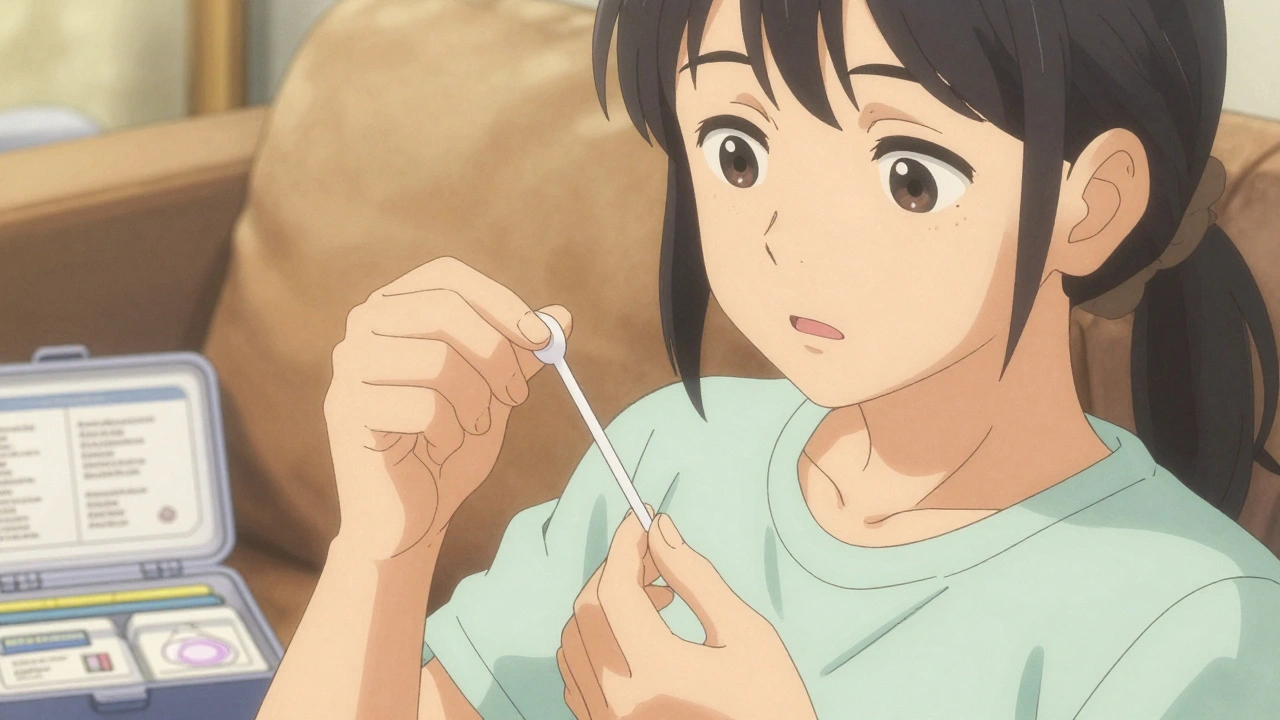
One of the biggest barriers to screening is discomfort or fear of pelvic exams. Many people avoid getting tested because of this. That’s where self-collection comes in. Starting in 2024, Kaiser Permanente and other major health systems began accepting self-collected HPV tests. You use a simple swab - like a Q-tip - to collect a sample from your vagina at home or in a clinic. No speculum, no exam, no embarrassment.
Studies show it’s almost as accurate as a clinician-collected sample. One 2024 study found self-collection detected 84.4% of precancers, compared to 90.7% for doctor-collected samples. That’s close enough to be reliable. And it works. In Australia and the Netherlands, offering self-collection increased screening rates by 30 to 40% among women who hadn’t been screened in years.
The U.S. Preventive Services Task Force now says self-collected HPV testing should be an option for everyone eligible for screening. It’s especially helpful for people in rural areas, those with mobility issues, or anyone who’s avoided care because of trauma or cultural barriers.
Why Vaccinated People Still Need Screening
A common myth is that if you got the HPV vaccine, you don’t need screening anymore. That’s false. The vaccine doesn’t cover all cancer-causing HPV types. It also doesn’t reverse infections you already had. So even if you were vaccinated at 12, you still need regular tests starting at 25.
The CDC is clear: vaccinated and unvaccinated people should be screened the same way. Skipping screening because you’re vaccinated puts you at risk. In fact, women who were vaccinated but never screened are now being diagnosed with cervical cancer at higher rates than expected - because they assumed they were protected.
Global Gaps and Inequities
While the U.S. and other high-income countries are shifting to HPV-based screening, the rest of the world is still catching up. In low- and middle-income countries, only 19% of women have ever been screened. Cervical cancer is the fourth most common cancer in women globally - and the leading cause of cancer death for women in many African and South Asian countries.
The World Health Organization launched a bold plan in 2020: the 90-70-90 targets. By 2030, they want 90% of girls vaccinated by age 15, 70% of women screened by 35 and again by 45, and 90% of those with disease treated. If met, this could prevent 62 to 77 million cervical cancer cases over the next century.
Here in the U.S., disparities remain. Black women are 70% more likely to die from cervical cancer than White women. That’s not because of biology - it’s because of access. Missed appointments, lack of insurance, transportation issues, and distrust in the medical system all play a role. Self-collection, mobile clinics, and community outreach are helping close the gap, but we’re not there yet.
What’s Next?
The future of HPV prevention is even brighter. Artificial intelligence is now being used to analyze Pap smears. Paige.AI received FDA approval in January 2023 to help pathologists spot abnormal cells faster and more accurately. Studies also suggest that after two negative HPV tests, screening every six years may be safe - longer than current guidelines. That could reduce costs and burden without sacrificing safety.
More countries are adopting self-collection. More labs are getting ready to run HPV tests. More people are learning that cancer prevention doesn’t have to be scary or complicated. It just has to happen.
What You Should Do Right Now
- If you’re 11 to 12, get the HPV vaccine - two doses, six months apart.
- If you’re 13 to 26 and haven’t been vaccinated, talk to your doctor. You can still get it.
- If you’re 25 to 65, get an HPV test every five years. Ask if self-collection is an option.
- If you’re 21 to 24, get a Pap test every three years.
- If you’re over 65 and have had normal screenings for years, you may not need more. Talk to your provider.
- If you’ve had a hysterectomy, ask if you still need screening - it depends on why you had it and whether your cervix was removed.
HPV isn’t something to be ashamed of. It’s common. But cancer doesn’t have to be. Vaccination and screening are simple, proven, and life-saving. You don’t need to wait for symptoms. You don’t need to be perfect. You just need to act - once every few years - and protect yourself.
Do I still need a Pap test if I’ve had the HPV vaccine?
Yes. The HPV vaccine protects against the most common cancer-causing types, but not all of them. You still need regular screening starting at age 25. For most people, that means an HPV test every five years - not a Pap test alone. Vaccination reduces your risk, but it doesn’t eliminate the need for screening.
Can I do an HPV test at home?
Yes. Self-collected HPV tests are now widely available and recommended by major health groups. You’ll get a swab and instructions - you collect the sample yourself from your vagina. It’s just as reliable as a doctor-collected sample for detecting precancer. This option removes barriers like fear, discomfort, or lack of access to clinics.
If my HPV test is positive, does that mean I have cancer?
No. A positive HPV test only means the virus is present. Most infections go away on their own within one to two years. Only a small number of people develop precancerous changes, and even fewer develop cancer. If your test is positive, your provider will check for HPV 16 or 18 and may do a Pap test or colposcopy to see if cells are changing. This is a warning sign, not a diagnosis of cancer.
Why is HPV testing done every five years instead of every year?
HPV infections take years - often a decade or more - to turn into cancer. Testing every five years finds those slow-growing changes early enough to treat them easily. More frequent testing leads to unnecessary procedures, anxiety, and costs. Studies show that after two negative HPV tests, the risk of developing serious precancer is extremely low for at least six years. Five-year intervals are safe and effective.
Is HPV screening only for women?
Currently, routine HPV screening is only recommended for people with a cervix - primarily women and transgender men who haven’t had a hysterectomy. There’s no approved screening test for HPV-related cancers in men or for the throat or anus in any gender. But vaccination protects everyone. Men benefit from the vaccine by reducing their risk of anal, throat, and penile cancers, and by helping prevent transmission to partners.