
🩺 Opioid Withdrawal & Risk Assessment Tool
Select the symptoms you are experiencing right now. The Clinical Opiate Withdrawal Scale (COWS) helps quantify how severe your withdrawal is.
Answer these questions honestly. These behaviors indicate potential addiction rather than just physical dependence.
Physical Dependence Only
If you have high withdrawal scores but low OUD risk, you likely have physical dependence. This is a normal physiological adaptation. Management usually involves a slow, medically supervised taper (5-10% dose reduction every 2-4 weeks).
Potential Opioid Use Disorder
If you check 2 or more behavioral boxes, you may meet criteria for OUD. This is distinct from dependence. Medication-Assisted Treatment (MAT) with buprenorphine or methadone combined with therapy is recommended to address the underlying brain reward circuitry changes.
Imagine you’ve been taking prescribed opioids for chronic back pain for six months. One day, your doctor suggests tapering off the medication. You feel sick-nauseous, sweaty, and anxious-and immediately assume you’re “addicted.” But are you? Or is your body simply reacting to a normal physiological change? This confusion is more common than you might think, and it’s costing patients their treatment and peace of mind.
Physical dependence is a natural adaptive state that develops in response to repeated drug administration, revealed by withdrawal symptoms upon cessation. It is not a disease; it’s your nervous system recalibrating. In contrast, Addiction, clinically known as Substance Use Disorder (SUD) or Opioid Use Disorder (OUD), is a chronic, relapsing disorder characterized by compulsive drug seeking and use despite adverse consequences. The distinction matters because misdiagnosing one as the other can lead to unnecessary stigma, premature discontinuation of effective pain relief, or missed opportunities for specialized care.
The Neurobiology Behind the Difference
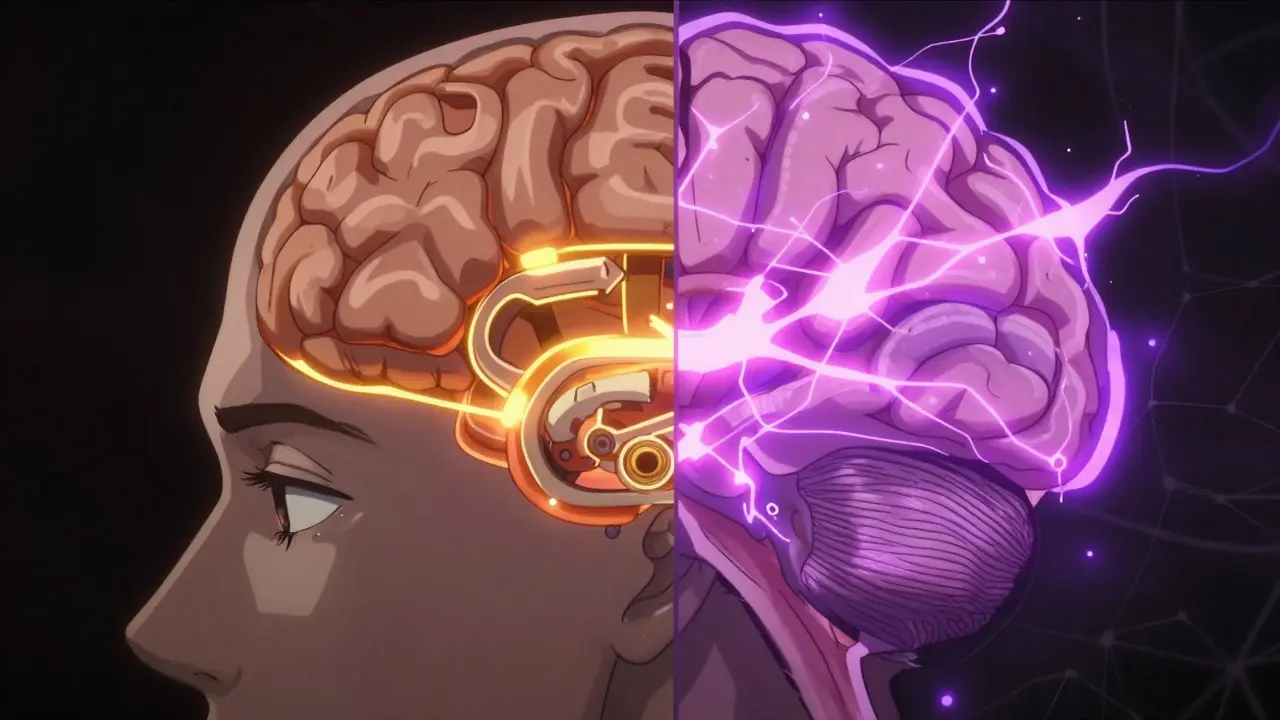
To understand why these two states are fundamentally different, we have to look at what happens inside the brain. When opioids bind to mu-opioid receptors, they inhibit norepinephrine release in the locus ceruleus, a region of the brainstem that regulates autonomic functions like heart rate and blood pressure. With chronic use, the brain compensates by increasing cAMP signaling and neuronal excitability, creating a new baseline. If you stop abruptly, this imbalance triggers withdrawal. This is physical dependence.
Addiction, however, involves pathological changes in entirely different circuits. It engages the mesolimbic dopamine pathway, specifically the ventral tegmental area and nucleus accumbens, which govern reward processing. It also affects the prefrontal cortex and amygdala, altering decision-making and impulse control. Neuroimaging studies show that while withdrawal-related adaptations in the locus ceruleus resolve within weeks after stopping opioids, epigenetic changes in the nucleus accumbens of individuals with OUD can persist for years, even after long periods of abstinence.
Key Clinical Differences
Clinicians rely on specific criteria to distinguish between these states. Physical dependence is expected and manageable. According to the CDC, nearly 100% of patients taking opioids for more than 30 days develop some degree of physical dependence. However, only about 8% develop OUD. Here is how they compare:
| Feature | Physical Dependence | Opioid Use Disorder (Addiction) |
|---|---|---|
| Primary Brain Region | Locus Ceruleus (Autonomic Regulation) | Nucleus Accumbens & Prefrontal Cortex (Reward & Control) |
| Behavioral Impact | No impairment in decision-making | Compulsive use despite harm |
| Prevalence in Chronic Users | ~100% after 30+ days | ~8% |
| Management Strategy | Medically supervised tapering | Medication-Assisted Treatment (MAT) + Therapy |
| Diagnostic Criteria | Presence of withdrawal symptoms | ≥2 of 11 DSM-5 symptoms in 12 months |
Withdrawal symptoms from physical dependence are predictable. They typically include nausea (reported in 92% of cases), vomiting (85%), sweating (78%), anxiety (89%), yawning (76%), and diarrhea (68%). These symptoms peak around 48-72 hours after the last dose and usually subside within a week or two. In contrast, OUD manifests through behavioral red flags: taking larger amounts than intended, failing to cut down, spending excessive time obtaining or using the drug, and continuing use despite social or occupational problems.
Why the Confusion Is Dangerous
The conflation of dependence and addiction has real-world consequences. A 2020 study in the Journal of Pain Research found that 68% of chronic pain patients incorrectly believed that experiencing withdrawal meant they were addicted. This fear has led many patients to discontinue prescribed opioids prematurely, resulting in uncontrolled pain and, paradoxically, an increased risk of turning to illicit substances. Dr. Andrew Kolodny of the Opioid Policy Research Collaborative warns that this confusion contributes to the undertreatment of pain and the stigmatization of patients who develop dependence during appropriate medical therapy.
Conversely, overlooking true addiction can be fatal. The U.S. opioid epidemic cost $1.53 trillion from 2018 to 2022, with over 80,000 overdose deaths in 2021 alone. Identifying OUD early allows for intervention with Medication-Assisted Treatment (MAT). Buprenorphine, for instance, reduces mortality by 70-80%, while methadone reduces it by 50%. These treatments address the underlying neurobiological pathology of addiction, something that simple tapering cannot do.
Practical Steps for Patients and Providers
If you are currently on opioid therapy, here is how to navigate the landscape safely:
- Use Validated Risk Tools: Clinicians should use the Opioid Risk Tool (ORT) at the start of therapy. It identifies high-risk patients for OUD development, allowing for closer monitoring without assuming everyone will become addicted.
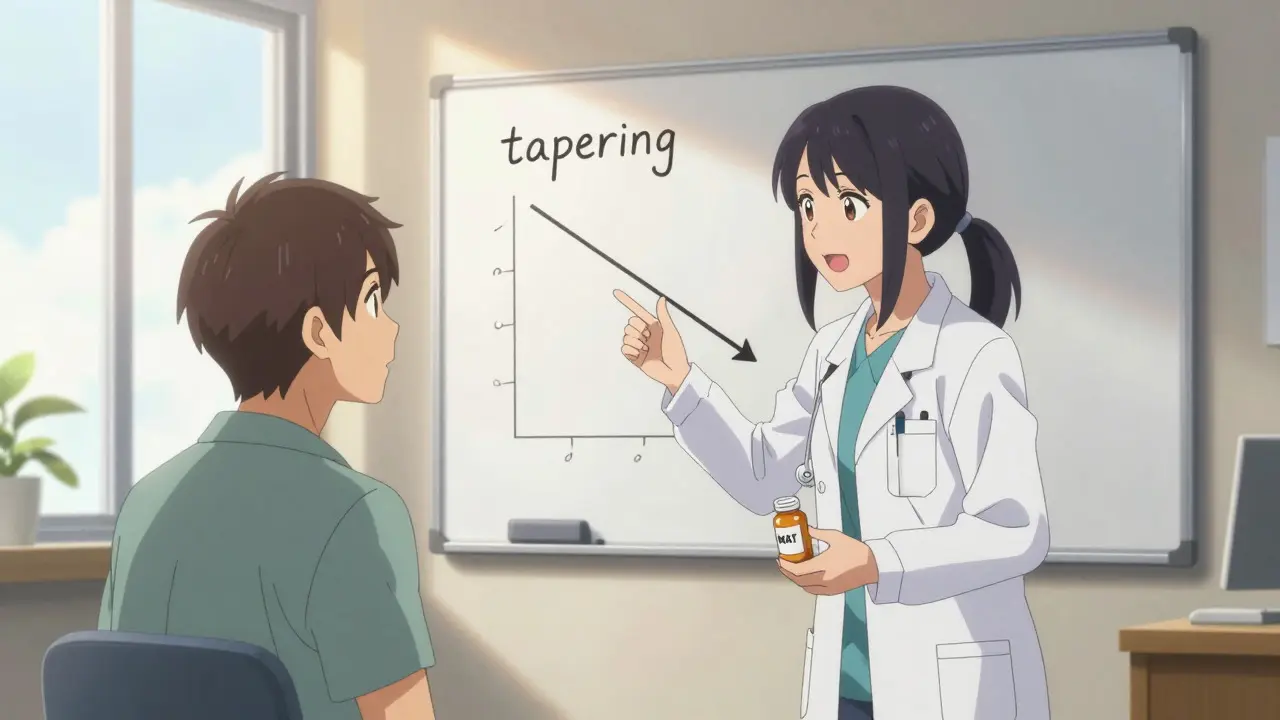
- Implement Slow Tapers: For those developing physical dependence, the CDC recommends reducing doses by 5-10% every 2-4 weeks. For patients on high doses (>100 MME/day), slower rates (5% monthly) are safer to prevent severe withdrawal.
- Monitor with COWS: The Clinical Opiate Withdrawal Scale (COWS) helps quantify withdrawal severity. Scores ≥12 indicate moderate withdrawal requiring intervention, ensuring comfort during tapering.
- Seek MAT if Behavioral Symptoms Appear: If you find yourself hiding pills, driving long distances to get refills, or feeling compelled to use despite negative consequences, speak to a provider about MAT. It is a sign of OUD, not just dependence.
Recent advancements offer hope for better differentiation. A 2023 study in the Journal of Neuroscience showed that fMRI biomarkers can differentiate physical dependence from OUD with 89% accuracy by measuring prefrontal cortex activation during craving tasks. While this technology isn’t yet in routine clinical practice, experts predict its integration within 3-5 years will significantly reduce misdiagnosis rates, which currently stand at 35%.
Frequently Asked Questions
Is physical dependence the same as addiction?
No. Physical dependence is a normal physiological adaptation to repeated drug exposure, involving the autonomic nervous system. Addiction (OUD) is a pathological condition involving changes in brain reward circuits and executive function, leading to compulsive behavior despite harm.
How long does opioid withdrawal last?
Acute withdrawal symptoms typically peak within 48-72 hours and last about 7-10 days. However, post-acute withdrawal syndrome (PAWS), including anxiety and sleep disturbances, can persist for weeks or months in some individuals.
What is the safest way to come off opioids?
The safest method is a medically supervised taper, reducing the dose by 5-10% every 2-4 weeks. Slower tapers are recommended for higher doses or longer durations of use to minimize withdrawal discomfort and reduce the risk of relapse.
Can you be physically dependent but not addicted?
Yes. In fact, most patients on long-term opioid therapy are physically dependent but do not have OUD. Dependence is expected; addiction is a separate diagnostic entity characterized by loss of control and compulsive use.
What treatments are available for Opioid Use Disorder?
Medication-Assisted Treatment (MAT) is the gold standard, using medications like buprenorphine or methadone combined with behavioral therapy. These treatments normalize brain chemistry and reduce cravings, significantly improving survival rates and quality of life.