
Celiac disease is not just a food preference or a mild intolerance. It is an autoimmune disorder where your immune system attacks the lining of your small intestine every time you consume gluten. For the roughly 1% of the global population living with this condition, the stakes are high. Left unmanaged, it leads to malnutrition, osteoporosis, and even certain cancers. The good news? Strict adherence to a gluten-free diet resolves symptoms for 95% of patients within weeks. But here is the catch that most new diagnoses miss: going gluten-free doesn’t automatically fix your nutrition. In fact, it often creates new gaps.
If you were recently diagnosed or suspect you have celiac disease, you are likely overwhelmed. You need to know what to eat, what to avoid, and how to rebuild your body’s nutrient stores. This guide cuts through the noise. We will look at the strict dietary rules, the hidden dangers of cross-contamination, and the specific supplements you likely need to thrive-not just survive-in 2026.
The Non-Negotiables: What Actually Constitutes a Gluten-Free Diet?
Many people think "gluten-free" means avoiding bread. That is too simple. To heal your gut, you must eliminate three specific grains entirely: wheat (including all its cousins like spelt, kamut, semolina, and triticale), barley (and any product containing malt), and rye. Even tiny amounts matter. Research from the American College of Gastroenterology shows that as little as 50mg of gluten per day-about one crumb-can prevent intestinal healing in half of all patients.
So, what can you eat? Your safe list includes:
- Rice, corn, and potatoes
- Quinoa, amaranth, millet, and sorghum
- Buckwheat (despite the name, it is gluten-free)
- Tapioca, flax, and soy
- Certified gluten-free oats
Let’s talk about those oats. For years, doctors told celiacs to avoid them completely due to cross-contamination risks. However, updated guidelines from the European Society for the Study of Coeliac Disease in 2025 state that 95% of patients can safely consume certified gluten-free oats. These oats contain less than 20 parts per million (ppm) of gluten. If you want to try them, start slow-about 50 grams a day-and monitor your reaction. About 5% of celiacs develop an intolerance to avenin, a protein in oats similar to gluten, so listen to your body.
The Hidden Traps: Cross-Contamination and Label Reading
You can buy the most expensive gluten-free bread on the market, but if you toast it in a toaster that previously held wheat bread, you are still sick. Cross-contamination is the silent enemy of celiac management. According to patient surveys on Reddit’s r/celiac community, 85% of people who continue to experience symptoms blame hidden exposure in restaurants or shared kitchen spaces.
Here is how to protect yourself:
- Read labels meticulously: "Wheat-free" does not mean "gluten-free." Barley and rye are not wheat, but they are toxic to you. Look for the official "Certified Gluten-Free" seal or verify the ingredient list yourself.
- Dedicate kitchen tools: Use separate cutting boards, colanders, and toasters. Wooden utensils absorb gluten and should be replaced with metal, glass, or plastic alternatives.
- Watch out for hidden sources: Soy sauce, malt vinegar, modified food starch, and even communion wafers often contain gluten. Always check.
- Medication safety: Surprisingly, 30% of prescription medications use gluten as a binding agent. Consult the Gluten-Free Drug Database maintained by the University of Chicago Celiac Center or ask your pharmacist before starting new meds.
Dining out remains the biggest hurdle. Only 28% of US restaurants have verified gluten-free protocols. When you do go out, ask specific questions: Do you fry french fries in the same oil as breaded chicken? Is the pasta boiled in dedicated water? If the answer is vague, skip the meal. Your health isn’t worth the risk.
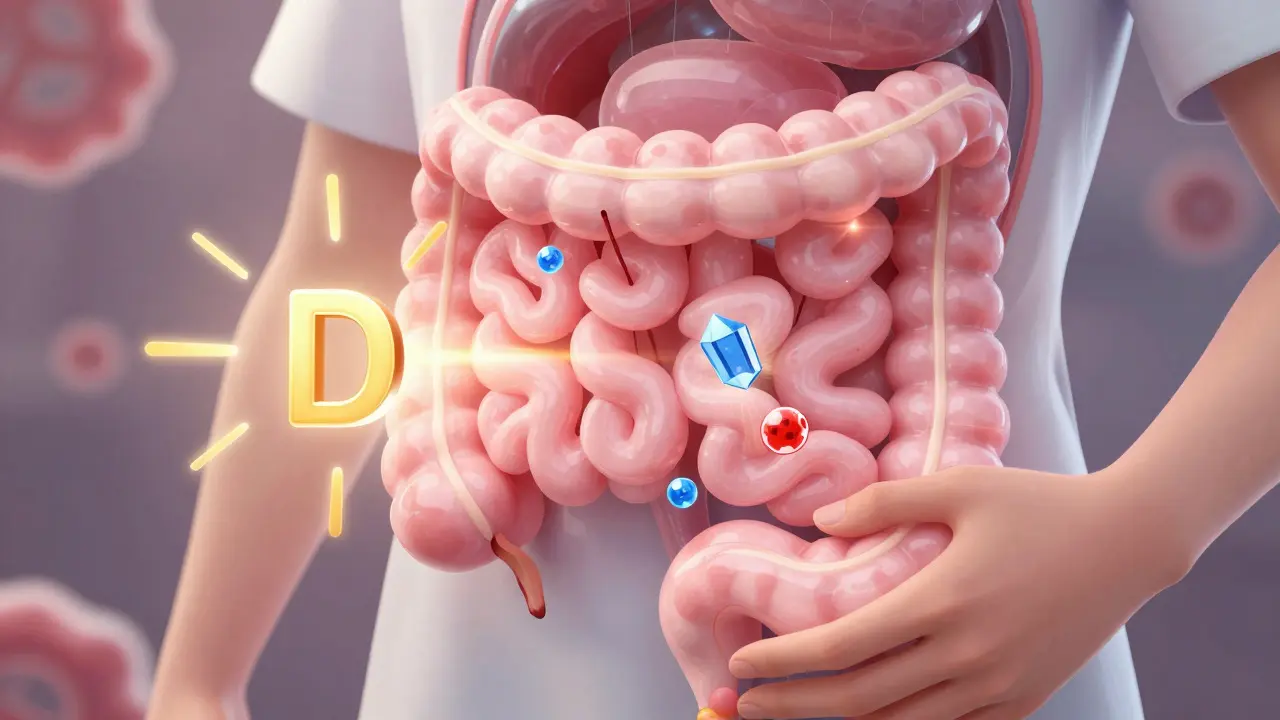
Why You Feel Tired: Addressing Nutrient Deficiencies
When you have active celiac disease, your damaged intestines cannot absorb nutrients properly. This leads to severe deficiencies. Even after you start the gluten-free diet, your body needs help catching up. You aren’t just hungry; you are starved for micronutrients.
| Nutrient | Prevalence at Diagnosis | Recommended Daily Intake | Why It Matters |
|---|---|---|---|
| Iron | 12-63% | 18mg (women), 8mg (men) | Low iron causes anemia, fatigue, and brain fog. Gut damage blocks absorption. |
| Vitamin D | 37-75% | 600-800 IU (often higher) | Essential for bone health and immune function. Deficiency leads to osteoporosis. |
| Calcium | 25-40% | 1,000-1,200mg | Works with Vitamin D to maintain bone density. Crucial for preventing fractures. |
| Folate (B9) | High prevalence | 400mcg | Needed for DNA synthesis and red blood cell formation. |
| Vitamin B12 | Moderate prevalence | 250-500mcg | Supports nerve health and energy production. Often absorbed poorly in the gut. |
Don’t guess with supplements. Get tested. A complete blood count (CBC) and metabolic panel should be part of your follow-up care. If you are anemic, oral iron might not be enough because your gut still struggles to absorb it. Some patients require intravenous iron supplementation to get their levels back to normal. Similarly, while sunlight helps with Vitamin D, many celiacs need therapeutic doses (up to 5,000 IU daily under doctor supervision) to correct deep deficits.
Bone Health and Long-Term Monitoring
Your bones take a beating during active celiac disease. Calcium and Vitamin D malabsorption lead to decreased bone mineral density. The silver lining? Bone density often improves significantly within 1 to 2 years of strict dietary adherence. But you need to track it.
Adults should undergo a dual-energy X-ray absorptiometry (DXA) scan every 2 to 3 years. This measures bone strength and catches osteopenia or osteoporosis early. If your scores are low, your doctor may prescribe bisphosphonates alongside your supplement regimen. Don’t wait for a fracture to address this. Prevention is far easier than repair.
Regular monitoring also includes checking your tissue transglutaminase IgA (tTG-IgA) antibody levels. These tests confirm whether your diet is working. Ideally, these levels should drop to normal ranges within 6 to 12 months. If they don’t, you are likely still consuming gluten, either intentionally or accidentally. At that point, a detailed review with a dietitian is essential to find the hidden source.

The Reality of Cost and Lifestyle Adjustments
Let’s address the elephant in the room: cost. Gluten-free living is expensive. A 2024 Consumer Reports analysis found that gluten-free products cost 159% more than conventional equivalents. Gluten-free bread alone can run $5.99 per pound compared to $2.31 for standard bread. Over time, this adds up.
To manage costs, focus on whole, naturally gluten-free foods. Rice, beans, lentils, fresh vegetables, fruits, and meat are cheaper and healthier than processed gluten-free substitutes. Save the packaged goods for convenience, not as your staple. Also, note that insurance coverage for specialized testing and supplements is limited. Only 15-20% of functional medicine tests are typically reimbursed, so budget accordingly for out-of-pocket expenses.
Despite the challenges, the quality of life improvement is profound. Surveys show that 78% of celiac patients report significant life improvements within three months of strict adherence. Energy returns, bloating disappears, and mental clarity sharpens. It is a trade-off, but for most, it is a worthy one.
What If Symptoms Persist?
About 15-30% of patients experience non-responsive celiac disease, meaning symptoms continue despite a strict diet. This is frustrating and scary, but it has explanations. First, rule out accidental gluten exposure. Second, consider other conditions like lactose intolerance (which often accompanies celiac initially) or Small Intestinal Bacterial Overgrowth (SIBO). Third, in rare cases, refractory celiac disease may require immunosuppressive therapy. If you are doing everything right and still feel sick, seek advanced diagnostics like small bowel capsule endoscopy to assess mucosal healing.
How long does it take for the gut to heal after starting a gluten-free diet?
Symptom relief often occurs within days to weeks, but full intestinal healing takes longer. Most adults see significant mucosal recovery within 1 to 2 years of strict adherence. Children tend to heal faster. Regular antibody testing (tTG-IgA) helps track this progress.
Can I ever eat gluten again if I stick to the diet strictly?
No. Celiac disease is a lifelong condition. There is no cure yet. Stopping the gluten-free diet will reactivate the autoimmune response and cause further damage to your small intestine. Current treatments are experimental and not widely available.
Is oatmeal safe for someone with celiac disease?
Only if it is labeled "certified gluten-free." Regular oats are often contaminated with wheat during processing. Even certified oats should be introduced gradually, as 5% of celiacs have an adverse reaction to avenin, a protein in oats. Always consult your doctor before adding oats to your diet.
What are the best supplements for a newly diagnosed celiac patient?
The most critical supplements are Iron, Vitamin D, Calcium, Folate, and Vitamin B12. However, you should not guess your dosage. Get blood work done first. Deficiencies vary widely between individuals. Start with a multivitamin designed for malabsorption issues and add targeted supplements based on your lab results.
How do I handle dining out with celiac disease?
Choose restaurants with dedicated gluten-free menus or staff training. Ask specific questions about preparation methods, such as whether fries are fried in shared oil. Carry a gluten-free restaurant card to communicate your needs clearly. Avoid buffets and busy kitchens where cross-contamination risks are highest.