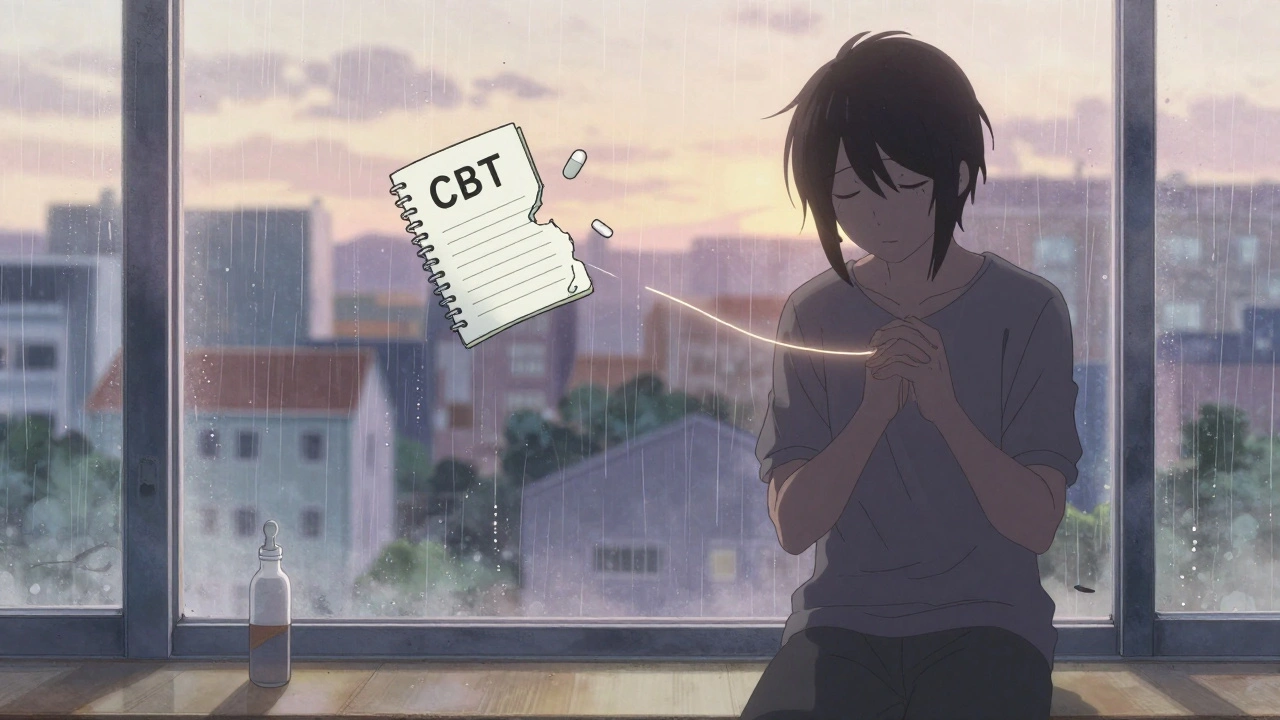
When you’ve been feeling down for weeks-no matter how hard you try to shake it off-you’re not just having a bad phase. You might be dealing with major depressive disorder (MDD). It’s not weakness. It’s not laziness. It’s a real medical condition that affects about 1 in 6 adults in the U.S. every year. And the good news? It responds well to treatment. Many people find real relief with just the right mix of therapy and medication. But choosing between them-or combining them-can feel overwhelming. Here’s what actually works, based on the latest guidelines and real-world results.
What Major Depressive Disorder Really Feels Like
MDD isn’t just sadness. It’s a persistent low mood that doesn’t lift, even when good things happen. You lose interest in things you used to love-hanging out with friends, cooking, even scrolling through your phone. Sleep changes. Appetite shifts. Energy vanishes. Some people feel numb. Others are overwhelmed by guilt or worthlessness. Symptoms last at least two weeks, often longer. And they interfere with work, relationships, and daily life. Unlike temporary grief or stress, MDD doesn’t fade on its own. Left untreated, it can get worse. But it’s treatable. And the most effective approaches don’t rely on just one tool-they use two: psychotherapy and medication.Psychotherapy: Talking Your Way Out of the Dark
Therapy isn’t about being told what to do. It’s about learning new ways to think, feel, and act. The most proven form is Cognitive Behavioral Therapy (CBT). It helps you spot negative thought patterns-like “I’m a failure” or “Nothing will ever get better”-and test whether they’re actually true. You don’t just talk about your feelings. You do exercises. You track your mood. You challenge your beliefs. And over time, your brain starts rewiring itself. Another effective option is Interpersonal Therapy (IPT). This one focuses on your relationships. Maybe you’ve been isolating yourself. Maybe you’re stuck in a toxic dynamic with a partner or family member. IPT helps you rebuild connections, set boundaries, and communicate better. Depression often thrives in loneliness. IPT pulls you back into the world. For people who struggle with traditional talk therapy, Behavioral Activation is a simpler, action-based approach. Instead of digging into thoughts, you start by scheduling small, meaningful activities-walking outside, calling a friend, making a meal. You rebuild pleasure through action, not insight. It’s especially helpful if you’re too exhausted to think deeply. And if you live far from a therapist, or can’t take time off work, Computerized CBT (CCBT) is a solid alternative. Online programs like those offered through the NHS or private platforms deliver structured CBT lessons via apps or websites. They’re not perfect-no human connection, no real-time feedback-but they work. Studies show they reduce symptoms, especially when combined with brief check-ins from a clinician.Antidepressants: How They Work and What to Expect
Medication doesn’t make you “happy.” It helps your brain function better so you can engage with therapy and life again. The first-line choices are SSRIs-Selective Serotonin Reuptake Inhibitors. These include escitalopram, sertraline, and fluoxetine. They’re generally well-tolerated and have fewer side effects than older drugs. If SSRIs don’t help enough, doctors often turn to SNRIs like venlafaxine or duloxetine. These affect both serotonin and norepinephrine, which can help with energy and motivation. For severe cases, mirtazapine or amitriptyline may be used, though they come with more side effects like weight gain or drowsiness. You won’t feel better the next day. It takes 1-2 weeks to notice small shifts. Full improvement usually comes after 6-12 weeks. Many people quit too soon because they don’t see instant results. But if you stick with it, about 70-80% of people see a 50% or greater drop in symptoms. Side effects are common at first-nausea, headaches, trouble sleeping, or reduced sex drive. Most fade after a couple of weeks. If they don’t, your doctor can adjust the dose or switch you to another medication. There’s no “best” antidepressant. What works for one person might not work for another. It’s trial and error, guided by science.
Combining Therapy and Medication: The Gold Standard
Here’s the most important thing to know: for moderate to severe MDD, combining therapy with medication is more effective than either alone. A 2025 study in Nature confirmed that people on both CBT and an SSRI were significantly more likely to recover fully than those on just one. Why? Therapy teaches you skills to prevent relapse. Medication gives you the mental space to use those skills. If you’re too overwhelmed to do homework or challenge your thoughts, medication can lift the fog enough for therapy to stick. If you’re only on meds, you might feel better-but you haven’t learned how to stay better. For mild depression, therapy alone is often enough. No need to start medication unless symptoms don’t improve after 4-6 weeks. For severe depression (PHQ-9 score of 16 or higher), guidelines from NICE and AAFP strongly recommend starting both at the same time.What Doesn’t Work (And What to Avoid)
Don’t expect quick fixes. Supplements like St. John’s Wort or omega-3s might help a little, but they’re not replacements for proven treatments. Same with “positive thinking” or “just get more sleep.” Depression isn’t a mindset. It’s a brain chemistry issue. Avoid self-diagnosing or self-medicating. Online quizzes can’t replace a clinical assessment. And never stop antidepressants suddenly. That can cause withdrawal symptoms-dizziness, electric-shock feelings, irritability. Always taper under medical supervision. Also, don’t assume therapy is only for “deep” problems. You don’t need to have a traumatic past to benefit. Even if your depression came out of nowhere-after a job loss, a health scare, or just life piling up-therapy helps you rebuild.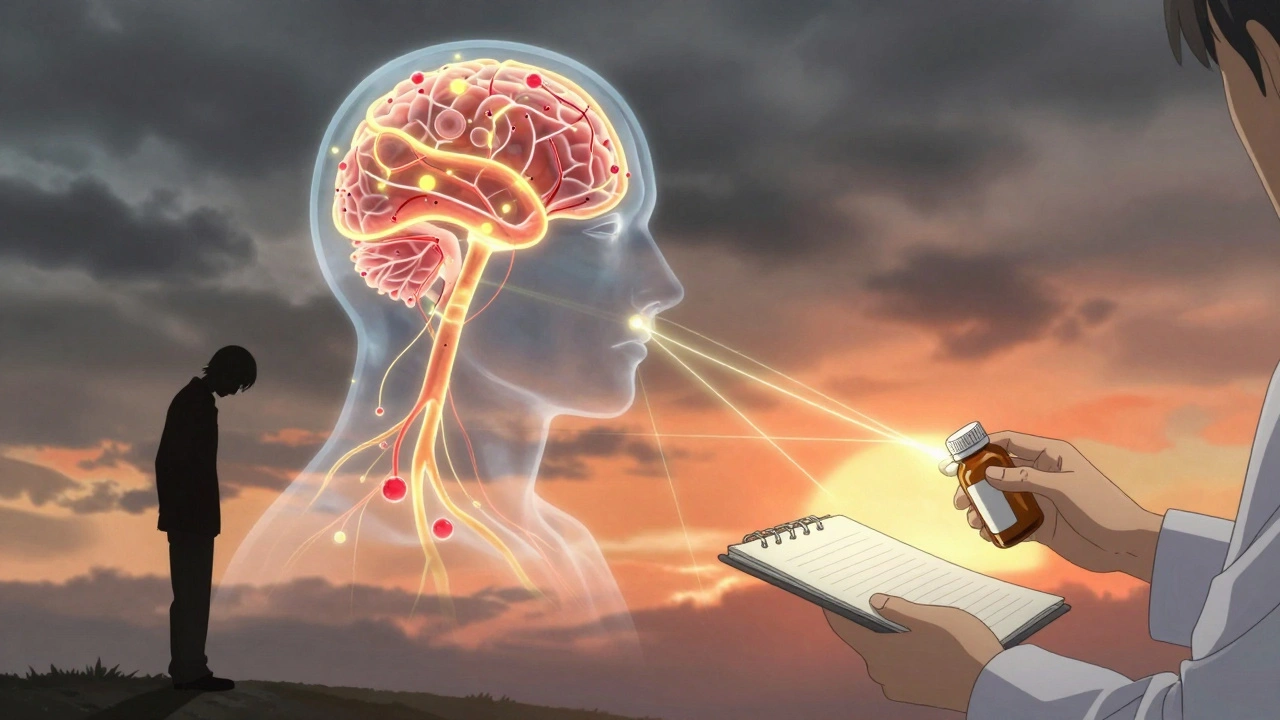
Access and Real-Life Barriers
The biggest hurdle isn’t effectiveness-it’s access. In many places, waiting lists for therapy can be months long. Private sessions cost hundreds per hour. Insurance doesn’t always cover them fully. That’s why telehealth and digital tools have become lifelines. If you’re in a rural area, or can’t afford in-person care, start with CCBT. Many public health systems now offer free or low-cost online programs. If you’re on medication, your primary care doctor can manage it. You don’t always need a psychiatrist. And if you’re struggling to stick with treatment? That’s normal. Depression makes you want to give up. Tell your therapist or doctor. They’ve heard it before. They can adjust the plan. Maybe you need shorter sessions. Maybe a different medication. Maybe you need help finding childcare so you can attend appointments.Long-Term Outlook: Recovery Is Possible
People often worry that once they start antidepressants, they’ll be on them forever. Not true. Many people take them for 6-12 months, then slowly taper off with their doctor’s help-especially if they’ve built strong coping skills through therapy. The goal isn’t just to feel better. It’s to feel like yourself again. To wake up without dread. To enjoy a cup of coffee. To call a friend without overthinking it. To believe that tomorrow might be okay. Recovery isn’t linear. Some days are harder. But with the right support, most people don’t just survive-they thrive. Studies show that those who complete a full course of CBT are less likely to relapse than those who only took medication. If you’re reading this and thinking, “Maybe this is me,” don’t wait. Talk to your doctor. Ask about therapy options. Ask about medication. You don’t have to do this alone. Help exists. And it works.Can I just take antidepressants and skip therapy?
Yes, antidepressants alone can help, especially for moderate to severe depression. But research shows combining them with therapy-especially CBT-leads to better long-term outcomes. Therapy teaches you skills to prevent relapse, while medication helps you get to a point where you can use those skills. If you only take meds, you might feel better for a while, but you’re more likely to return to depression later.
How long does it take for antidepressants to work?
Most people notice small improvements in energy or sleep within 1-2 weeks. But full benefits usually take 6-12 weeks. It’s common to feel worse before you feel better, especially in the first few days. Don’t stop because you’re not cured yet. Stick with it, and talk to your doctor if side effects are unbearable.
Is therapy only for people with trauma?
No. Therapy isn’t just for people with past abuse or major life events. Many people develop depression after job loss, chronic illness, burnout, or even just the slow buildup of stress. CBT and IPT don’t require you to dig into your childhood. They focus on your current thoughts, behaviors, and relationships. You don’t need a dramatic backstory to benefit.
What if I can’t afford therapy or medication?
Many public health systems offer free or low-cost options. In the U.S., community health centers and university clinics often provide sliding-scale fees. Online CBT platforms like SilverCloud or MoodGYM are sometimes covered by insurance. Generic antidepressants like sertraline cost as little as $4 a month at many pharmacies. If cost is a barrier, ask your doctor-there are always options.
Do SSRIs make you emotionally numb?
Some people report feeling “flat” or less emotional on SSRIs. This isn’t universal, but it’s common enough to be noted in clinical studies. If this happens, it doesn’t mean the drug isn’t working-it might mean the dose is too high, or the medication isn’t the best fit. Talk to your doctor. Switching to another SSRI or trying an SNRI often helps. Emotional blunting usually improves over time or with a dosage change.
When should I consider Electroconvulsive Therapy (ECT)?
ECT is considered when depression is severe, life-threatening, or hasn’t responded to at least two different treatments. It’s not a last resort-it’s a highly effective one. Studies show it works in 70-90% of cases where other treatments failed. It’s done under anesthesia, with no memory loss in most cases. If you’re suicidal or unable to eat or care for yourself, ECT can be life-saving.
Next Steps: What to Do Today
If you think you might have major depressive disorder:- Write down your symptoms: How long have you felt this way? What’s changed? What helps even a little?
- Make an appointment with your primary care doctor. They can screen you and refer you to therapy or prescribe medication.
- Ask about local CBT programs or online options like CCBT.
- If you’re already on medication, don’t stop. Talk to your doctor about side effects or lack of progress.
- If you’re in crisis, call or text 988 (U.S. and Canada) or reach out to your local mental health hotline. You’re not alone.