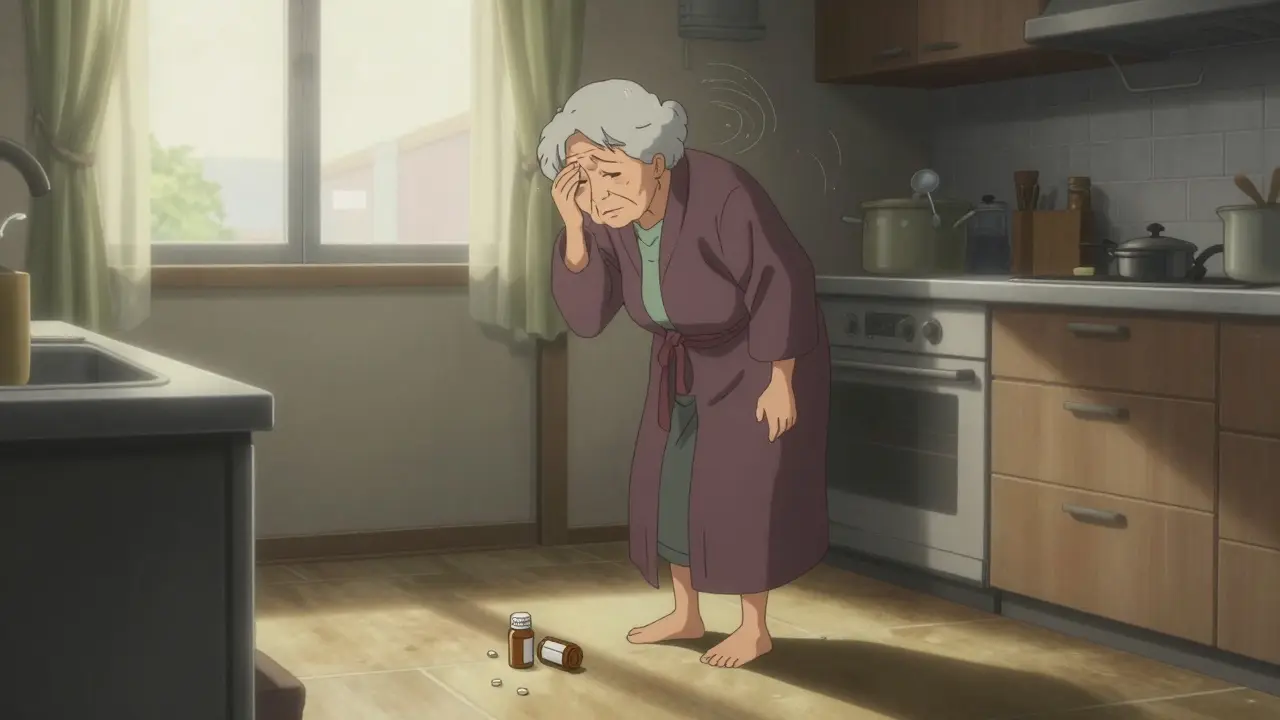
Every year, more than 36,000 older adults in the U.S. die from falls. That’s more than car crashes. And a big part of the reason? The medications they’re taking. Many of these drugs are prescribed to help with sleep, anxiety, pain, or high blood pressure-but they’re quietly making seniors wobbly on their feet. The problem isn’t always new prescriptions. Often, it’s medications that have been taken for years without ever being reviewed.
What Makes a Medication Dangerous for Balance?
It’s not just about being old. It’s about how drugs interact with aging bodies. As we get older, our kidneys and liver don’t clear medications as quickly. Our nervous system becomes more sensitive to sedatives. Blood pressure drops faster when standing up. All of this means even small doses of certain drugs can cause dizziness, confusion, or sudden weakness.Medications that increase fall risk don’t just make you sleepy. They can:
- Lower blood pressure too much when standing (orthostatic hypotension)
- Blur vision or slow reaction time
- Make you feel foggy or forgetful
- Reduce muscle strength or coordination
The American Geriatrics Society calls these drugs fall risk-increasing drugs (FRIDs). And they’re not rare. Studies show that between 65% and 93% of seniors who suffer a fall were taking at least one of them at the time. Many were taking three or more.
Top Medications That Raise Fall Risk
Here are the drug classes most linked to falls in older adults, based on the latest 2023 Beers Criteria and CDC STEADI guidelines:Antidepressants
Depression is common in older adults, but many antidepressants come with a hidden cost. Selective serotonin reuptake inhibitors (SSRIs) like sertraline (Zoloft) and fluoxetine (Prozac) double the risk of falling. Tricyclic antidepressants (TCAs) like amitriptyline are even worse-they block acetylcholine, which affects balance and causes dry mouth, constipation, and dizziness. The NHS in Scotland found that older adults on antidepressants fall at twice the rate of those not taking them.
Benzodiazepines and Sleep Aids
Drugs like diazepam (Valium), lorazepam (Ativan), and zolpidem (Ambien) are prescribed for anxiety or insomnia. But they slow brain activity, impair coordination, and increase confusion. Long-acting versions like diazepam stay in the body for days, making the risk worse over time. Even short-acting ones like zolpidem can cause morning drowsiness and unsteadiness. The CDC warns that these are among the most dangerous medications for seniors.
Antipsychotics
Used for dementia-related agitation or psychosis, drugs like quetiapine (Seroquel) and risperidone (Risperdal) are often prescribed off-label. They cause sedation, muscle stiffness, and a condition called tardive dyskinesia, which makes people sway or stumble. The Beers Criteria strongly advises against using these in older adults unless absolutely necessary.
Blood Pressure Medications
High blood pressure is common, but treating it too aggressively can backfire. Beta blockers like carvedilol, ACE inhibitors like lisinopril, and diuretics like hydrochlorothiazide can cause sudden drops in blood pressure when standing. This is called orthostatic hypotension. A drop of 20 mm Hg systolic or 10 mm Hg diastolic within three minutes of standing is a red flag. Many seniors don’t realize their dizziness is from their meds-not just getting older.
Opioids and Muscle Relaxants
Opioids like oxycodone and hydrocodone slow reflexes and cause drowsiness. When combined with benzodiazepines, the risk of falling jumps by 150%. Muscle relaxants like cyclobenzaprine (Flexeril) and methocarbamol (Robaxin) work on the central nervous system and can cause the same dizziness and confusion as sedatives.
Antihistamines and Anticholinergics
Over-the-counter sleep aids and allergy pills like diphenhydramine (Benadryl) and doxylamine (Unisom) are common in medicine cabinets. But they’re powerful anticholinergics-drugs that block a key brain chemical involved in memory and movement. These are listed in the Beers Criteria as avoid in seniors. Even one pill can cause grogginess that lasts all day.
Why Polypharmacy Is a Silent Killer
Taking four or more medications at once-called polypharmacy-is a major red flag. It doesn’t matter if each drug is “safe” on its own. Together, they multiply the risk. A senior on an SSRI, a diuretic, a benzodiazepine, and an antihistamine isn’t just at risk-they’re in a danger zone.
And here’s the worst part: many of these drugs were started years ago, during a hospital stay or a quick doctor’s visit, and never re-evaluated. The NHS in Glasgow found that most falls aren’t caused by new prescriptions-they’re caused by old ones that no one checked.
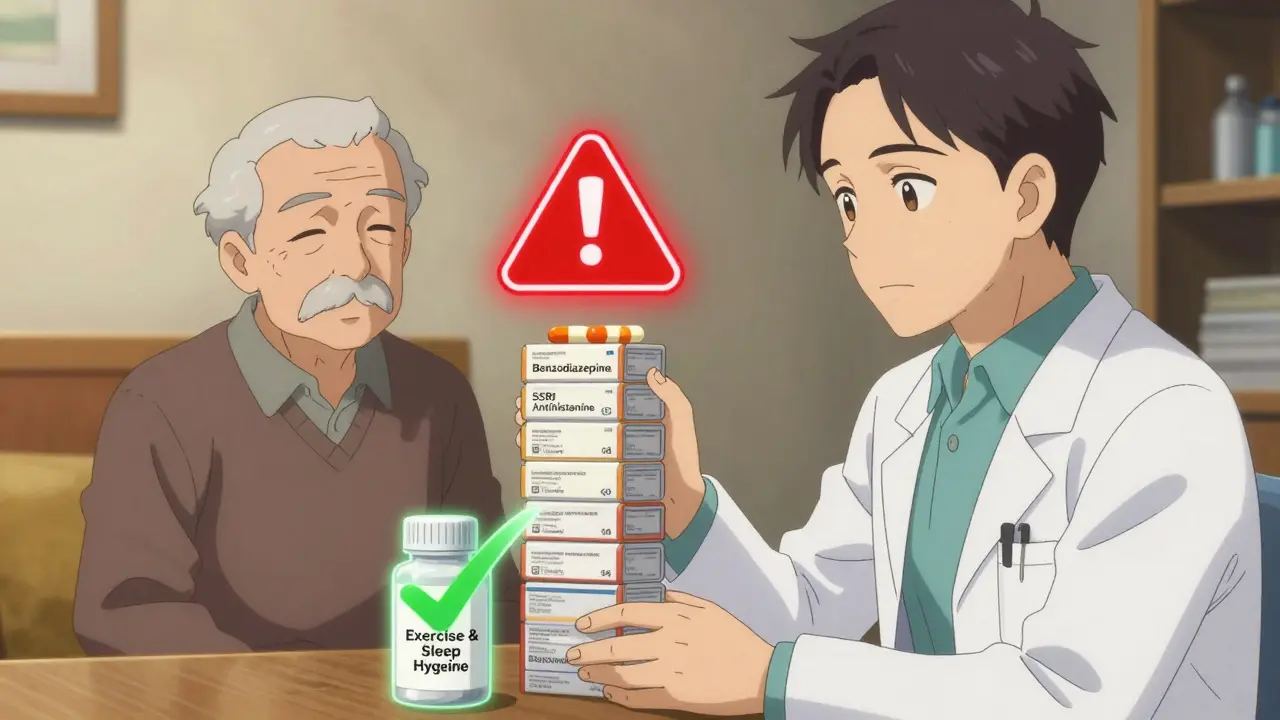
What Can Be Done? The Power of Medication Review
The good news? This is one of the most preventable causes of falls. The CDC says the single most effective way to reduce fall risk is to review all medications with a healthcare provider.
Here’s what a real medication review looks like:
- Bring every pill, capsule, patch, and supplement to your appointment-no exceptions.
- Ask: “Is this still necessary? Could it be lowered or stopped?”
- Ask about alternatives: “Is there a non-drug option for my sleep or anxiety?”
- Check for interactions: “Do these drugs work together to make me dizzy?”
Pharmacists are key players here. Programs like HomeMeds, developed by the University of South Florida, show that pharmacist-led reviews reduce falls by 22%. These professionals don’t just check names-they look at dosages, timing, and how drugs affect the body over time.
Doctors are starting to use tools like STOPP (Screening Tool of Older Persons’ Prescriptions) to flag risky drugs. But not all clinics do this. If your doctor doesn’t bring it up, ask.
What to Ask Your Doctor
You don’t need to be an expert to protect yourself or a loved one. Here are five simple questions to ask at your next visit:
- “Could any of these medications be making me dizzy or unsteady?”
- “Is there a lower dose I could try?”
- “Could I stop one or two of these safely?”
- “Are there non-drug treatments for my condition?”
- “Can we schedule a full medication review with a pharmacist?”
Don’t wait for a fall to happen. If you’ve had even one unexplained stumble, it’s time to talk.
Real Change Is Possible
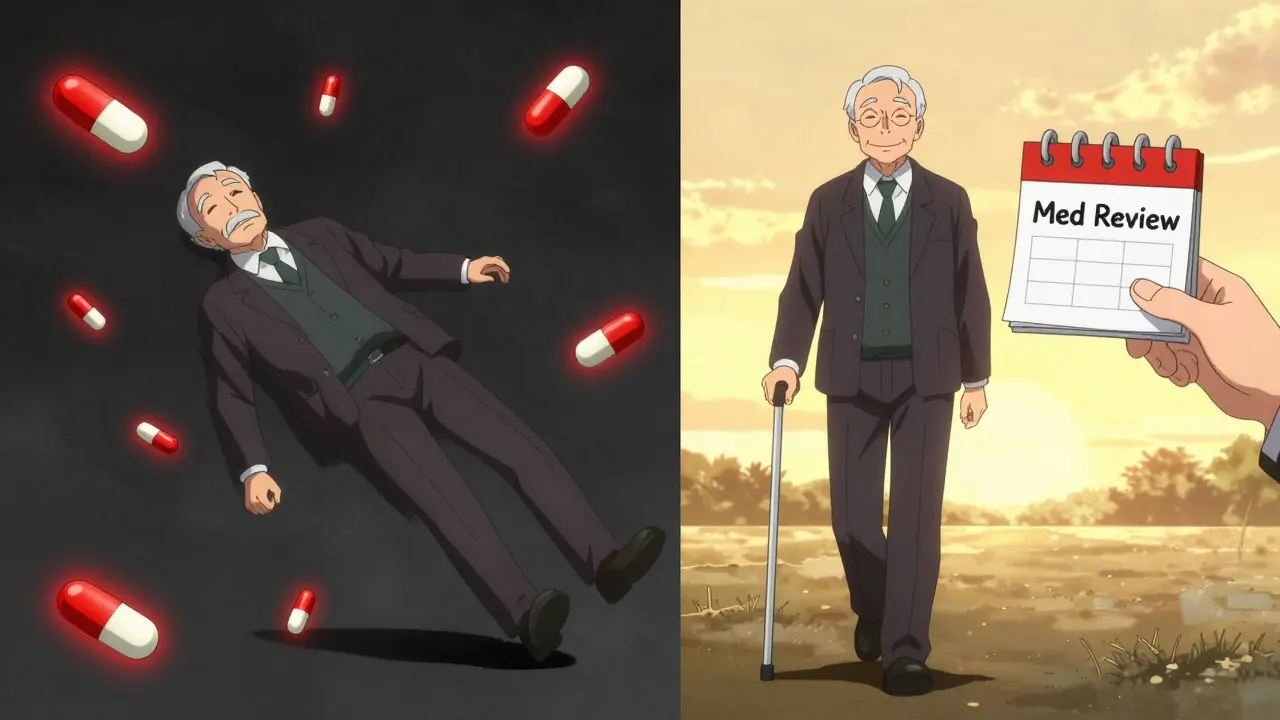
Studies show that when high-risk medications are reduced or stopped, fall rates drop by 20-30%. One 82-year-old woman in Auckland stopped her nighttime benzodiazepine and her daily antihistamine after a pharmacist review. Within two weeks, her morning dizziness vanished. She hasn’t fallen since.
Medications aren’t the enemy. But when they’re not reviewed, they become silent hazards. The goal isn’t to stop all drugs-it’s to make sure every one is still needed, at the right dose, and not working against you.
By 2025, 75% of major medical centers will have formal deprescribing protocols. But you don’t have to wait for that. Start today. Grab your pill bottles. Write down every drug you take. And ask your doctor: Is this still helping me-or is it putting me at risk?
Which medications are most likely to cause falls in seniors?
The top medications linked to falls in older adults include antidepressants (especially SSRIs and tricyclics), benzodiazepines (like Valium and Ambien), antipsychotics (such as Seroquel), blood pressure drugs (like diuretics and beta blockers), opioids, muscle relaxants, and first-generation antihistamines like Benadryl. These drugs affect balance, blood pressure, or brain function, increasing the chance of stumbling or fainting.
Can stopping a medication really reduce fall risk?
Yes. Studies show that carefully reducing or stopping high-risk medications can lower fall rates by 20% to 30%. For example, stopping a long-term benzodiazepine or switching from an anticholinergic sleep aid to a non-drug sleep strategy has helped many seniors regain stability. Always do this under medical supervision-never stop suddenly.
Why are over-the-counter drugs like Benadryl dangerous for seniors?
Benadryl and similar OTC sleep or allergy meds are anticholinergics. They block a brain chemical needed for memory, coordination, and muscle control. In seniors, even one dose can cause dizziness, blurred vision, confusion, and dry mouth-all of which increase fall risk. The American Geriatrics Society’s Beers Criteria lists these as drugs to avoid in older adults.
What is polypharmacy, and why is it a problem?
Polypharmacy means taking four or more medications at once. Even if each drug is safe alone, they can interact to cause dizziness, low blood pressure, or confusion. Seniors on multiple meds are far more likely to fall. The risk isn’t just from the number-it’s from how the drugs combine to affect the nervous system and circulation.
Who should review a senior’s medications?
A pharmacist is often the best person to start with. They’re trained to spot drug interactions and outdated prescriptions. Your doctor should also review medications annually, especially after a fall or hospital stay. Programs like HomeMeds use pharmacists to do full home medication reviews and have been shown to cut falls by 22%.
What should I do if I’m worried about my medications?
Make a list of every pill, patch, vitamin, and supplement you take-including over-the-counter ones. Bring it to your next doctor or pharmacist visit. Ask: ‘Could any of these be making me unsteady?’ and ‘Is there a safer alternative?’ Don’t stop anything on your own-work with your care team to adjust safely.
Next Steps for Families and Caregivers
If you’re helping an older loved one, here’s what to do right now:
- Collect all medications-don’t rely on memory or old labels.
- Check expiration dates. Discard anything outdated.
- Look for duplicate drugs (e.g., two different sleep aids).
- Ask the pharmacist to run a drug interaction check.
- Set up a medication review appointment with a geriatrician or pharmacist.
Falls aren’t inevitable. With the right review, many seniors can stay steady, independent, and safe-for years to come.