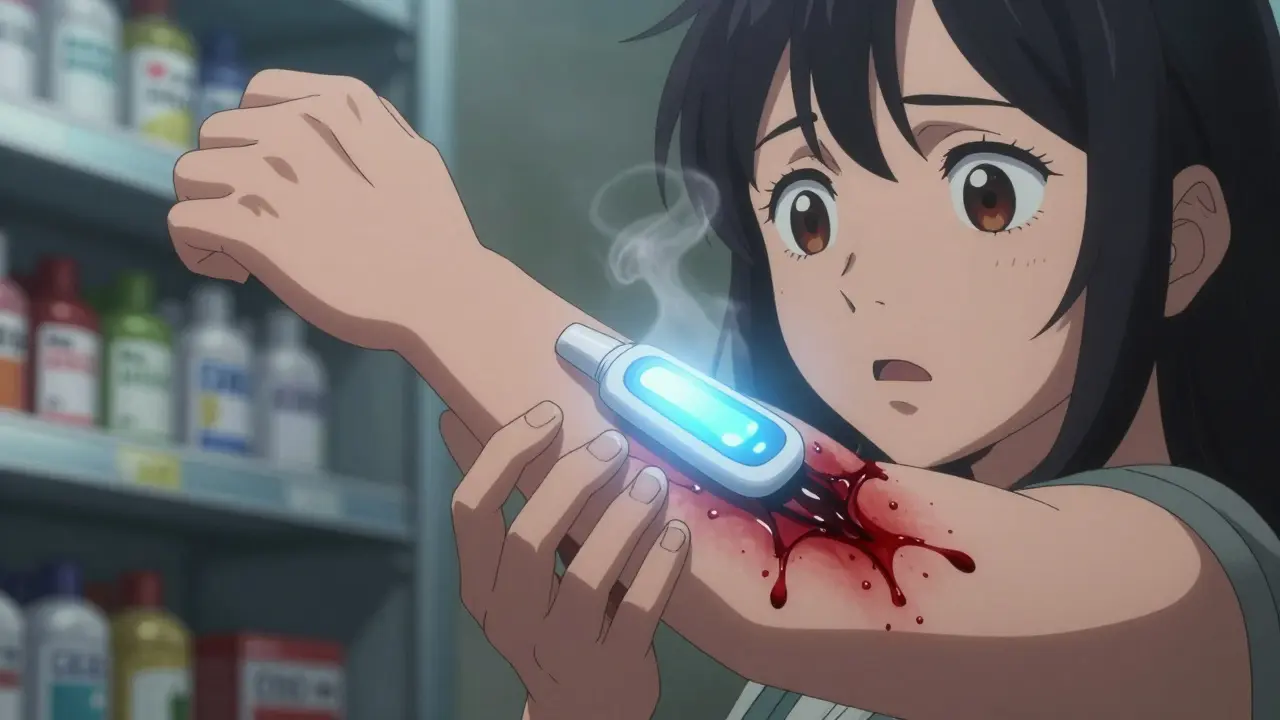
Thousands of people reach for OTC topical pain relievers every day-creams, gels, and patches that promise quick relief for sore muscles, stiff joints, or nagging arthritis pain. They’re easy to use, don’t require a prescription, and seem harmless. But OTC topical pain relievers aren’t risk-free. What you don’t know about how they work-or how they can hurt you-could lead to serious injury.
What’s Actually in These Products?
Not all topical pain relievers are the same. The active ingredients determine both how they work and what risks they carry. The most common ones you’ll find on shelves are menthol, methyl salicylate, capsaicin, and lidocaine.Menthol is the cooling agent in products like Aspercreme Heat Pain Relieving Gel. It contains 10% menthol, which tricks your nerves into feeling cold, temporarily masking pain. But Health Canada’s 2017 safety review found a direct link between menthol and rare but serious skin burns-even when used exactly as directed. These aren’t minor redness or irritation cases. They’re actual chemical burns that require medical care.
Methyl salicylate is related to aspirin. It’s in products like Bengay and Icy Hot. It works by reducing inflammation locally. Unlike menthol, there’s no documented case of serious burns from methyl salicylate alone. But if you’re allergic to aspirin or take blood thinners like warfarin, this ingredient can increase your risk of bleeding or skin reactions.
Capsaicin, derived from chili peppers, works differently. It depletes substance P, a chemical that sends pain signals to your brain. OTC versions contain 0.025% to 0.1% capsaicin. You won’t feel relief right away-it can take up to seven days of applying it 3-4 times daily. And yes, it burns… at first. That’s normal. But if you touch your eyes afterward? That’s a medical emergency. Always wear gloves or use a roll-on applicator.
Lidocaine is a local anesthetic. In prescription strength, it’s used in numbing injections. In OTC products, federal law caps it at 4%. But here’s the problem: illegal products sold online and in beauty supply stores contain up to 20% lidocaine. The FDA issued a warning in July 2023 after finding these products marketed for use before or after laser treatments, tattoos, and microdermabrasion. High concentrations absorbed through damaged skin can cause seizures, irregular heartbeat, and even death.
When Topical Pain Relievers Can Turn Dangerous
Most people assume these products are safe because they’re sold over the counter. That’s the biggest mistake you can make.Never apply them to broken, irritated, or sunburned skin. The chemicals don’t stop at the surface-they seep deeper. A small cut or rash becomes a highway for toxins. One woman applied a menthol gel to a minor scrape from gardening. Within hours, she developed a full-thickness burn. She didn’t realize the gel was the cause until her doctor pointed it out.
Don’t combine these products with heating pads, electric blankets, or hot tubs. Heat opens your pores and speeds up absorption. A study from Harvard Medical School showed that using a menthol cream with a heating pad can increase skin absorption by up to 40%. That’s enough to push a safe dose into the danger zone.
And don’t assume more is better. Applying extra gel, covering it with plastic wrap, or using multiple products at once doesn’t speed up relief-it increases risk. The Cleveland Clinic warns that overuse can lead to skin irritation, numbness, or even systemic toxicity, especially in older adults or people with reduced kidney or liver function.
Who Should Avoid These Products Altogether?
Some people should never use topical pain relievers without talking to a doctor first.If you have a salicylate allergy (like aspirin sensitivity), avoid methyl salicylate and diclofenac creams. Even if you’ve never had a reaction before, your body can change over time.
If you take blood thinners-warfarin, apixaban, rivaroxaban, or even daily aspirin-topical salicylates and diclofenac can interfere with your medication. You might not notice until you start bruising easily or bleeding longer than usual.
Children under 12 should never use products with menthol, methyl salicylate, or capsaicin. Their skin is thinner, and their bodies process chemicals differently. A child who got menthol gel on their hand and rubbed their eyes ended up in the ER with corneal burns.
Older adults, especially those over 65, are at higher risk. Their skin is more fragile, and their kidneys and liver don’t clear chemicals as efficiently. A 72-year-old man used a capsaicin patch daily for his knee pain. After three weeks, he developed numbness in his fingers and dizziness. His doctor traced it to systemic absorption from overuse.

What the Regulators Are Doing
Health Canada and the FDA aren’t sitting back. After the 2017 review, Health Canada mandated that all menthol-containing products carry a clear warning: “May cause skin burns.” Labels now include symbols and bold text. If you see a product without it, don’t buy it.The FDA has taken stronger action. In July 2023, they named six companies-Bella’s Beauty Supply, DermaRoller Store, DermaSelect, DermaWand, DermaFlash, and DermaSweep-for selling illegal lidocaine products with concentrations up to 20%. These were marketed for cosmetic procedures, which is a red flag. Cosmetic procedures damage the skin’s barrier, making absorption dangerous.
The FDA is still finding these products on Amazon, Etsy, and Instagram. They’re not just “unregulated”-they’re illegal. And they’re still being sold.
How to Use Them Safely
If you choose to use topical pain relievers, follow these steps:- Read the label. Check the active ingredient and concentration. If it says “lidocaine” and the percentage isn’t listed, don’t use it.
- Apply only to healthy, intact skin. No cuts, rashes, or sunburns.
- Wash your hands after applying. If you’re using capsaicin, wear gloves or use a roller applicator.
- Keep away from eyes, nose, and mouth. If contact happens, rinse with cool water for 15 minutes and call poison control.
- Never use with heat sources-no heating pads, hot baths, or saunas.
- Don’t use more than 4 times a day unless directed by a doctor.
- Stop using if you notice redness, blistering, or increased pain. That’s not “working”-that’s damage.
- Don’t use for more than 7 days without seeing a doctor. If it’s not helping by then, you need a different solution.

Are These Better Than Oral Pain Relievers?
Yes-for the right person, in the right situation.Oral NSAIDs like ibuprofen and naproxen carry real risks: stomach bleeding (affecting 1-2% of regular users), kidney damage, and increased heart attack risk. Topical versions deliver the medicine straight to the pain site, with far less entering your bloodstream. Harvard Health says they’re a safer choice for osteoarthritis or muscle strains.
But they’re not magic. They won’t fix a torn ligament or a pinched nerve. And they won’t work for deep joint pain like hip arthritis. They’re best for surface-level discomfort: a sore shoulder from carrying groceries, stiff knees after walking, or a pulled back muscle.
For chronic pain, they’re a tool-not a cure. And they work best when combined with movement, stretching, and physical therapy.
What to Do If You Think You’ve Been Harmed
If you develop a skin burn, blister, numbness, dizziness, or irregular heartbeat after using a topical pain reliever:- Stop using the product immediately.
- Wash the area with mild soap and cool water.
- Call poison control at 1-800-222-1222 (U.S.) or your local emergency number.
- Save the product packaging. Take a photo of the label.
- See a doctor. Bring the product with you.
Report the incident to the FDA’s MedWatch program. Your report helps them track dangerous products and remove them from shelves.
Final Thought: Just Because It’s OTC Doesn’t Mean It’s Safe
You wouldn’t take a prescription pill without reading the label. Don’t treat topical pain relievers any differently. They’re medicine. And like all medicine, they have side effects, interactions, and limits.There’s no shame in using a cream for a sore back. But there’s real danger in assuming it’s harmless. Know what’s in it. Know how to use it. And when in doubt-ask your pharmacist. They’re trained to catch the risks you might miss.
Can topical pain relievers cause serious burns?
Yes. Products containing menthol have been linked to rare but serious skin burns, even when used correctly. Health Canada confirmed this in a 2017 safety review. Burns can occur without overheating or misuse. Always check labels for burn risk warnings.
Is lidocaine cream safe to use?
Only if it contains 4% lidocaine or less and is used as directed. Products sold online with higher concentrations (up to 20%) are illegal and dangerous. They can cause seizures, heart problems, and breathing issues, especially if applied to broken skin during cosmetic procedures.
Can I use these products with other medications?
Be cautious. Menthol and capsaicin generally have low interaction risk. But methyl salicylate and diclofenac can interact with blood thinners and aspirin. If you take warfarin, apixaban, or daily aspirin, talk to your doctor or pharmacist before using these creams.
How long does it take for capsaicin cream to work?
It can take up to 7 days of consistent use-applied 3 to 4 times daily-to feel relief. Don’t stop after a few days. The burning sensation when you first apply it is normal, but it fades with continued use.
Are topical pain relievers better than pills?
For localized pain like arthritis in the knee or a strained muscle, yes. Topical versions deliver medicine directly to the site with less absorption into the bloodstream, reducing risks like stomach bleeding or kidney damage that come with oral NSAIDs. But they won’t help with deep or widespread pain.
Can children use OTC topical pain relievers?
No. Children under 12 should not use products containing menthol, methyl salicylate, or capsaicin. Their skin is more permeable, and their bodies process chemicals differently. Accidental eye contact can cause serious injury.
What should I do if I accidentally get pain cream in my eye?
Rinse your eye with cool water for at least 15 minutes. Do not rub. Call poison control immediately. Even small amounts can cause severe irritation, corneal damage, or temporary vision loss.
Do these products expire?
Yes. Expired creams and gels may lose effectiveness or change chemical composition. Always check the expiration date. If the product looks separated, smells odd, or has changed color, throw it out.
Can I use these patches with other pain treatments?
Avoid combining multiple topical products unless directed by a doctor. Using more than one at a time increases absorption and risk of side effects. Also, don’t use them with heat sources like heating pads or saunas.
Why do some products say "for external use only"?
Because these products are designed to act on the skin and underlying tissues-not inside the body. Swallowing them can cause poisoning. Even inhaling the fumes from menthol gels can irritate the lungs. Always follow the "external use only" instruction.