MAOI Food Safety Checker
Check Food Safety with MAOIs
This tool helps determine if foods are safe to consume while taking MAOIs based on tyramine content. For irreversible MAOIs (phenelzine, tranylcypromine), foods with more than 6mg tyramine per serving are unsafe.
Enter your medication type and food item to check safety
When you're taking an MAOI antidepressant, your diet isn't just about nutrition-it's about safety. A single bite of aged cheese, a splash of soy sauce, or even a slice of pepperoni could trigger a dangerous spike in blood pressure. This isn't a myth or an old wives' tale. It's a real, documented risk backed by decades of clinical evidence. The culprit? Tyramine, a naturally occurring compound in certain foods that, when combined with MAOIs, can cause a hypertensive crisis-sometimes deadly.
What Are MAOIs and Why Do They React With Tyramine?
MAOIs, or monoamine oxidase inhibitors, are antidepressants that work by blocking enzymes called monoamine oxidase. These enzymes normally break down neurotransmitters like serotonin, dopamine, and norepinephrine in the brain. By stopping their breakdown, MAOIs help lift mood in people with depression, especially treatment-resistant or atypical types.
But here's the catch: the same enzymes that break down brain chemicals also break down tyramine in your gut. Tyramine is an amino acid found in aged, fermented, or spoiled foods. It helps regulate blood pressure. Normally, your body handles it fine. But when you're on an irreversible MAOI-like phenelzine, tranylcypromine, or isocarboxazid-your gut can't process tyramine anymore. That means it floods into your bloodstream.
Once in your blood, tyramine forces your nerve endings to release stored norepinephrine. This causes your blood pressure to skyrocket. Levels can jump to 180/120 mmHg or higher. That’s not just high-it’s emergency-level dangerous. Symptoms include severe headache, chest pain, rapid heartbeat, nausea, blurred vision, and in rare cases, stroke or brain hemorrhage.
Which Foods Contain Dangerous Levels of Tyramine?
Not all foods are equal when it comes to tyramine. The amount depends on how the food is processed, aged, or stored. The rule of thumb: if it’s fermented, aged, pickled, or spoiled, it’s risky.
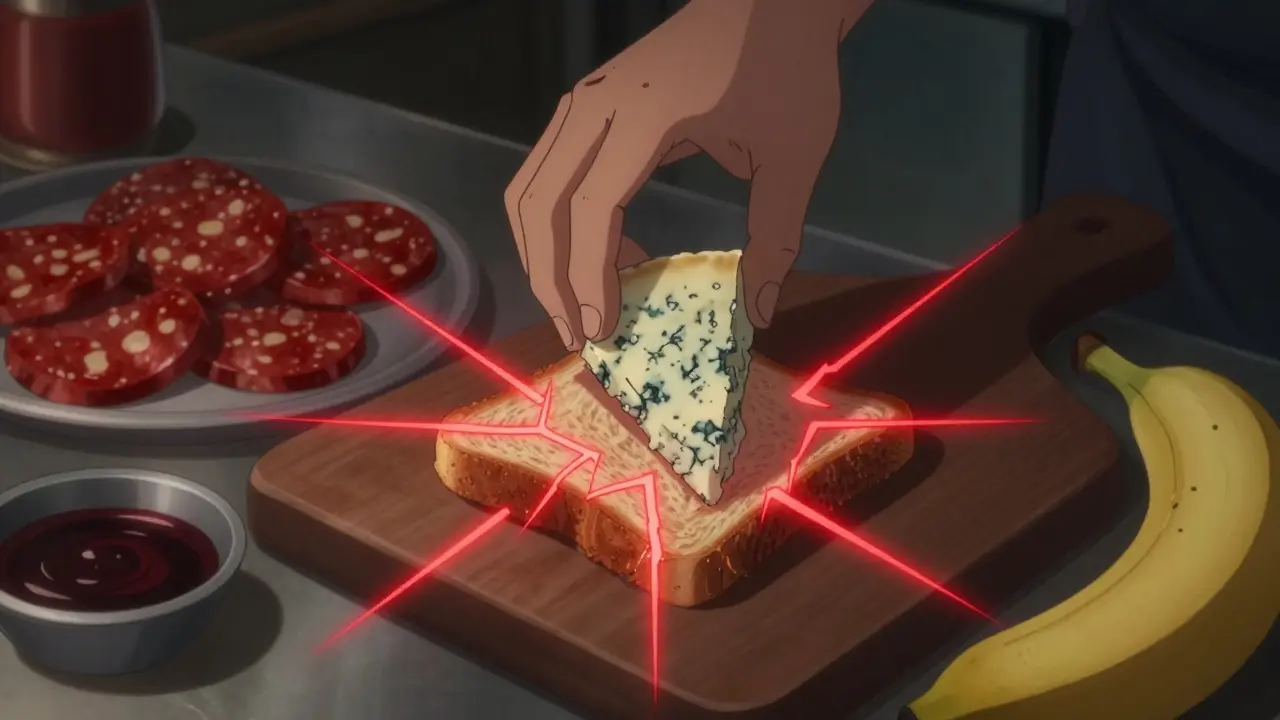
- Aged cheeses: Cheddar, Swiss, blue cheese, parmesan, brie, camembert. One slice of aged cheddar can contain 30 mg of tyramine. A 1-ounce serving of blue cheese can push 100 mg. Fresh cheeses like mozzarella, cottage cheese, or cream cheese are safe.
- Dried or cured meats: Salami, pepperoni, summer sausage, corned beef, and liverwurst. One ounce of salami can have 50 mg of tyramine. Even small portions add up fast.
- Fermented soy products: Soy sauce, miso paste, tempeh, and fermented tofu. Traditional soy sauce can have up to 500 mg per 100 ml. Modern commercial versions are lower-around 30 mg-but still risky. One tablespoon of soy sauce can deliver 15 mg.
- Overripe fruits: Bananas, avocados, and figs become dangerous when they’re past their peak. A ripe avocado has about 1 mg per 100g. An overripe one? Up to 10 mg. Eat them while they’re still firm.
- Tap beer and draft beer: These contain live yeast and can have 10-30 mg of tyramine per 100 ml. Bottled or canned beer is usually fine because pasteurization kills the yeast. Wine is generally low-risk-Chianti has about 10-20 mg per 100 ml-but drink in moderation.
- Yeast extracts: Marmite, Vegemite, and other concentrated yeast spreads. One teaspoon can contain over 20 mg.
- Leftovers stored too long: Food left in the fridge for more than 24-48 hours can develop more tyramine as proteins break down. Eat meals fresh. Don’t reheat leftovers from more than a day ago.
Commercial processing has helped reduce tyramine in many foods, but it’s not foolproof. Always check labels. If a product says "fermented," "aged," or "naturally brewed," it’s probably not safe.
Not All MAOIs Are the Same
Some MAOIs are more dangerous than others. The old-school ones-phenelzine and tranylcypromine-are irreversible and affect MAO-A everywhere: brain, gut, liver. These require strict diet rules.
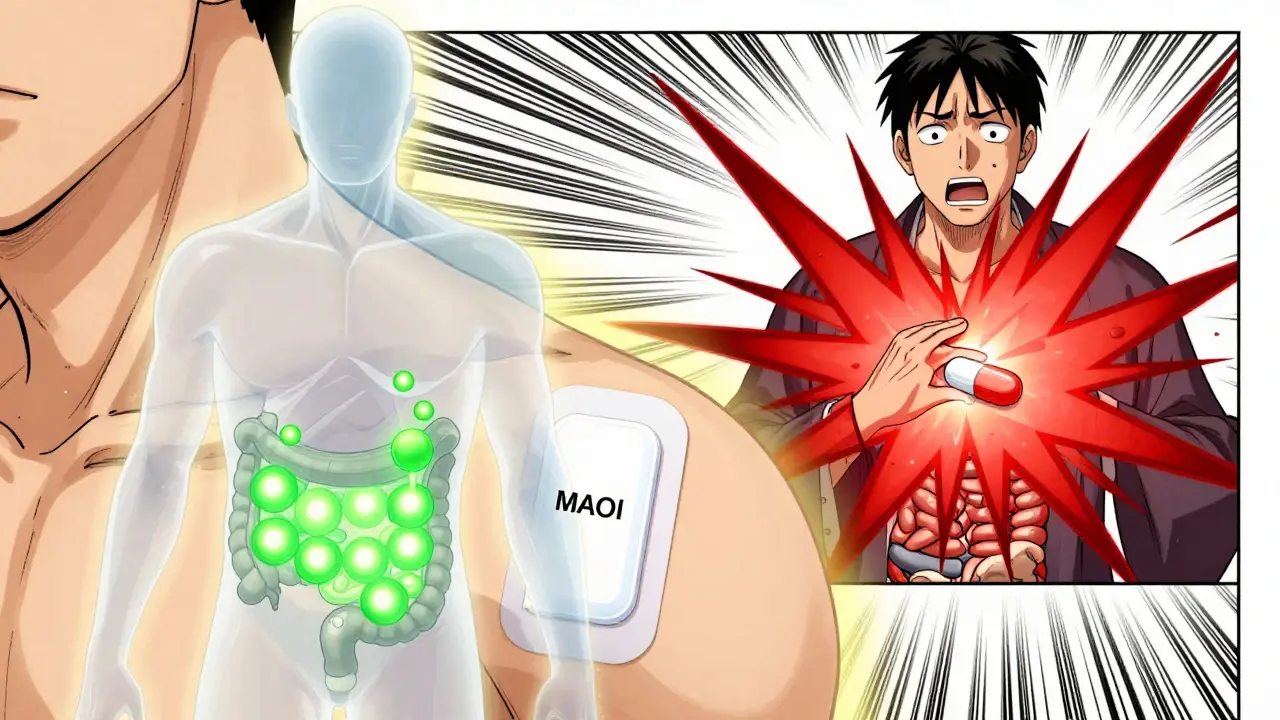
But newer forms are different. The transdermal selegiline patch (Emsam), for example, delivers the drug through your skin. At the lowest dose (6 mg/24 hours), it doesn’t significantly block MAO-A in your gut. That means you can eat most foods without risk. At higher doses (9 mg and 12 mg), dietary restrictions kick back in.
There’s also moclobemide, a reversible MAOI. It doesn’t permanently disable the enzyme. If tyramine shows up, the enzyme can still work. This drug is used in Europe and Canada but not yet approved in the U.S. Still, it shows how MAOI safety is evolving.
Bottom line: if you’re on Emsam at 6 mg, you can relax. If you’re on phenelzine? Don’t risk it.
What About Other Medications and Supplements?
It’s not just food. Many over-the-counter and prescription drugs can also trigger dangerous reactions.
- Decongestants: Pseudoephedrine (Sudafed) and phenylephrine (found in many cold meds) can cause severe high blood pressure when mixed with MAOIs.
- Pain relievers: Meperidine (Demerol) and dextromethorphan (in cough syrups) can cause serotonin syndrome-a separate but equally dangerous reaction.
- Herbal supplements: St. John’s wort, ginseng, and L-tryptophan can interact dangerously. Even some weight-loss pills contain hidden stimulants.
- Other antidepressants: Never start an SSRI like fluoxetine or sertraline within 14 days of stopping an MAOI. The risk of serotonin syndrome is real and potentially fatal.
Always tell every doctor, dentist, or pharmacist you see that you’re on an MAOI. Even a simple dental procedure might require a local anesthetic with epinephrine-which can be risky.
How Long Do You Need to Stay on the Diet?
It’s not just while you’re taking the medication. MAOIs bind permanently to enzymes. It takes 2 to 4 weeks for your body to make new ones. That means you must keep avoiding high-tyramine foods for at least two weeks after your last dose.
Some people stop their MAOI too soon because they feel better. That’s a mistake. The enzyme regeneration window is biological, not emotional. If you eat a slice of blue cheese just one week after stopping, you’re still at risk.
Keep a log. Write down your last dose. Set a calendar reminder for two weeks after. Don’t rely on memory.
Real-Life Tips for Managing the Diet
Living on an MAOI diet sounds overwhelming. But it’s manageable with a few simple habits.
- Use a tyramine reference sheet. The University of Iowa and Mayo Clinic have printable guides with exact thresholds. Keep one on your fridge.
- When in doubt, skip it. If a food looks moldy, smells off, or has been sitting for days, don’t eat it.
- Buy fresh. Shop weekly. Cook in small batches. Avoid bulk buying aged cheeses or cured meats.
- Read labels. Look for "fermented," "aged," or "naturally brewed." Avoid anything with "yeast extract" or "hydrolyzed protein."
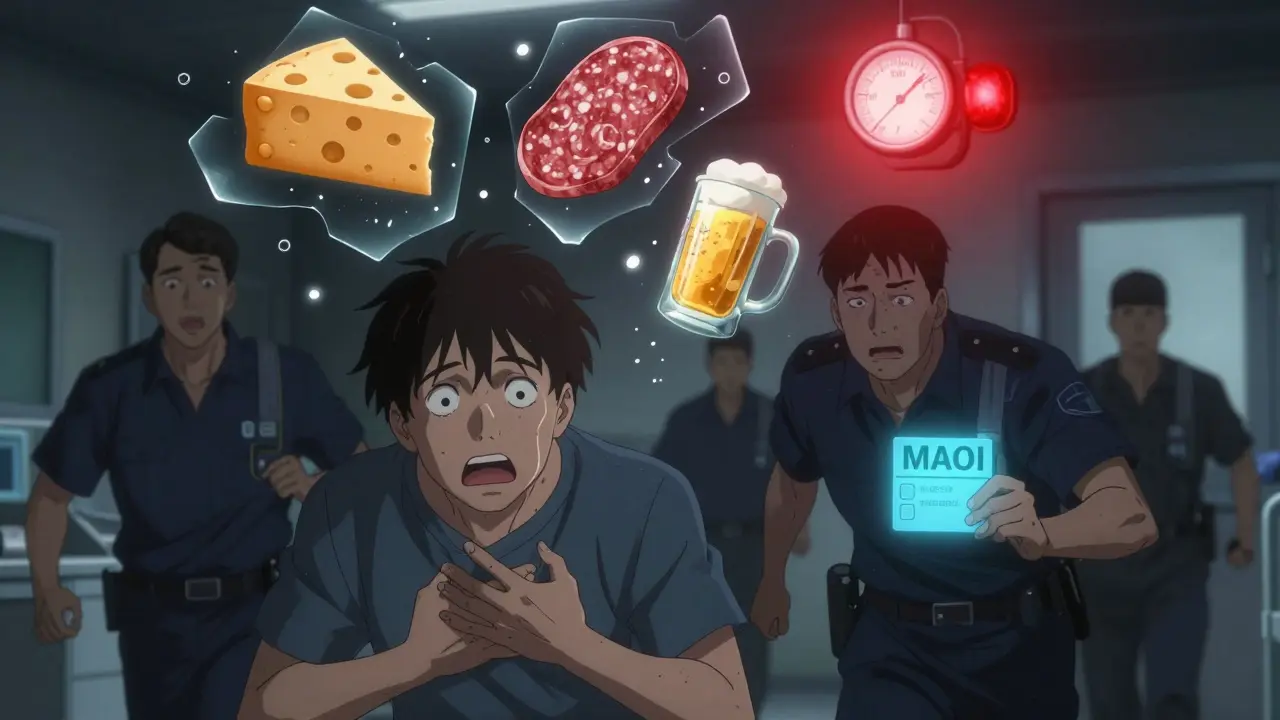
- Carry an MAOI alert card. In an emergency, paramedics need to know you’re on one. A simple card in your wallet can save your life.
Many people on MAOIs report that after a few weeks, avoiding these foods becomes second nature. They start noticing how much better they feel-not just emotionally, but physically. No headaches. No racing heart. No panic over a missed meal.
Is This Still Relevant Today?
MAOIs make up less than 2% of antidepressant prescriptions in the U.S., mostly because of these dietary restrictions. But their use is rising. Why? Because they work when nothing else does.
For people with depression that hasn’t responded to SSRIs, SNRIs, or therapy, MAOIs can be life-changing. Modern formulations like Emsam have made them safer than ever. And better education-like knowing exact tyramine thresholds (6 mg per serving) instead of vague warnings-has cut the risk of hypertensive crises to under 0.5% per year.
This isn’t about fear. It’s about awareness. You’re not being punished for eating cheese. You’re protecting your body from a hidden, silent danger.
If you’re on an MAOI, you’re not alone. Thousands manage this diet successfully every day. With the right knowledge, you can take your medication, enjoy your meals, and stay safe.
Can I drink alcohol while on MAOIs?
Moderate amounts of wine, beer, or spirits are generally safe if they’re not fermented or aged. Tap beer and draft beer contain live yeast and can have high tyramine levels-avoid those. Bottled or canned beer is usually fine in small amounts. Wine, especially red, has low tyramine (10-20 mg per 100 ml), so one glass is okay. But alcohol can lower blood pressure and mask symptoms of a hypertensive crisis. Always drink in moderation and never mix with other drugs.
Are all cheeses off-limits?
No. Only aged, fermented, or mold-ripened cheeses are risky. Cheddar, Swiss, blue cheese, parmesan, brie, and camembert contain high tyramine levels. Fresh cheeses like mozzarella, ricotta, cottage cheese, cream cheese, and goat cheese are safe. If it’s sold in a sealed package and labeled "fresh," it’s likely okay. When in doubt, check the label or ask your pharmacist.
What if I accidentally eat a high-tyramine food?
If you eat something risky, watch for symptoms: severe headache, chest pain, rapid heartbeat, nausea, sweating, blurred vision, or stiff neck. If any appear, call emergency services immediately. Don’t wait. A hypertensive crisis can develop within minutes. If you’re alone, have someone nearby who knows you’re on an MAOI. Carry your alert card. Quick action saves lives.
Can I take supplements like vitamin B6 or omega-3s?
Yes. Vitamin B6 and omega-3 fatty acids don’t interact with MAOIs. They’re safe and even helpful for brain health. But avoid supplements containing L-tryptophan, 5-HTP, St. John’s wort, or ginseng. These can trigger serotonin syndrome or raise blood pressure. Always check with your doctor before starting any new supplement.
Why do some people say they eat cheese without problems?
Some people are on safer MAOIs like the Emsam patch at low doses (6 mg/24 hours), where dietary restrictions are minimal. Others may have taken only a few bites of low-tyramine aged cheese, or their body metabolizes tyramine differently. But that doesn’t mean it’s safe for everyone. What works for one person can be life-threatening for another. Never assume your experience is universal. Stick to the guidelines.