Vitamin C & Iron Absorption Calculator
Calculate Your Iron Absorption
Result Summary
Enter your food type and quantities to see absorption results.
Optimal Vitamin C for This Food:
100-200mg
Key Recommendations:
- • Use 100-200mg vitamin C with plant-based iron sources
- • Take together for maximum benefit (within 30 minutes)
- • Avoid tea/coffee within 2 hours of iron meal
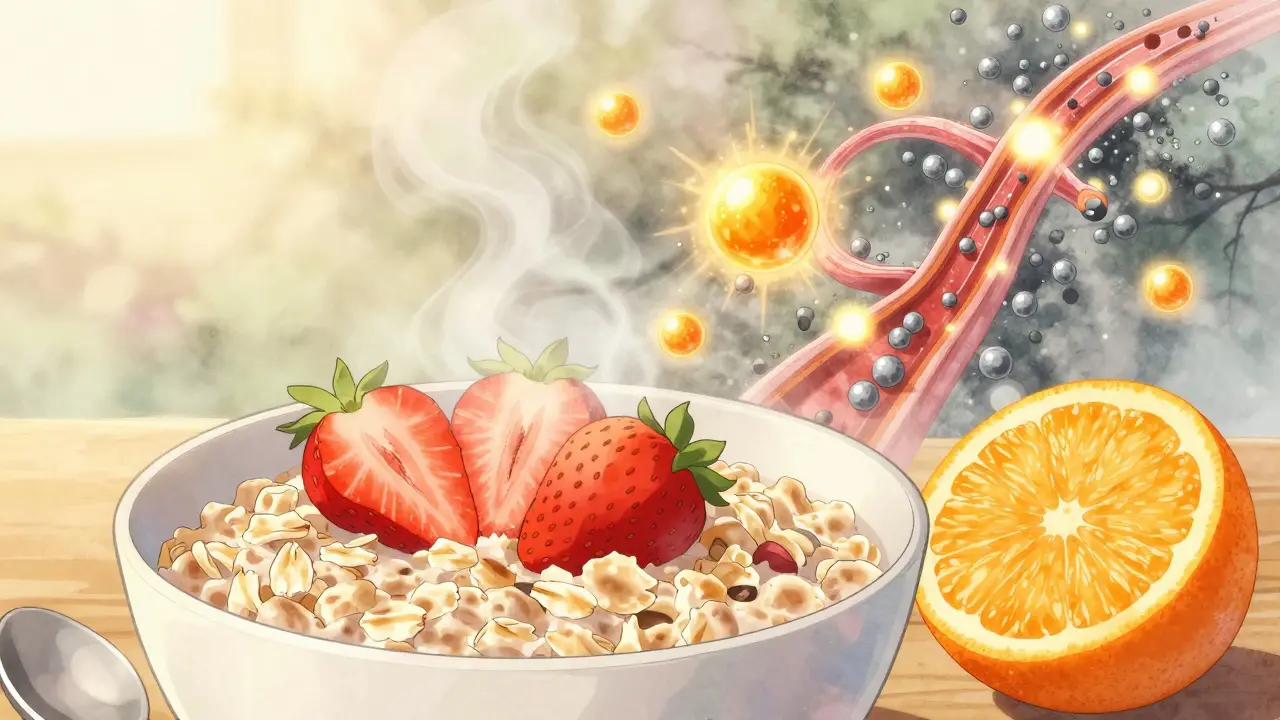
When you eat spinach, lentils, or fortified cereal, your body doesn’t absorb all the iron in those foods-usually less than 20%. But if you add a source of vitamin C to that meal, like an orange, strawberries, or red bell pepper, your body can absorb up to twice as much. This isn’t just a myth. It’s science backed by decades of research, from lab studies at Japan’s SPring-8 synchrotron to real-world results in WIC programs across the U.S.
Why Vitamin C Makes Iron Work Better
The iron in plant foods is called non-heme iron. Unlike the iron in meat (heme iron), which your body absorbs easily, non-heme iron is stubborn. It doesn’t dissolve well in your gut, so most of it just passes through. Vitamin C changes that. It acts like a tiny molecular key, reducing ferric iron (Fe³⁺) into ferrous iron (Fe²⁺), the form your body can actually pull into your bloodstream through a transporter called DMT-1. Studies using X-ray crystallography show vitamin C binds to a specific enzyme in your small intestine called Dcytb. This binding lets it donate electrons to iron, making it soluble and ready for absorption. One 2020 study found that 500mg of vitamin C boosted iron absorption from a meal by 185%. Even 100mg-a single orange or half a cup of orange juice-can double absorption. That’s why the World Health Organization recommends 100mg of vitamin C with every plant-based iron meal for people at risk of anemia.How Much Vitamin C Do You Actually Need?
You don’t need to chug a liter of orange juice. The sweet spot is 100-200mg per meal. That’s:- One medium orange
- Half a cup of raw red bell pepper
- One cup of strawberries
- Six ounces of orange juice
What Foods Boost Iron the Most?
Not all plant foods respond the same way to vitamin C. Here’s what the data shows:- Fortified cereals: Absorption increases by 67%
- Legumes (lentils, beans): Absorption jumps 123%
- Spinach: 89% improvement
- Quinoa, tofu, pumpkin seeds: 70-90% boost
What Blocks Iron Absorption (And How to Beat It)
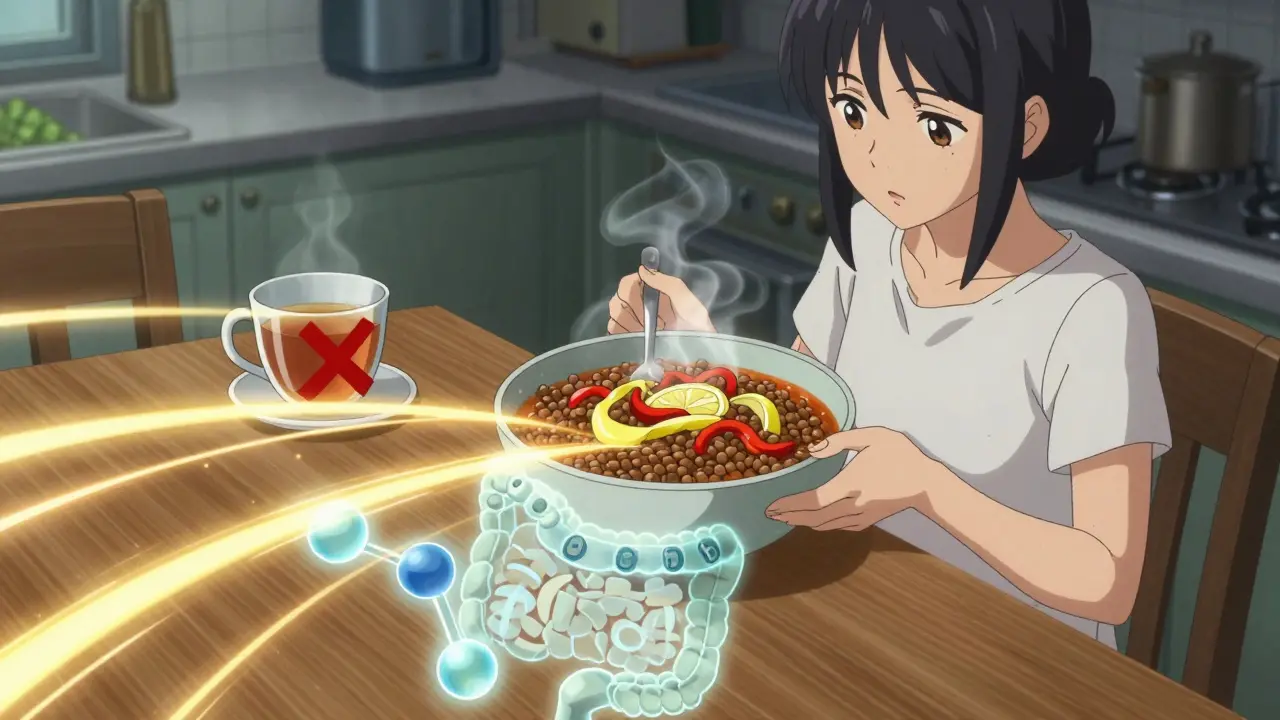
Vitamin C doesn’t just help-it fights back. Certain foods and drinks block iron absorption:- Tea and coffee: Contain polyphenols that cut absorption by 50-65%
- Calcium supplements: Reduce iron uptake by 50-60%
- Phytates (in whole grains, nuts, seeds): Can cut absorption by up to 60%
When Vitamin C Won’t Help (And When It Could Hurt)
Vitamin C doesn’t improve absorption of heme iron from meat, fish, or poultry. That’s already absorbed at 15-35% efficiency. So if you eat steak, you don’t need an orange beside it. It also doesn’t help people with certain conditions:- Hemochromatosis: Too much iron is dangerous here. Vitamin C can make it worse.
- H. pylori infection or low stomach acid: These disrupt the gut environment vitamin C needs to work.
- Severe iron deficiency: Vitamin C alone won’t fix it. You still need a supplement-but take it with vitamin C for better results.
Timing Matters More Than You Think
Taking vitamin C and iron at the same time is critical. If you take vitamin C 30 minutes before or after your iron-rich meal, absorption drops by half. That’s why many people think supplements aren’t working-they’re taking them at the wrong time. Best practice: Eat your iron food and vitamin C together. Example:- Breakfast: Fortified cereal + orange juice
- Lunch: Lentil salad with tomato, bell pepper, and lemon dressing
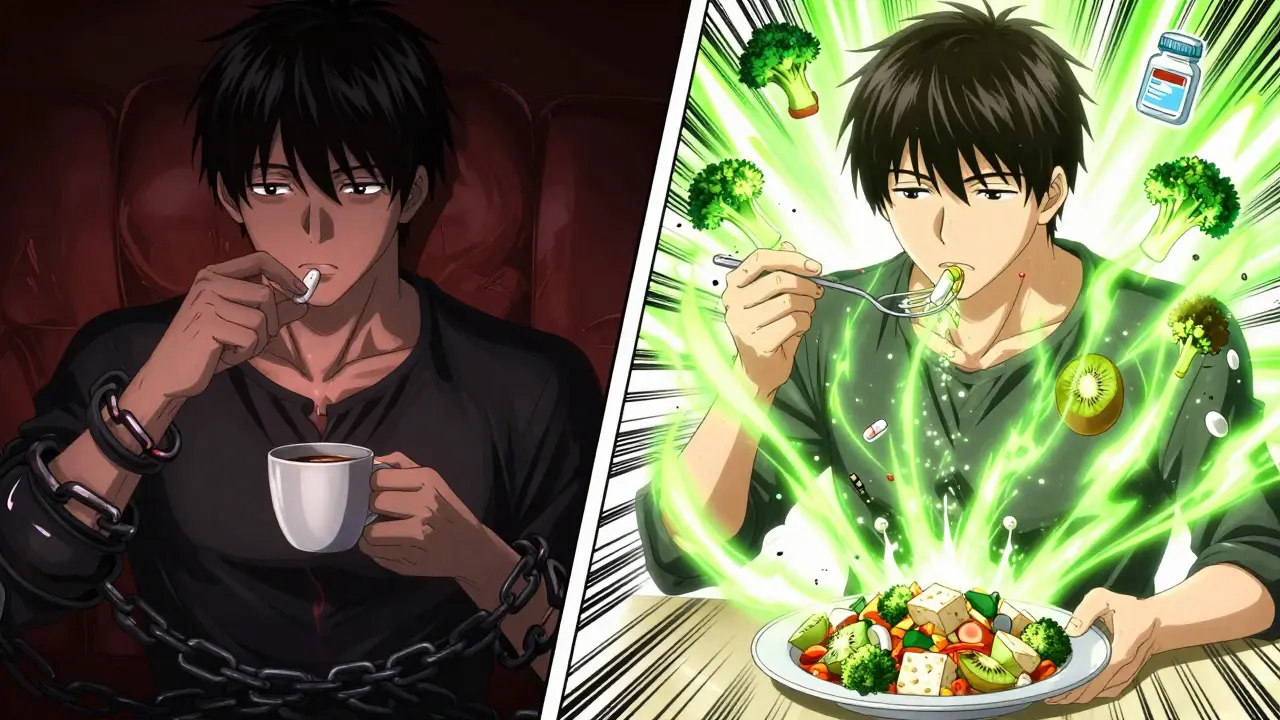
- Dinner: Tofu stir-fry with broccoli and a side of kiwi
Drug Interactions to Watch Out For
If you’re on medication, timing becomes even more important:- Levothyroxine (thyroid medication): Iron can block its absorption. Take them at least 2 hours apart.
- Calcium supplements: Don’t take them with iron. Separate by 4 hours.
- Antacids (aluminum or magnesium-based): These reduce iron absorption by 70-80%. Avoid them within 2 hours of meals with iron.
Real-Life Success Stories
A pregnant woman in Michigan had a hemoglobin level of 9.8 g/dL-significantly low. She started pairing fortified cereal with 120mg of vitamin C (a cup of strawberries and half a grapefruit) every morning. Within 8 weeks, her level hit 12.1 g/dL. No IV iron. No side effects. On Reddit, 78% of users who switched from taking iron with water to iron with orange juice said they felt more energy. Some even stopped feeling nauseous-likely because better absorption meant they could take lower doses. Amazon reviews show iron supplements with added vitamin C get 4.2 out of 5 stars. Iron-only products? Just 3.6. The top reason? “No more constipation.” Better absorption means less unabsorbed iron sitting in the gut.What’s New in 2024?
The FDA now requires all non-heme iron supplements to state on their label: “Take with vitamin C-rich foods for better absorption.” The WHO updated its global guidelines in February 2024 to say vitamin C pairing is essential for plant-based diets in low-resource areas. Researchers are testing timed-release tablets that deliver vitamin C and iron together in a way that keeps them active longer in the gut. Early results are promising. And in April 2024, MyFitnessPal added a feature that alerts users when they log iron-rich foods without vitamin C. It’s a small nudge-but for millions, it could make a big difference.Simple Rules to Remember
- Pair 100-200mg vitamin C with every plant-based iron meal.
- Wait 2 hours after coffee, tea, or antacids before eating iron-rich food.
- Separate calcium supplements by 4 hours.
- Take thyroid meds at least 2 hours apart from iron.
- Use whole foods: oranges, strawberries, peppers, kiwi-not just pills.
- Don’t take more than 500mg vitamin C at once if you have a sensitive stomach.
Iron deficiency affects 1.2 billion people worldwide. Vitamin C is one of the cheapest, safest, and most effective tools we have to fight it. Use it right, and you’re not just eating better-you’re healing better.
Can I take vitamin C and iron together as a supplement?
Yes, and many iron supplements now include vitamin C for this exact reason. Look for formulas labeled with ascorbic acid or vitamin C on the label. But whole foods are still better-they come with fiber, antioxidants, and other nutrients that help your body use the iron more efficiently. If you use a supplement, make sure it contains 100-200mg of vitamin C per dose.
Does vitamin C help with heme iron from meat?
No. Heme iron from meat, fish, and poultry is already absorbed at 15-35% efficiency, so vitamin C doesn’t significantly boost it. You don’t need to pair steak with orange juice. But if you’re eating a mixed meal with both meat and plant-based iron (like a bean and beef stew), vitamin C will still help with the plant-based portion.
Why do I feel nauseous when I take iron with vitamin C?
You might be taking too much iron, not too much vitamin C. High doses of iron (over 65mg) can cause nausea regardless of vitamin C. Try lowering your iron dose and pairing it with 100mg of vitamin C from food instead of a pill. Also, take it with food-not on an empty stomach. Many people feel better when they eat their iron-rich meal first, then have the vitamin C source right after.
Can I use lemon juice instead of orange juice?
Yes. One tablespoon of fresh lemon juice contains about 20mg of vitamin C. So if you squeeze two or three lemons over your lentils or spinach, you’ll get close to the 100-200mg target. Lemon juice is just as effective as orange juice-it’s all about the total amount of vitamin C, not the source.
Is it okay to take vitamin C at night if I took iron in the morning?
No. The effect only works when both are consumed within the same 30-minute window. Taking vitamin C hours later won’t help with the iron you ate earlier. If you take iron in the morning, have your vitamin C with it. If you take iron at night, have vitamin C with your dinner. Timing is everything.