
Imagine this: you’re standing in your kitchen at 7:00 AM, coffee brewing, ready to start the day. But then it hits you-did you take your blood pressure pills last night? You scramble to check the bottle, hoping for a missed dose rather than a double one. This moment of panic is more common than you think. In fact, nearly half of people with chronic conditions struggle to stick to their medication schedules. It’s not because they don’t care about their health; it’s because relying on willpower alone is a losing game.
The good news? You can hack your brain to make taking medicine as automatic as brushing your teeth. By using simple behavioral tricks rooted in psychology, you can transform medication from a daily chore into an effortless habit. Let’s look at how to do that without feeling overwhelmed.
Key Takeaways
- Habit stacking links medication to an existing routine, reducing the mental effort needed to remember doses.
- Simplifying your regimen by consolidating doses or using weekly pill organizers can boost adherence by up to 26%.
- Digital reminders and smartphone apps are highly effective, especially when personalized rather than generic.
- Addressing emotional barriers through techniques like motivational interviewing helps overcome intentional non-adherence.
- Combining multiple strategies (environmental cues + social support + tech) yields better results than any single trick.
Why Willpower Fails and Habits Win
We often blame ourselves for forgetting pills, but science tells a different story. Our brains are wired to conserve energy. Every time you have to consciously decide whether to take a pill, you drain a bit of your cognitive battery. Over weeks and months, this decision fatigue adds up. According to research from the National Institutes of Health, poor medication adherence leads to over 125,000 preventable deaths annually in the US alone. That’s not just a statistic; it’s a sign that our current approach to remembering meds is broken.
The solution isn’t to try harder-it’s to try smarter. Behavioral science shows that habits form when we pair a new action (taking meds) with a consistent cue (an existing routine). When you remove the need for conscious decision-making, adherence improves dramatically. A 2022 Cochrane Review found that behavioral interventions improved adherence by an average of 15.7% compared to standard care. The key is making the behavior automatic, not dependent on memory.
The Power of Habit Stacking
One of the most effective behavioral tricks is called habit stacking. This concept, popularized by author James Clear, involves linking a new habit to an existing one. Instead of setting a random alarm for "take meds," you tie it to something you already do every day without fail.
For example:
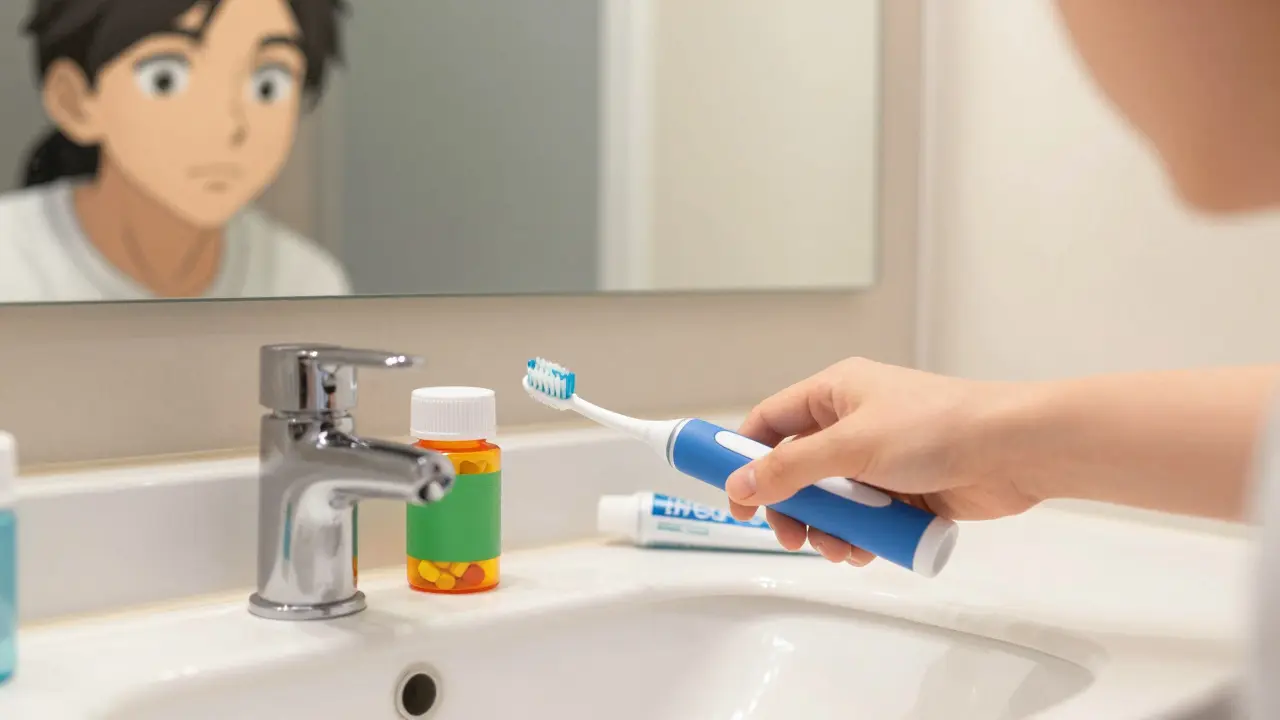
- If you brush your teeth every morning, place your pill bottle next to your toothbrush.
- If you drink coffee with breakfast, put your medication on the counter right next to the coffee maker.
- If you watch the evening news, take your night-time pills as the credits roll.
This works because the existing habit acts as a trigger. Your brain starts associating the two actions. Studies show that pairing medications with daily routines creates automaticity, significantly reducing missed doses. For elderly patients, using weekly pill organizers combined with routine pairing reduced missed doses by 27%, according to a 2021 study in the Journal of the American Geriatrics Society.
Simplify Your Regimen
Complexity is the enemy of consistency. If you’re juggling five different pills at three different times of day, no amount of willpower will save you. Simplification is one of the most powerful tools in behavioral medicine.
Talk to your doctor about consolidating doses. Can you take all your morning pills at once? Are there combination drugs available that replace two separate prescriptions? A 2011 meta-analysis published in the American Journal of Managed Care found that single-pill combinations increased adherence rates by 26% compared to multiple-pill regimens. Even small changes, like switching from twice-daily to once-daily dosing, can make a huge difference.
If consolidation isn’t possible, use external aids. Weekly pill organizers are cheap, effective, and visually satisfying. Seeing empty slots gives you immediate feedback that you’ve completed your task. Plus, they protect you from accidental double-dosing if you’re unsure whether you took your pill.
Leverage Technology Wisely
Smartphones are always within reach, making them perfect allies for medication adherence. But not all digital tools are created equal. Generic alarms get ignored after a week. Effective apps use behavioral principles like gamification, progress tracking, and personalized messaging.
A 2021 meta-analysis in JMIR mHealth and uHealth showed that smartphone-based reminders increased adherence by 28.7% among adults with chronic conditions. Look for apps that offer:
- Customizable reminder timing based on your actual schedule.
- Visual progress displays (e.g., streaks or calendars) to reinforce positive behavior.
- Integration with electronic health records for seamless tracking.
Some advanced systems even use ingestible sensors paired with mobile apps. The Proteus Discover system, for instance, improved adherence by 34.7% in heart failure patients by confirming when a pill was swallowed. While these high-tech solutions aren’t necessary for everyone, they highlight how technology can close the gap between intention and action.

Address Emotional Barriers
Not all non-adherence is forgetfulness. Sometimes, people skip doses because they feel side effects, doubt the medication’s effectiveness, or simply resent the burden of illness. These are emotional barriers, and they require different strategies.
Motivational interviewing is a counseling technique that helps patients identify their own reasons for wanting to adhere. Unlike lecturing, it encourages self-reflection. Research shows that motivational interviewing improved adherence by 22.1% across 34 randomized controlled trials. It’s particularly useful for patients who intentionally skip doses due to stigma or fear.
Another helpful approach is dialectical behavioral therapy (DBT) skills like radical acceptance. Accepting that you have a condition requiring treatment reduces resistance. Dr. Deborah S. Hasin, Professor of Epidemiology at Columbia University, notes that cognitive-behavioral therapy (CBT) can reduce non-adherence by 31% by addressing both knowledge gaps and attitudinal barriers.
Create a Support System
You don’t have to do this alone. Social support plays a crucial role in habit formation. Enlist a family member, friend, or caregiver to check in with you regularly. Some pharmacies offer auto-refill programs that improve continuity by 33.4%, according to 2022 research in Medical Care. These services ensure you never run out of medication, removing another potential barrier.
Healthcare teams also matter. Studies show that coordinated care-involving physicians, pharmacists, and nurses delivering consistent messages-achieves 68% adherence rates compared to 49% with fragmented care. Don’t hesitate to ask your provider for help designing a plan that fits your life.
| Strategy | Effectiveness | Best For | Implementation Tip |
|---|---|---|---|
| Habit Stacking | High | Forgetful individuals | Link meds to an existing daily ritual |
| Pill Organizers | Medium-High | Elderly or multi-med users | Use color-coded weekly boxes |
| Smartphone Apps | High | Tech-savvy users | Choose apps with visual progress trackers |
| Motivational Interviewing | High | Emotional/attitudinal barriers | Work with a counselor or therapist |
| Regimen Simplification | Very High | Complex medication schedules | Ask your doctor about combination drugs |
Troubleshooting Common Pitfalls
Even with the best plans, setbacks happen. Here’s how to handle common issues:
"I forgot my dose." Don’t panic. Check your medication guide for instructions on missed doses. Generally, if it’s close to the next scheduled time, skip the missed one. Never double up unless advised by your doctor. Set a backup reminder on your phone labeled "Did I take my pill?" to jog your memory.
"The app feels annoying." Customize notifications. Instead of a harsh alarm, use a gentle chime or voice message from a loved one. Make the reminder feel supportive, not punitive.
"I hate taking so many pills." Talk to your pharmacist. They may be able to suggest alternatives or adjust timing to minimize discomfort. Remember, simplification is key.
What is the most effective way to remember to take medication?
The most effective method combines habit stacking with environmental cues. Place your medication next to an object you interact with daily, like your toothbrush or coffee maker. Pair this with a smartphone reminder for redundancy. This dual approach addresses both memory lapses and routine integration.
Can behavioral tricks really improve medication adherence?
Yes. Evidence from a 2022 Cochrane Review shows that behavioral interventions improve adherence by an average of 15.7%. Techniques like habit stacking, simplification, and motivational interviewing target the root causes of non-adherence, making them far more effective than willpower alone.
Are pill organizers worth using?
Absolutely. Weekly pill organizers reduce missed doses by 27% in elderly populations. They provide visual confirmation of taken doses and prevent accidental double-dosing. For anyone managing multiple medications, they are a simple, low-cost tool with significant benefits.
How do I deal with emotional resistance to taking medication?
Emotional barriers often stem from stigma, side effects, or denial. Motivational interviewing and cognitive-behavioral therapy (CBT) can help reframe your mindset. Working with a healthcare provider to address specific concerns-such as adjusting dosage to minimize side effects-can also alleviate resistance.
Is it safe to rely on smartphone apps for medication reminders?
Yes, provided you choose reputable apps with strong privacy policies. Smartphone reminders increase adherence by 28.7% in chronic condition patients. However, apps should complement, not replace, professional medical advice. Always verify dosages and timings with your doctor or pharmacist.