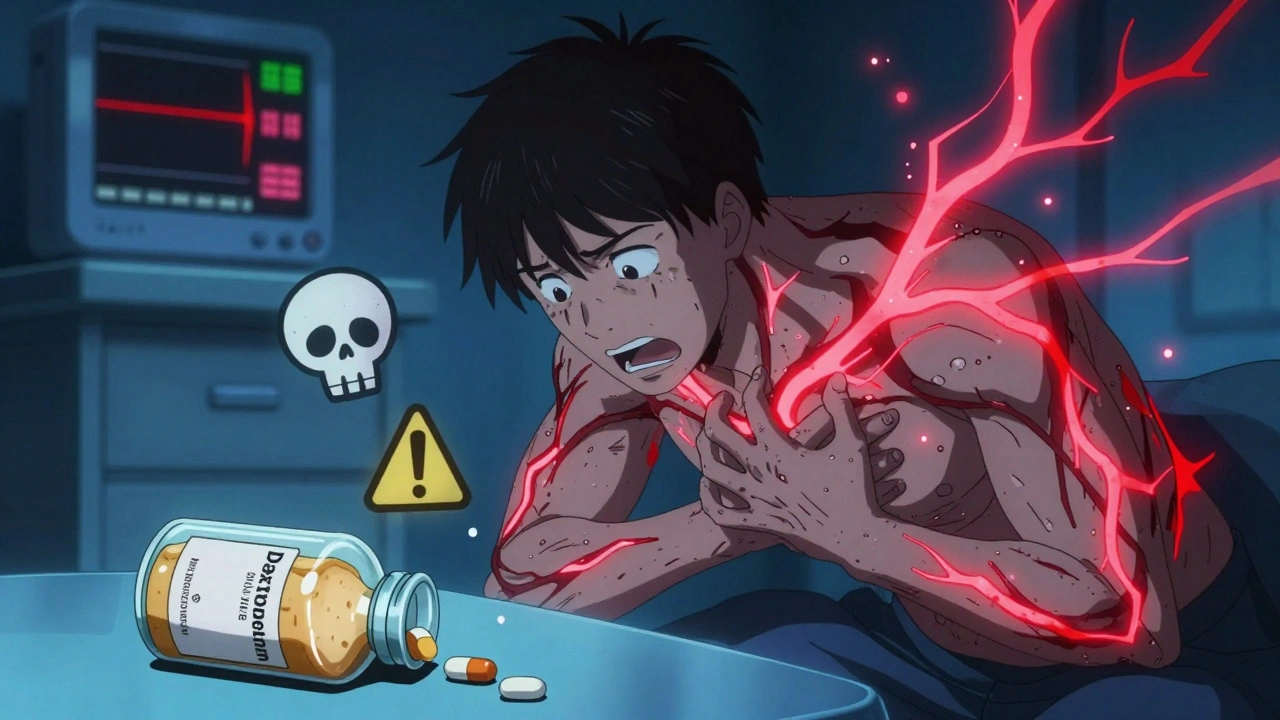
MAO inhibitors are among the most powerful antidepressants ever developed - but they’re also some of the most dangerous if used incorrectly. These drugs work by blocking an enzyme that breaks down key brain chemicals like serotonin, norepinephrine, and dopamine. That’s why they help people with treatment-resistant depression. But the same mechanism that makes them effective can turn deadly when mixed with common medicines, supplements, or even foods you might not think twice about.
How MAO Inhibitors Work - and Why They’re Risky
MAO inhibitors, or MAOIs, were first discovered in the 1950s. Originally developed as tuberculosis drugs, doctors noticed patients became unusually cheerful. That led to their use for depression. Today, only a small fraction of people take them - less than 1% of all antidepressant prescriptions in the U.S. - because newer drugs like SSRIs are safer and easier to manage.
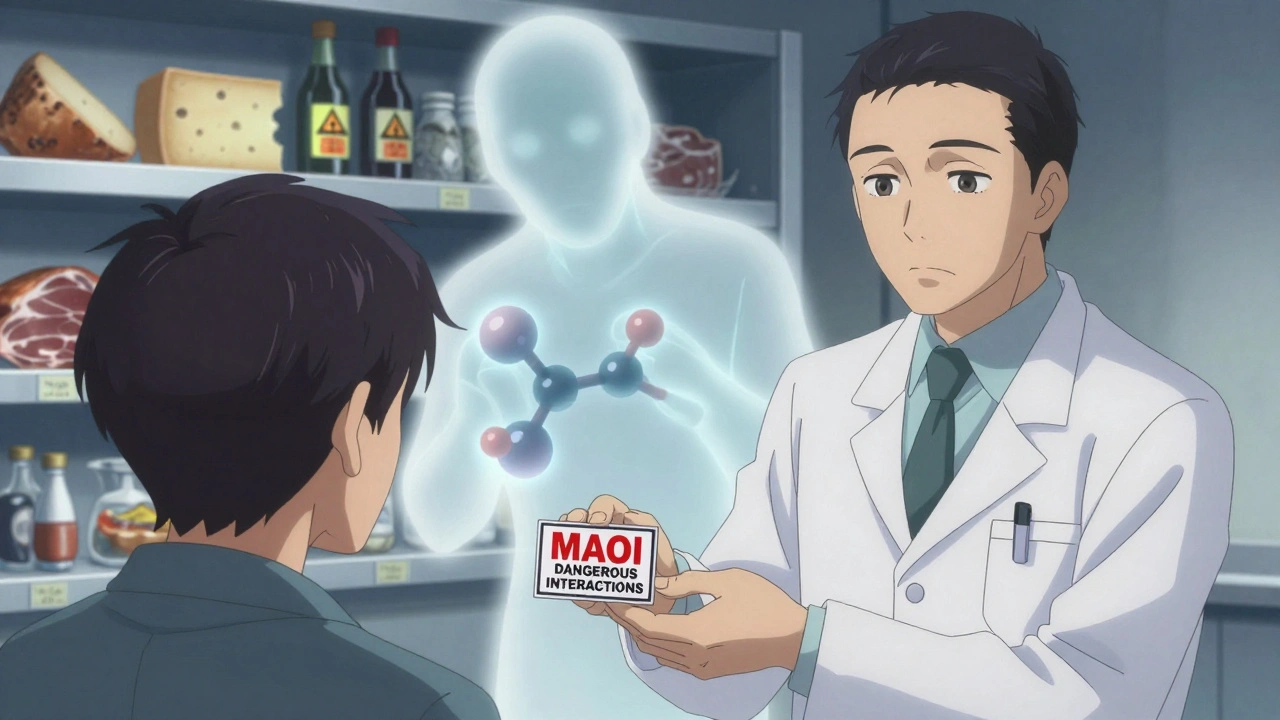
But for some, MAOIs still work when nothing else does. Drugs like phenelzine (Nardil), tranylcypromine (Parnate), and the transdermal patch selegiline (Emsam) are still prescribed by psychiatrists for severe cases. The problem? They don’t just affect brain chemistry. They affect your whole body’s ability to process certain substances. Even small amounts of the wrong medication or food can trigger a medical emergency.
The Two Deadly Risks: Hypertensive Crisis and Serotonin Syndrome
There are two main dangers with MAOIs - and both can kill you within hours.
Hypertensive crisis happens when tyramine, a compound found in aged or fermented foods, builds up in your blood. Normally, your body breaks down tyramine using the MAO enzyme. But if you’re on an MAOI, that enzyme is blocked. Tyramine then causes a massive surge in norepinephrine, which spikes your blood pressure. Systolic pressure can jump 50 to 100 mmHg in under two hours. Cases have been documented where patients hit 250 mmHg - enough to cause stroke, heart attack, or brain hemorrhage.
Serotonin syndrome is even more unpredictable. It occurs when too much serotonin accumulates in your nervous system. This can happen if you take an MAOI with another drug that boosts serotonin - like an SSRI, a cough medicine, or even a herbal supplement. Symptoms start mild: shivering, diarrhea, restlessness. But they can spiral into high fever (over 106°F), muscle rigidity, seizures, organ failure, and death. Mortality rates for severe cases range from 2% to 12%.
Medications You Must Avoid
Many common prescriptions and over-the-counter drugs are deadly when combined with MAOIs. Here’s what you absolutely cannot take:
- SSRIs (citalopram, fluoxetine, sertraline) - even one dose can trigger serotonin syndrome. You need at least a 14-day gap between stopping an SSRI and starting an MAOI. For fluoxetine, wait five weeks because it lingers in your system.
- Dextromethorphan - found in more than 100 cough and cold products. A single 30mg dose in someone on phenelzine has caused hospitalization with hyperthermia and agitation. The FDA has warned about this since 1992.
- Tramadol, meperidine, methadone - these opioids are off-limits. A 32-year-old man was intubated after taking tramadol while on selegiline. He survived, but many don’t.
- Linezolid - an antibiotic used for resistant infections. It also inhibits MAO. A fatal case in 2008 involved a woman taking linezolid and phenelzine together. Since then, it’s been strictly contraindicated.
- Phenylephrine - a decongestant in many cold medicines. It directly raises blood pressure. Combine that with an MAOI, and you risk a hypertensive crisis within minutes.
- Ephedra - banned by the FDA in 2004, but still found in some weight-loss or energy supplements. It’s a potent stimulant that can cause sudden death with MAOIs.
Supplements That Can Kill You
Just because something is sold as a “natural remedy” doesn’t mean it’s safe. Many supplements interact dangerously with MAOIs.
- St. John’s Wort - a popular herbal antidepressant. It increases serotonin. Combined with MAOIs, it’s caused multiple cases of serotonin syndrome, including one where a patient’s temperature hit 40.5°C (105°F).
- 5-HTP - a supplement that converts directly into serotonin. A 2018 case report showed a patient on phenelzine developed life-threatening serotonin syndrome after taking just 200mg of 5-HTP.
- SAMe - S-adenosylmethionine. Used for depression and joint pain. It affects serotonin pathways. No safe dose exists when combined with MAOIs.
- Ginseng - even though evidence is mixed, there are documented cases of mania and tremors in MAOI users who took ginseng. Some researchers suspect caffeine contamination, but the risk isn’t worth it.
Food Restrictions: What You Can’t Eat
MAOIs don’t just interact with pills - they react with food. Tyramine builds up in aged, fermented, or spoiled products. Even small amounts can be dangerous.
- Aged cheeses - cheddar, parmesan, blue cheese, and others aged over six months. One ounce can contain 15mg of tyramine - enough to spike blood pressure.
- Cured meats - pepperoni, salami, sausage. These are preserved with fermentation and contain high levels of tyramine.
- Fermented soy - soy sauce, miso, tempeh. A single tablespoon of soy sauce can have up to 30mg of tyramine.
- Draft and tap beer - unlike bottled beer, these contain live yeast and higher tyramine levels (8-20mg per 12oz).
- Red wine - especially Chianti. A 5oz glass has about 8mg of tyramine.
The threshold for triggering a crisis is as low as 10-25mg of tyramine. That’s less than you’d think. A slice of aged cheese or a few tablespoons of soy sauce could be enough.
There’s one exception: the selegiline patch (Emsam) at the lowest dose (6mg/24hr). Studies show this form doesn’t require dietary restrictions. But higher doses still do. Always confirm your dose with your doctor.
What Happens When You Mix Them?
Real-world cases show how quickly things go wrong.
A 65-year-old woman took linezolid for a lung infection while still on phenelzine. Within 24 hours, she developed fever, confusion, and high blood pressure. She died in the ICU.
A 26-year-old woman took one 30mg dose of dextromethorphan for a cold while on phenelzine. She became violently agitated, her temperature rose to 41°C, and she needed emergency sedation and cooling.
A man on selegiline took tramadol for back pain. He went into serotonin syndrome within hours - his muscles locked, his body overheated, and he needed a breathing tube.
These aren’t rare. Between 1998 and 2003, 19 people died from MAOI interactions. Today, electronic health records block many of these combinations - but not all. And many patients don’t know.
Why Doctors Still Prescribe Them
Despite the risks, MAOIs aren’t obsolete. They work when other antidepressants fail. People with atypical depression - who feel heavy, oversleep, overeat, and are hypersensitive to rejection - often respond better to MAOIs than SSRIs.
Most prescriptions now come from psychiatrists, not primary care doctors. In fact, 92% of MAOI prescriptions are written by specialists. That’s because managing these drugs requires expertise. Primary care physicians still frequently miss the risks - a 2021 study found 34% didn’t know dextromethorphan was dangerous with MAOIs.
Today, over two-thirds of MAOI prescriptions are for the selegiline patch. It’s safer, easier to use, and has fewer dietary restrictions at low doses. But even then, patients must be warned.
What You Should Do If You’re on an MAOI
If you’re taking one of these drugs, here’s what you need to do:
- Carry a wallet card listing every medication you’re on and all contraindicated drugs. Over 78% of psychiatrists now provide these.
- Check every new medication - even over-the-counter ones. Ask your pharmacist: “Is this safe with MAOIs?”
- Don’t assume supplements are safe. St. John’s Wort, 5-HTP, and SAMe are not harmless.
- Know your food limits. Avoid aged cheeses, cured meats, soy sauce, and draft beer. If you’re unsure, don’t eat it.
- Wash out properly. If switching to another antidepressant, wait at least 14 days. For fluoxetine, wait five weeks.
There’s no room for guesswork. One wrong pill, one bite of blue cheese, one herbal tea - and you could end up in the hospital.
Is There a Safer Future?
Researchers have been trying for decades to make better MAOIs. Moclobemide, a reversible MAO-A inhibitor, is used in Europe and has far fewer food and drug interactions. But it was never approved in the U.S. because it wasn’t strong enough in clinical trials.
The FDA still requires warning labels on all dextromethorphan products: “Do not use if taking an MAOI.” But a 2020 government review found 12% of these products didn’t even include the warning.
For now, MAOIs remain a last-resort option - powerful, effective, and unforgiving. If you’re prescribed one, treat it like a loaded gun. Know the risks. Avoid the triggers. And never take anything new without checking with your doctor.
Can I take Tylenol with MAO inhibitors?
Yes, acetaminophen (Tylenol) is generally safe with MAO inhibitors. It doesn’t affect serotonin or norepinephrine levels. However, avoid combination products that include decongestants like phenylephrine or cough suppressants like dextromethorphan. Always check the full ingredient list.
Is coffee safe with MAOIs?
Moderate coffee consumption is usually fine. Caffeine doesn’t directly interact with MAOIs. But if you’re already experiencing anxiety, insomnia, or high blood pressure from the MAOI, extra caffeine can make it worse. Limit yourself to 1-2 cups per day and monitor how you feel.
What happens if I accidentally eat cheese while on an MAOI?
If you eat a small amount of aged cheese, monitor yourself closely for the next hour. Watch for symptoms like severe headache, stiff neck, chest pain, rapid heartbeat, or blurred vision. These could signal a hypertensive crisis. If any appear, go to the emergency room immediately. Don’t wait. This is a medical emergency.
Can I take melatonin with MAOIs?
Melatonin is generally considered safe with MAOIs. It doesn’t raise serotonin or norepinephrine levels. However, since research is limited, start with a low dose (0.5-1mg) and monitor for sleep disturbances or unusual drowsiness. Always tell your doctor you’re taking it.
Are there any MAOIs that don’t require diet restrictions?
Yes - the selegiline transdermal patch (Emsam) at the 6mg/24hr dose does not require dietary tyramine restrictions. Studies show this low dose doesn’t inhibit gut MAO, so tyramine is still broken down normally. But higher doses (9mg and 12mg) still require the same restrictions as oral MAOIs. Always confirm your dose with your prescriber.
How long do I need to wait after stopping an MAOI before taking an SSRI?
Wait at least 14 days after stopping any irreversible MAOI before starting an SSRI. For fluoxetine (Prozac), wait five weeks because it and its active metabolite stay in your system much longer. Rushing this can cause serotonin syndrome. Never switch medications without your doctor’s supervision.