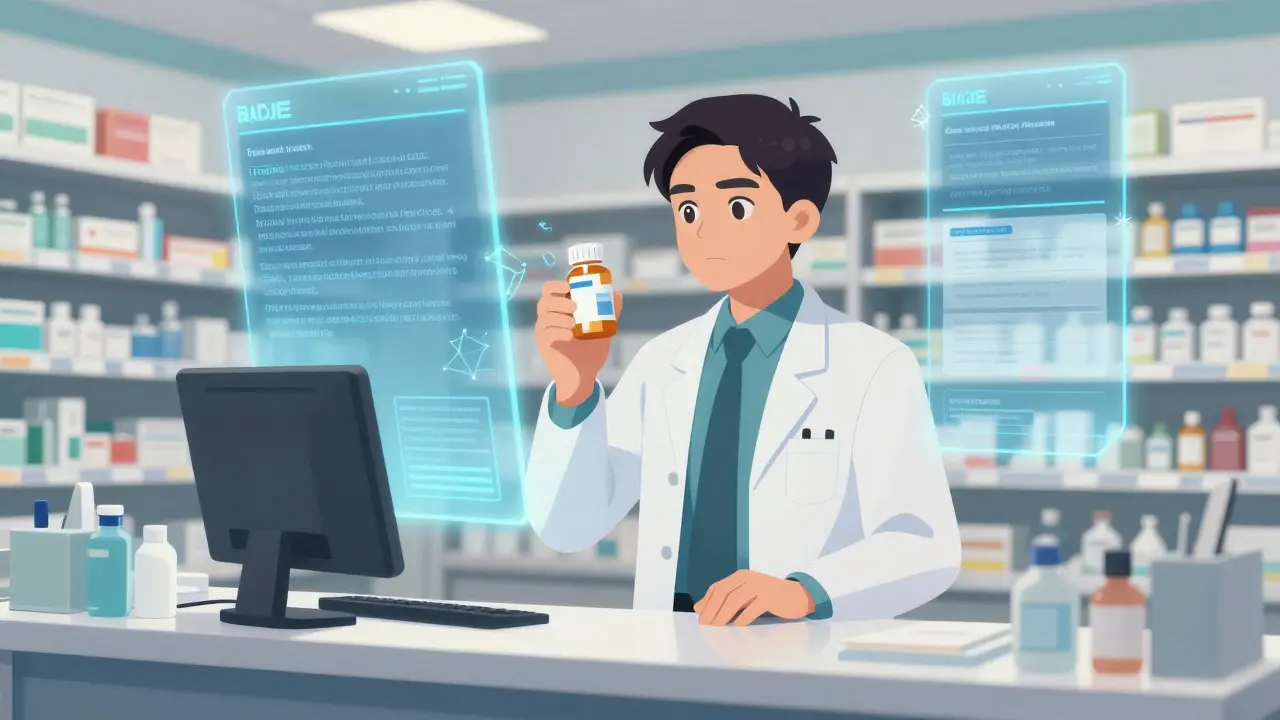
Imagine a patient walks into your pharmacy with a prescription for a brand-name heart medication. You check the system, see an approved generic alternative, and prepare to fill it. But before you hand that bottle over, you are navigating a complex web of federal science, state-specific statutes, and ethical duties. One wrong move-substituting without consent in a strict state or ignoring a narrow therapeutic index warning-can lead to disciplinary action or, worse, patient harm.
Generic drugs account for more than 90% of prescriptions dispensed in the United States, yet they represent only about 17% of total drug spending. This massive shift relies on pharmacists acting as the final gatekeepers. Your role is not just to swap pills; it is to ensure that every substitution meets rigorous legal standards for safety and efficacy. Understanding these obligations is critical for protecting your license and your patients.
The Science Behind the Swap: Bioequivalence and the FDA
Before diving into state laws, we must understand the federal foundation. The Food and Drug Administration (FDA) requires that any generic medicine perform identically to its brand-name counterpart in the body. This isn't a guess; it's a scientific mandate established by the Drug Price Competition and Patent Term Restoration Act of 1984, commonly known as the Hatch-Waxman Act.
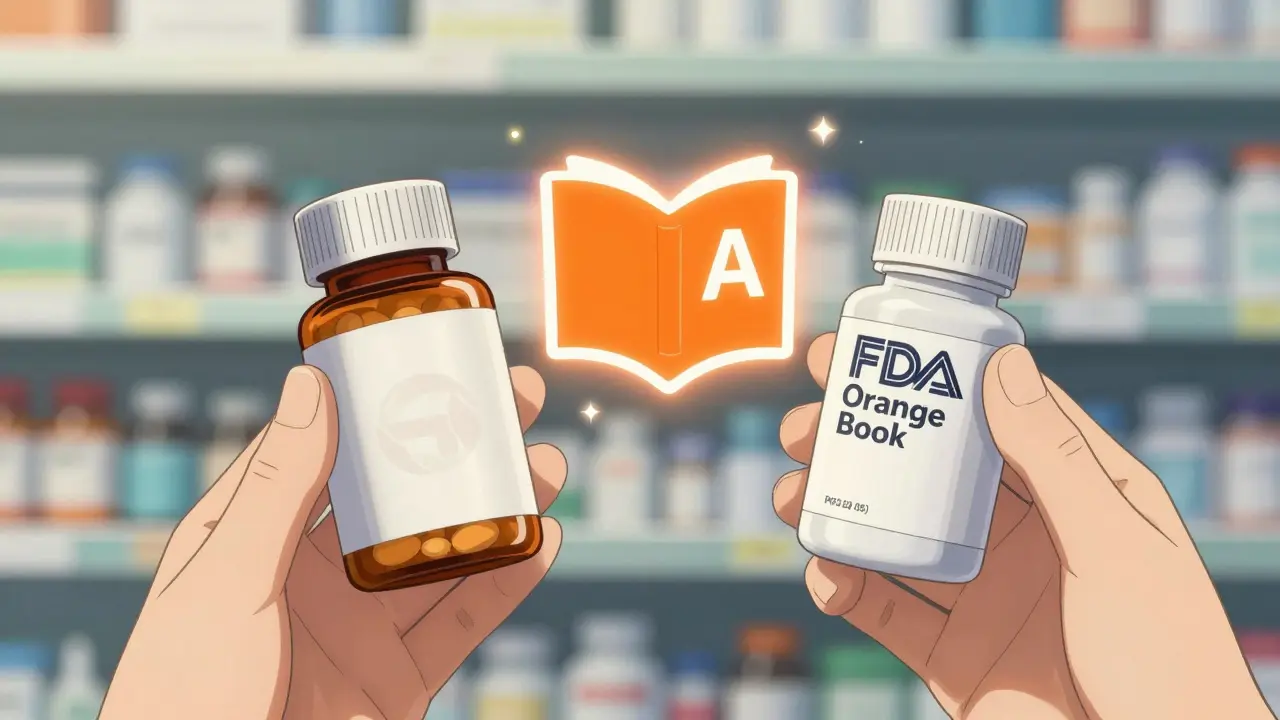
To qualify for substitution, a generic drug must go through the Abbreviated New Drug Application (ANDA) process. This means proving identical active ingredients, dosage forms, routes of administration, strength, labeling, and bioequivalence. The gold standard for this data is the FDA Orange Book, first published in 1980. As a pharmacist, you rely on this resource daily. It lists reference listed drugs and their therapeutically equivalent generic products. Look for the "A" rating. An A-rated product has been demonstrated to be bioequivalent to the reference drug. If a product lacks this rating, substitution is generally off the table unless specific exceptions apply.
However, bioequivalence doesn't mean identical in every single way. Inactive ingredients like dyes or binders can differ. For most patients, this is irrelevant. But for those with severe allergies or sensitivities, these differences matter. Your legal obligation includes reviewing the label and counseling the patient if there is a risk of reaction to an inactive ingredient.
Mandatory vs. Permissive Substitution: Know Your State
Federal law sets the baseline, but state laws dictate the daily practice. There is no one-size-fits-all rule. Jurisdictions fall into two main categories regarding substitution authority:
- Mandatory Substitution States: In 24 jurisdictions, pharmacists must dispense a generic version of a multi-source drug unless the prescriber specifically prohibits it. These states aim to maximize cost savings. Examples include California and New York. Here, failing to substitute when a generic is available can actually be a violation of state law, unless you document a valid clinical reason otherwise.
- Permissive Substitution States: In the remaining 26 jurisdictions, pharmacists have the discretion to substitute but are not legally required to do so. This allows for greater professional judgment. You might choose not to substitute if you suspect a patient will struggle with adherence due to pill appearance changes, or if you have concerns about a specific manufacturer's quality control history.
This distinction changes how you approach the counter. In a mandatory state, your default workflow assumes substitution. In a permissive state, you actively evaluate each case. The NIH study PMC6172151 highlights that mandatory states see higher generic utilization rates (around 92.7%) compared to permissive states (87.3%). While the gap seems small, it represents millions of prescriptions and significant economic impact.
Consent Protocols: Presumed vs. Explicit
Even if you are allowed to substitute, you must handle patient consent correctly. Laws here vary sharply between presumed consent and explicit consent states.
In presumed consent states (18 jurisdictions), you may substitute without explicitly notifying the patient, provided the substitution is documented in the pharmacy records. The assumption is that the patient accepts the standard of care, which includes generics. However, best practice still encourages brief communication to build trust.
In explicit consent states (32 jurisdictions), you must obtain affirmative permission from the patient before substituting. This often involves a signed form or a clear verbal agreement recorded in the patient profile. Failing to get this consent can lead to complaints and board investigations. Patient reviews on platforms like RateMDs show that 63% of negative feedback regarding generics cites "lack of notification" as the primary issue. Even if you are in a presumed consent state, proactively explaining the switch can prevent these conflicts.
| Framework Type | Number of States (Approx.) | Pharmacist Action Required | Patient Consent Needed? |
|---|---|---|---|
| Mandatory Substitution | 24 | Must substitute unless prohibited | Varies (Presumed or Explicit) |
| Permissive Substitution | 26 | May substitute at discretion | Varies (Presumed or Explicit) |
| Presumed Consent | 18 | Document substitution | No explicit permission needed |
| Explicit Consent | 32 | Obtain signature/verbal agreement | Yes, affirmative permission |
High-Risk Drugs: Narrow Therapeutic Index and Restrictions
Not all generics are created equal in the eyes of the law. Certain drug classes carry higher risks, leading to specific restrictions. The most notable group is Narrow Therapeutic Index (NTI) drugs. These medications have a very small margin between effective dose and toxic dose. Small variations in bioavailability can lead to treatment failure or toxicity.
Common NTI drugs include warfarin (an anticoagulant), levothyroxine (for thyroid conditions), phenytoin (an anticonvulsant), and lithium. Many states maintain "negative formularies" that prohibit substitution for these drugs unless specific criteria are met. For example, Tennessee uniquely restricts substitution for antiepileptic drugs used to treat epilepsy, regardless of FDA rating. Hawaii prohibits generic substitution for antiepileptics without both practitioner and patient consent.
Dr. Bruce Mueller’s 2019 study in JAMA Internal Medicine found a 12.7% higher rate of adverse events when substituting certain cardiac glycosides, despite FDA bioequivalence ratings. This data underscores why your professional judgment is vital. If a patient is stable on a specific brand of levothyroxine, switching them to a different generic manufacturer-even within the same state-can disrupt their TSH levels. Your obligation is to monitor these transitions closely and document any clinical rationale for maintaining a brand or specific generic source.
The "Medically Necessary" Designation
What happens when a doctor insists on the brand name? In many states, prescribers can block substitution by marking the prescription as "Dispense as Written" (DAW) or "Medically Necessary." However, the rules for doing this vary.
In Florida, for instance, the prescriber must write "MEDICALLY NECESSARY" in their own handwriting on written prescriptions or perform an "overt act" during electronic transmission. Simply checking a box in an e-prescribing system might not suffice. If you ignore this designation and substitute anyway, you risk violating state law. Conversely, if you honor a DAW request that wasn't properly executed according to state statute, you might face pushback from insurance payers who refuse to cover the higher brand-name cost.
You must know your state's specific requirements for DAW codes. Common reasons for DAW include:
- Patient allergy to an inactive ingredient in the generic.
- Clinical instability with previous generic trials.
- Physician preference based on specific formulation needs (e.g., liquid vs. tablet).
Always verify the DAW code origin. Was it entered by the prescriber, or did it auto-populate because the patient declined the generic? Documenting this distinction protects you from liability.

Documentation and Record-Keeping
If it isn't documented, it didn't happen. Documentation errors account for 68% of substitution-related disciplinary actions by state boards of pharmacy. Your records must clearly show:
- Substitution Decision: Whether you substituted or dispensed as written.
- Consent Status: Proof of patient consent if required by state law.
- Product Identifier: The National Drug Code (NDC) of the dispensed product.
- Rationale for Non-Substitution: If you chose not to substitute in a mandatory state, you need a valid clinical reason recorded.
Electronic health record (EHR) systems help automate some of this, but they are not infallible. Ensure your software is configured to flag NTI drugs and prompt for consent where necessary. Regular audits of your dispensing logs can catch configuration errors before they become compliance issues.
Biosimilars: The Next Frontier
While small-molecule generics have been around for decades, Biosimilars are changing the landscape. These are biological products highly similar to an existing FDA-approved reference product. Between 2017 and 2022, 32 states introduced biosimilar substitution laws. Unlike traditional generics, biosimilars are more complex and require interchangeability designations by the FDA. Pharmacists must stay updated on these evolving rules, as the substitution protocols for biologics differ significantly from those for small molecules.
Can I substitute a generic if the prescriber writes "Dispense as Written"?
Generally, no. If a prescriber marks a prescription as "Dispense as Written" (DAW) or "Brand Medically Necessary," you are legally obligated to dispense the brand-name drug, provided the notation meets your state's specific legal requirements (e.g., handwritten note or specific electronic code). Ignoring this can lead to legal liability and reimbursement denial.
Do I need patient consent to substitute a generic drug?
It depends on your state. In "explicit consent" states (32 jurisdictions), you must obtain affirmative permission from the patient. In "presumed consent" states (18 jurisdictions), you do not need explicit permission but must document the substitution. Always check your local board of pharmacy regulations.
What is the FDA Orange Book and why does it matter?
The FDA Orange Book is a database that lists approved drug products and their patent and exclusivity information. It provides therapeutic equivalence codes. Pharmacists use it to identify which generic drugs are considered therapeutically equivalent (A-rated) to brand-name drugs, ensuring safe and legal substitution.
Are there drugs that cannot be substituted with generics?
Yes. Many states restrict substitution for Narrow Therapeutic Index (NTI) drugs such as warfarin, levothyroxine, and certain anticonvulsants. Some states have outright bans or require additional consent for these high-risk medications due to the potential for serious adverse effects from minor bioavailability differences.
What is the difference between mandatory and permissive substitution states?
In mandatory substitution states, pharmacists are legally required to dispense a generic if one is available and not prohibited. In permissive states, pharmacists have the discretion to substitute but are not forced to do so, allowing for more professional judgment in individual cases.