
Select Today's Greens
Click the foods you've eaten today. Adjust the quantity to match your portion.
| Food Item | Portion | Vitamin K (µg) |
|---|---|---|
| Cooked Spinach | 1 Cup | 889 |
| Cooked Collard Greens | 1 Cup | 772 |
| Cooked Kale | 1 Cup | 547 |
| Cooked Broccoli | 1 Cup | 220 |
| Asparagus | 1/2 Cup | 70 |
| Green Beans | 1/2 Cup | 14 |
Consistency Tip:
The goal is not zero, but stability. Aim for a consistent range (e.g., 90-120 µg) every day to help your doctor maintain your target INR.
Managing your diet while on a blood thinner can feel like a balancing act. If you've been prescribed Warfarin is an anticoagulant medication used to prevent and treat blood clots by inhibiting vitamin K-dependent clotting factors., you probably heard that you need to watch your intake of greens. But here is the surprising part: you don't actually have to stop eating spinach or kale. In fact, trying to completely avoid these foods often makes your levels more unstable.
The real secret isn't restriction-it's consistency. When you keep your intake of vitamin K steady, your doctor can adjust your dose to match your lifestyle. If you suddenly eat a massive kale salad one day and nothing green for a week, your blood's ability to clot shifts, which can put you at risk for either a clot or excessive bleeding.
Why Vitamin K Affects Your Medication
To understand why this happens, we have to look at how the drug works. Vitamin K is a fat-soluble vitamin that acts as a cofactor for the gamma-carboxylation of clotting factors II, VII, IX, and X. Essentially, vitamin K helps your blood clot. Warfarin's job is to block this process. When you eat a lot of vitamin K, you're effectively giving your body the tools to bypass the medication, which lowers your Vitamin K foods on Warfarin efficacy.
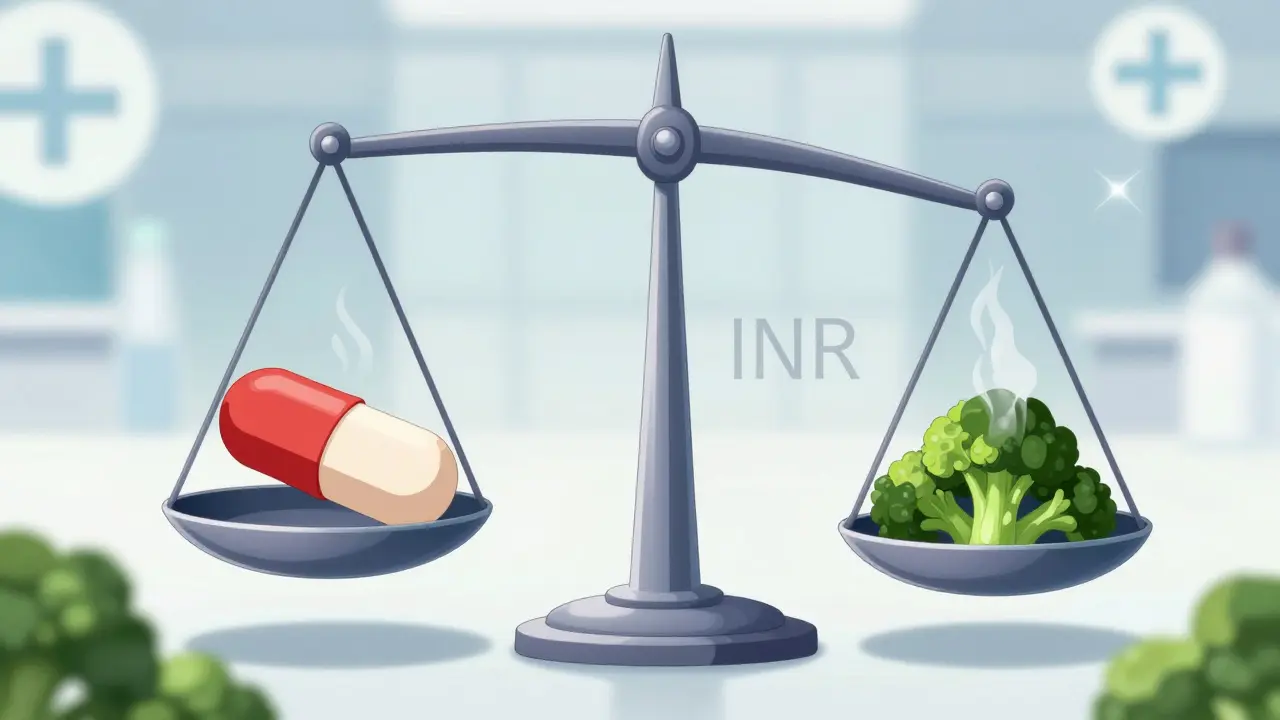
Doctors measure this balance using the International Normalized Ratio (INR), which is a standardized measurement of how long it takes your blood to clot. For most people, the target INR is between 2.0 and 3.0. If you eat too much vitamin K, your INR drops (blood clots faster); if you eat too little, your INR rises (blood clots slower, increasing bleeding risk).
Consistency Over Restriction
For years, patients were told to avoid green vegetables entirely. Modern medicine has moved away from this. The American Heart Association now emphasizes consistency over restriction. Why? Because if you eat a tiny amount of vitamin K every day, your body reaches a steady state. If you avoid it completely, then a single accidental serving of broccoli can cause a dramatic swing in your INR.
Research shows that patients who maintain a consistent intake of about 90-120 µg of vitamin K daily achieve a much higher "time in therapeutic range" (TTR)-meaning their INR stays in the safe zone more often. In some cases, stability jumps from around 60% to over 75% just by swapping "avoidance" for "consistency."
Identifying High and Low Vitamin K Foods
Not all greens are created equal. Some pack a massive punch of vitamin K, while others are relatively neutral. Understanding the difference helps you plan your meals without guessing.
| Food Item | Portion | Vitamin K Value | Impact Level |
|---|---|---|---|
| Cooked Spinach | 1 Cup | 889 µg | Very High |
| Cooked Collard Greens | 1 Cup | 772 µg | Very High |
| Cooked Kale | 1 Cup | 547 µg | High |
| Cooked Broccoli | 1 Cup | 220 µg | Moderate |
| Asparagus | 1/2 Cup | 70 µg | Low |
| Green Beans | 1/2 Cup | 14 µg | Very Low |
Notice the massive jump between raw and cooked spinach. Cooking can concentrate the nutrients, meaning a cooked serving has significantly more vitamin K than a raw one. This is why measuring your portions is so important.
Practical Strategies for Daily Balance
How do you actually do this in real life? You don't need to carry a calculator to the grocery store, but a few simple habits can make a huge difference.
- The "Same Portion" Rule: Instead of eating a giant salad on Monday and no greens on Tuesday, try eating the same amount of the same vegetable every day. For example, half a cup of steamed broccoli with dinner every night.
- Use a Food Diary: Keeping a simple log of what you eat helps you and your doctor spot patterns. If your INR dips, you can look back and see, "Oh, I had three servings of kale this week," and adjust accordingly.
- Be Wary of "Hidden" Vitamin K: Some nutritional supplements and meal replacement shakes contain added vitamin K. Check the labels on products like Ensure or Boost, as they can add 50-55 µg per serving.
- Plan Your Week: Use meal prep to ensure your vegetable intake doesn't fluctuate wildly between weekdays and weekends.
Pitfalls and Warning Signs
There are a few scenarios where your diet isn't the only thing at play. For instance, if you are taking antibiotics, these can kill the bacteria in your gut that produce vitamin K2. This can actually cause your INR to rise, making your blood thinner more potent and increasing your risk of bleeding.
Similarly, if you get a bad flu or stomach bug and stop eating normally, the sudden drop in vitamin K intake can spike your INR. If you've been sick for a few days and can't keep food down, it's a good idea to call your clinic for an extra INR check.
Finally, avoid the temptation to take "natural" supplements to fix your levels. Unless specifically directed by your doctor, avoid vitamin K supplements, as they can counteract your medication too aggressively.
Comparing Warfarin to Newer Alternatives
You might wonder why some people use DOACs (Direct Oral Anticoagulants) like Apixaban or Rivaroxaban instead. The biggest advantage of DOACs is that they don't interact with vitamin K. You can eat as much spinach as you want without worrying about your blood levels.
However, Warfarin is still widely used for several reasons. First, it is incredibly cost-effective-often costing just a few dollars a month compared to the thousands of dollars a year for newer drugs. Second, it has a well-established reversal protocol, meaning if you have an emergency and need to stop the blood-thinning effect quickly, doctors have very effective ways to do it.
Can I eat spinach if I'm on Warfarin?
Yes, you can. The key is to eat it consistently. If you enjoy spinach, decide on a portion size (e.g., one cup of baby spinach) and try to stick to that amount daily or weekly. Avoid suddenly increasing your intake from zero to several servings a day.
What happens if I eat too many greens in one day?
A sudden surge in vitamin K can lower your INR, which means your blood clots more quickly. This potentially increases the risk of a blood clot. If you've had a significant dietary slip, it's best to contact your healthcare provider to see if an extra INR test is needed.
Do I need to avoid all green vegetables?
No. Current medical guidelines from organizations like the American Heart Association suggest consistency over restriction. Avoiding all greens can actually lead to more unstable INR levels because your body becomes hypersensitive to small amounts of vitamin K.
Does cooking vegetables change their effect on Warfarin?
Yes. Cooking can concentrate the vitamin K in some vegetables. For example, cooked spinach generally has a much higher concentration of vitamin K per cup than raw spinach. Always be consistent with how you prepare your vegetables.
How long does it take for a dietary change to affect my INR?
Usually, a significant change in vitamin K intake will manifest in your INR levels within 3 to 5 days. This is why consistency is so vital-small daily changes can lead to a noticeable difference by the end of the week.