Ever wonder why you can buy the exact same pill for half the price, even though it has the same name, color, and shape as the brand-name drug you’ve been taking? That’s an authorized generic-and it’s not a scam. It’s the real thing, made in the same factory, with the same ingredients, and the same quality controls. But here’s the twist: it costs less. A lot less.
What Exactly Is an Authorized Generic?
An authorized generic isn’t a copycat. It’s not a generic made by a different company after the patent expires. It’s the brand-name drug itself, produced by the original manufacturer and sold under a different label-usually at a lower price. Think of it like a car company selling the exact same model under a budget brand name. Same engine. Same assembly line. Just a different sticker.
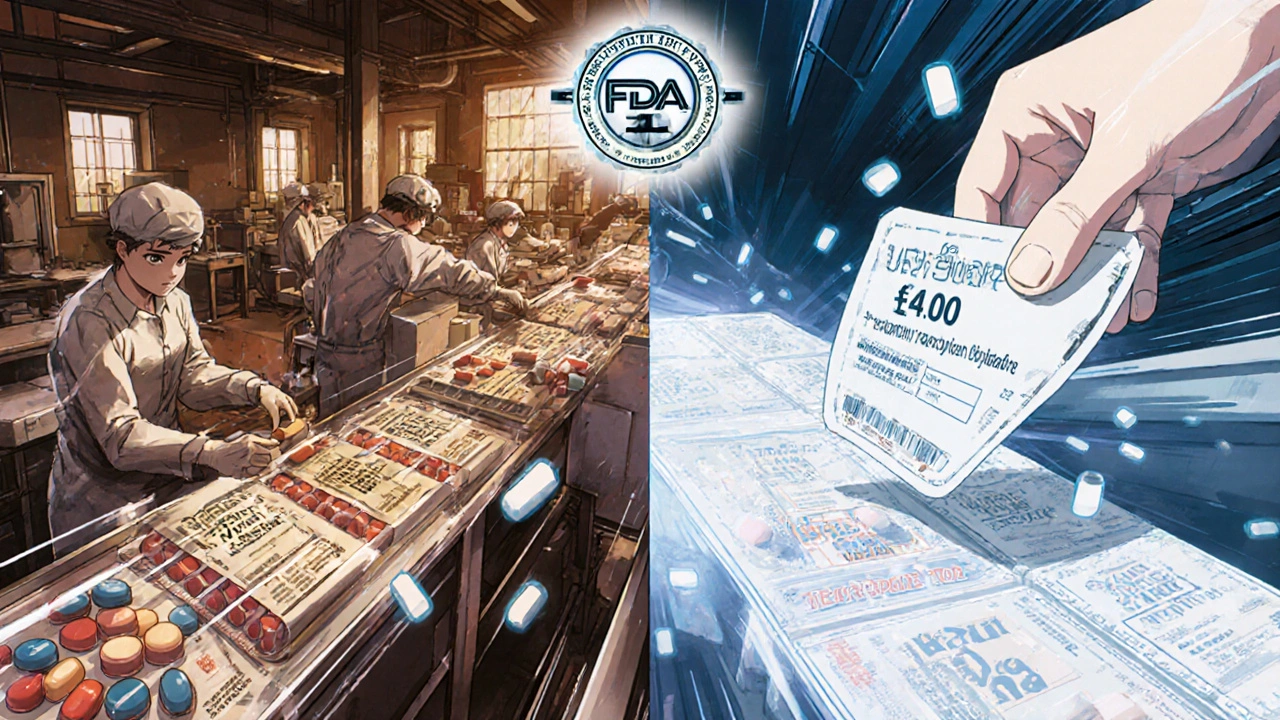
The U.S. Food and Drug Administration (FDA) requires that authorized generics meet the same standards as the brand-name version. Same active ingredient. Same dosage. Same release timing. Same quality testing. The only differences? The packaging and the price tag. No extra approval process is needed because the manufacturer uses the original New Drug Application (NDA) that got the brand drug approved in the first place.
Why Do They Cost Less?
The answer isn’t about lower production costs-it’s about competition.
When a brand-name drug’s patent runs out, the first company to file for a generic version gets 180 days of exclusive rights to sell it. That’s a huge advantage. Without competition, that first generic maker can charge close to the brand price. But here’s where authorized generics change the game.
Many brand manufacturers launch their own authorized generic right when the exclusivity period starts. Suddenly, instead of one generic competitor, there are two: the brand’s own version and the first generic. That forces both to drop prices fast. The FTC found that when an authorized generic enters the market at the same time as a traditional generic, retail prices drop by 4% to 8% compared to when no authorized generic is present. Wholesale prices? They fall even more-by 7% to 14%.
It’s not just about price. It’s about speed. Without an authorized generic, the first generic might hold prices high for months. With one, everyone scrambles to undercut each other from day one. That’s why drugs like EpiPen and Harvoni saw their prices cut in half within weeks of authorized generics hitting the market.
How Do Authorized Generics Compare to Regular Generics?
Regular generics are made by different companies after the patent expires. They go through a separate approval process called an Abbreviated New Drug Application (ANDA). That takes time. And even after approval, they’re often priced 80% lower than the brand.
Authorized generics skip that step. They’re already FDA-approved. They’re already being made. All the manufacturer has to do is slap a new label on it and sell it under a different name. That’s why they’re available immediately when the patent expires.
Here’s the key difference: authorized generics are identical to the brand. Regular generics are required to be bioequivalent-but not always identical in appearance or inactive ingredients. For most people, that doesn’t matter. But for patients with allergies or sensitivities, the exact match of an authorized generic can make a big difference.
Who Benefits the Most?
Patients do. But not always directly.
When an authorized generic is placed on the same formulary tier as the brand-name drug, insurers and pharmacy benefit managers (PBMs) may not push it as a cheaper option. That means you might still pay the brand price-even though the authorized generic is sitting right next to it on the shelf.
But when PBMs put the authorized generic on the lowest-cost tier (like Tier 1), patients save. A 2022 analysis of 1.2 million Medicare Part D patients showed that when authorized generics were prioritized, medication adherence jumped by 8.2 percentage points. People didn’t skip doses because they couldn’t afford it.
Pharmacies benefit too. Authorized generics often have higher profit margins than brand-name drugs, and they’re easier to stock because they’re the same product-no new training, no new inventory systems.
And manufacturers? They keep market share. Instead of losing 100% of their customers to a single generic competitor, they keep a slice of the pie-while still lowering prices to stay competitive.
Why Don’t All Drugs Have Authorized Generics?
Not every brand manufacturer uses this strategy. Some see it as self-sabotage. Others use it as a bargaining chip in patent lawsuits. The FTC has raised concerns that in some cases, brand companies pay generic makers to delay entry-and then launch their own authorized generic to block others.
That’s why some experts, like Dr. Peter Bach of Memorial Sloan Kettering, warn that authorized generics can sometimes be used to delay true competition. If a brand company launches its own generic right away, it can discourage other companies from investing in their own versions. That’s legal-but it’s not always good for consumers in the long run.
Still, the data shows that when authorized generics are used as a competitive tool-not a delay tactic-they work. Drugs like simvastatin, metformin, and atorvastatin saw faster price drops and higher generic adoption when authorized generics were introduced early.
What You Can Do to Save Money
Ask your pharmacist: “Is there an authorized generic for this drug?”
It’s not always obvious. The label might say “Generic” or “Authorized Generic.” Sometimes it’s just listed under a different name. If you’re paying full price for a brand drug, ask if the same pill is available cheaper under a different label.
Check your insurance formulary. Some plans list authorized generics as preferred options. Others don’t. If yours doesn’t, ask for a tier change or a prior authorization.
And don’t assume all generics are equal. If your doctor says “generic” and you get a pill that looks different from what you’ve taken before, ask if it’s an authorized version. You might be paying more than you need to.
The Bigger Picture
Authorized generics aren’t a magic fix for high drug prices. But they’re one of the few tools that actually work fast. They bring real competition to the market the moment a patent expires. They force prices down before patients even have a chance to get used to paying too much.
They’re also growing. In 2023, the FDA listed 137 active authorized generics across categories like heart disease, diabetes, depression, and asthma. That’s up from just a handful in the early 2000s. And with the Inflation Reduction Act capping out-of-pocket costs at $2,000 a year for Medicare users, the pressure to offer lower-cost options is only increasing.
For patients, the message is simple: you don’t have to pay brand prices just because it’s the same pill. The system is complex. The labels are confusing. But the savings are real. And you’re entitled to them.
Are authorized generics as safe as brand-name drugs?
Yes. Authorized generics are made in the same facility, with the same ingredients, and under the same quality controls as the brand-name drug. The FDA requires them to be identical in safety, strength, dosage, and performance. The only difference is the label and the price.
Why isn’t my insurance covering the authorized generic at a lower price?
Pharmacy Benefit Managers (PBMs) decide which drugs go on which formulary tiers. Sometimes, authorized generics are placed on the same tier as the brand, so you pay the same. Ask your pharmacist to check if the authorized version is available on a lower tier. If not, request a tier exception or switch to the generic version.
How do I know if my prescription is an authorized generic?
Look at the label. Authorized generics often say “Authorized Generic” or list the brand name followed by “AG.” If you’re unsure, ask your pharmacist. You can also check the FDA’s quarterly list of authorized generics online-though you’ll need to match the active ingredient and manufacturer.
Do authorized generics work as well as the brand?
They work exactly the same. Since they’re made from the same formula, in the same factory, with the same testing, there’s no difference in effectiveness. Many patients switch without noticing any change in how the medication works.
Can I switch from a brand to an authorized generic without talking to my doctor?
In most cases, yes. Authorized generics are considered therapeutically equivalent to the brand. Your pharmacist can substitute them unless your prescription says “Dispense as Written” or “Do Not Substitute.” Always confirm with your pharmacist before switching.