
When someone is diagnosed with early-stage lung or breast cancer, one of the first big decisions they face isn’t about surgery-it’s about when to start treatment. Should they begin chemotherapy or immunotherapy before the operation, or wait until after? This isn’t just a medical detail-it’s a turning point in how their body responds to treatment, how long they might stay in recovery, and even how likely they are to survive long-term.
What’s the Difference Between Neoadjuvant and Adjuvant Therapy?
Think of it this way: Neoadjuvant therapy is treatment given before surgery. Its goal? Shrink the tumor, kill hidden cancer cells early, and see how the cancer reacts to drugs while it’s still in the body. If the tumor shrinks dramatically, doctors know the treatment is working. If it doesn’t? They can adjust before the operation even happens.
Adjuvant therapy is treatment given after surgery. It’s meant to mop up any cancer cells left behind that you can’t see-even if the surgeon removed everything visible. It’s like a safety net, but you’re not sure if you actually needed it until months later.
The big difference? Neoadjuvant gives you real-time feedback. Adjuvant is a guess based on what’s known about the cancer type. And that feedback? It matters more than you think.
Why Timing Changes Everything
In the 1980s, doctors thought it didn’t matter whether you gave chemo before or after surgery for breast cancer. The survival rates were about the same. But then came the breakthroughs.
Take non-small cell lung cancer (NSCLC). Before 2022, most patients got chemo after surgery. But the CheckMate 816 trial changed everything. Patients who got nivolumab (an immunotherapy drug) plus chemo before surgery had a 24% chance of having no living cancer cells left in the removed tissue-what doctors call a pathologic complete response (pCR). The group that got chemo alone? Only 2.2%.
And it wasn’t just about tissue samples. Those who got neoadjuvant therapy lived longer without the cancer coming back. Their median event-free survival jumped from 20.8 months to 31.6 months. That’s a 37% improvement.
For triple-negative breast cancer (TNBC), the numbers are just as telling. About 30-40% of patients achieve pCR with neoadjuvant chemo. And those patients? They’re far more likely to survive 10 years than those who don’t. The treatment itself becomes a test-and the result tells doctors what to do next.
Is More Better? The Adjuvant After Neoadjuvant Debate
Here’s where things get messy. Once you finish neoadjuvant therapy and surgery, should you keep going with more drugs? Many oncologists assumed yes. But new data says maybe not.
A January 2024 study in JAMA Network Open looked at over 3,200 patients across four major trials. It found no real survival advantage to giving immunotherapy both before and after surgery-compared to just giving it before. But the side effects? They jumped. About 30% of patients who got double therapy had serious reactions like lung inflammation, fatigue, or immune-related damage. Only 18% of those who stopped after surgery had those issues.
Dr. Mark Awad from Dana-Farber put it bluntly: “The neoadjuvant-only approach may represent the optimal sequencing strategy.” In other words, if the cancer responds well before surgery, you might not need more drugs after. That means fewer hospital visits, less risk of long-term damage, and better quality of life.
But not everyone agrees. Dr. David Harpole from Duke warns that some cancers sneak back even after a great response. He believes a second round of treatment might still be needed for high-risk patients. The truth? It depends on the tumor.

Who Gets Which Treatment-and Why
Not every cancer patient gets the same option. Your type, stage, and biology decide your path.
- For NSCLC: If your tumor is stage IB (over 4 cm) to IIIA, NCCN Guidelines now recommend neoadjuvant chemoimmunotherapy. You’ll get 3-4 cycles over 9-12 weeks, then surgery 3-6 weeks later.
- For breast cancer: Neoadjuvant therapy is standard for HER2-positive and triple-negative subtypes. For hormone-positive cancers, it’s used if the tumor is large or you want to avoid a mastectomy.
- PD-L1 testing: If your tumor has PD-L1 expression of 1% or higher, immunotherapy is more likely to work. This test is now routine before treatment starts.
Surprisingly, adoption varies wildly. In academic hospitals, 92% have formal neoadjuvant pathways. In community clinics? Only 58%. That gap means some patients still get outdated care simply because their hospital hasn’t caught up.
The Hidden Cost: Anxiety, Delays, and Missed Opportunities
Neoadjuvant therapy isn’t perfect. It takes time. You’re waiting 8-12 weeks before surgery. During that time, some patients worry their cancer is growing. A 2023 survey found 62% of NSCLC patients on neoadjuvant therapy felt anxious about progression. That’s higher than the 38% who got adjuvant treatment.
And there’s another risk: if the tumor doesn’t respond, you’ve delayed surgery. About 5-10% of NSCLC patients see their cancer spread during neoadjuvant treatment. That’s why doctors monitor closely with CT scans and sometimes PET scans.
On the flip side, patients who chose adjuvant therapy often regret not knowing how their tumor reacted. One patient on the BreastCancer.org forum said: “I chose adjuvant because I didn’t want to wait. Later, I learned I might have benefited from seeing if chemo worked first.”
What’s Next? The Future of Treatment Sequencing
The next wave of changes is already here.
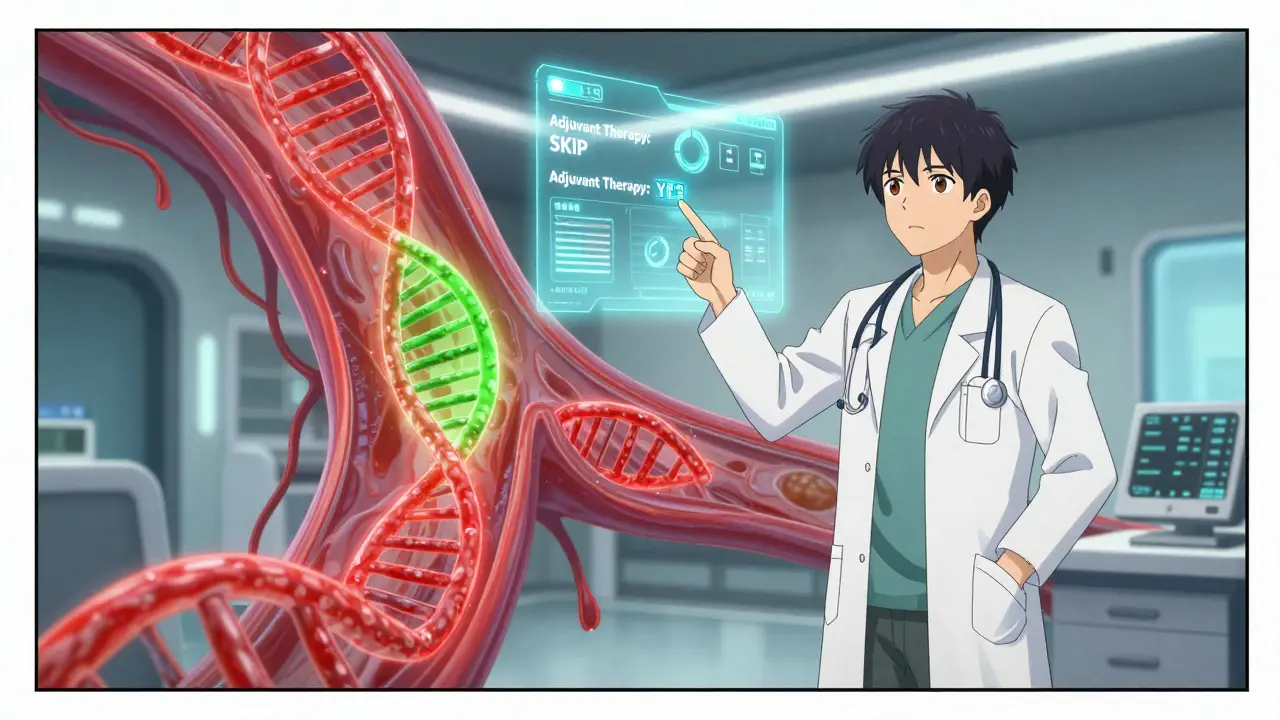
Researchers are now using circulating tumor DNA (ctDNA) to guide decisions. After surgery, if ctDNA is still floating in the blood, it means cancer cells are hiding. Those patients get adjuvant therapy. If it’s gone? They skip it. Twelve trials are testing this right now.
Trials like KEYNOTE-867 and NeoADAURA are testing whether targeted drugs like osimertinib (for EGFR-mutant lung cancer) should be used before surgery. Early results suggest they could be even more effective than chemo.
By 2030, experts predict optimized sequencing could push 5-year survival for early-stage lung cancer from 60-68% to 75-80%. That’s 15,000-20,000 lives saved each year in the U.S. alone.
Key Takeaways
- Neoadjuvant therapy lets you see how your cancer responds before surgery-giving you personalized insight.
- Adjuvant therapy is still useful, but adding it after neoadjuvant doesn’t always improve survival-and it increases side effects.
- Predicting response matters: Patients who achieve pathologic complete response (pCR) have far better long-term outcomes.
- PD-L1 testing and ctDNA monitoring are now critical tools for deciding who needs what treatment.
- Access to neoadjuvant therapy is growing, but many community hospitals still lag behind academic centers.
There’s no one-size-fits-all answer. But the trend is clear: the future of cancer treatment isn’t just about what drugs you take-it’s about when, why, and how you know they’re working.