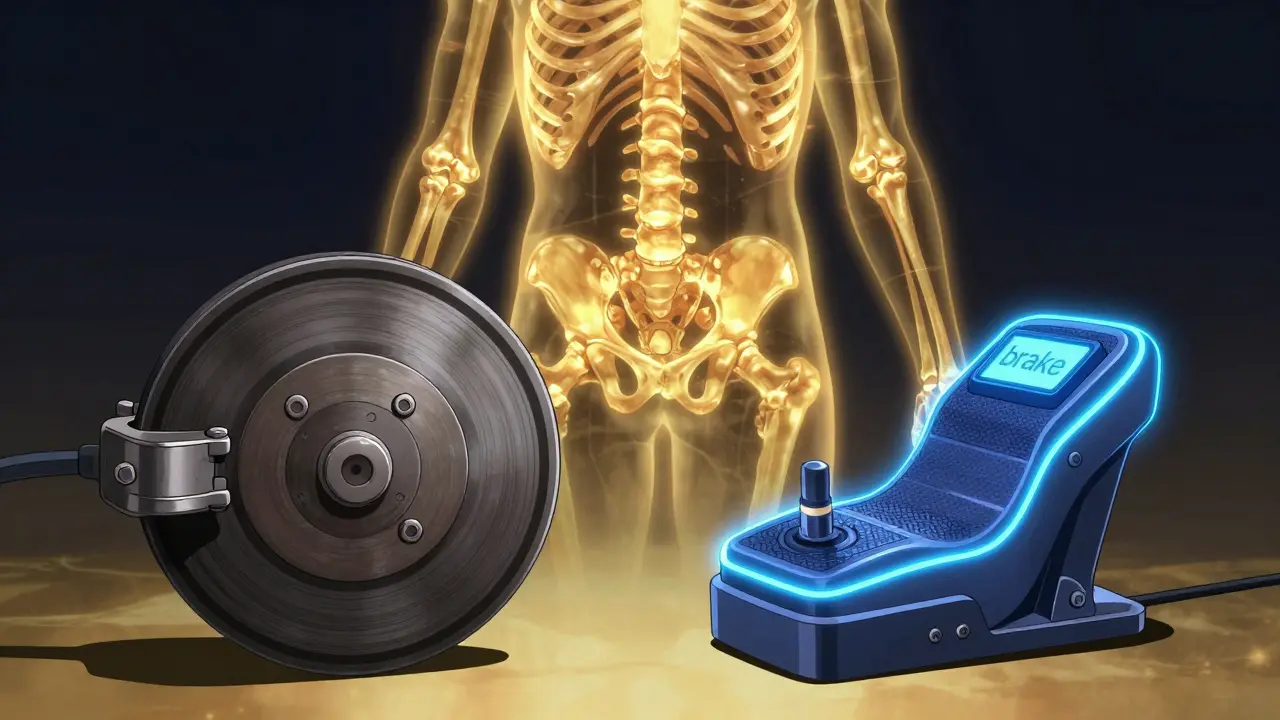
Most osteoporosis treatments act like a "brake," stopping your body from losing bone. But for people with severe bone loss or a history of fractures, just stopping the loss isn't enough. You need to actually build new bone. This is where anabolic agents for osteoporosis is where anabolic agents come in. Unlike standard therapies, these medications act as an "accelerator," stimulating the body to create fresh, dense bone tissue. If you've been told your T-score is dangerously low, you're likely looking at the two heavy hitters in this category: Teriparatide and Abaloparatide.
What Exactly Are Anabolic Agents?
To understand how these work, we have to look at how bone is made. Your body is constantly breaking down old bone and building new bone. In severe osteoporosis, the breakdown happens way faster than the buildup. Teriparatide is a synthetic fragment of the human parathyroid hormone (PTH 1-34) designed to trigger bone-forming cells. It was the first of its kind approved by the FDA back in 2002.
Then there's Abaloparatide, a synthetic analog of parathyroid hormone-related protein (PTHrP). Approved in 2017, it's like a more refined version of the same idea. While both are called "anabolics" because they build tissue, Abaloparatide is designed to be more selective. It targets a specific receptor configuration (the RG conformation), which researchers believe allows it to build bone without accidentally triggering the cells that break bone down as much as Teriparatide does.
Comparing the Big Two: Bone Density and Fractures
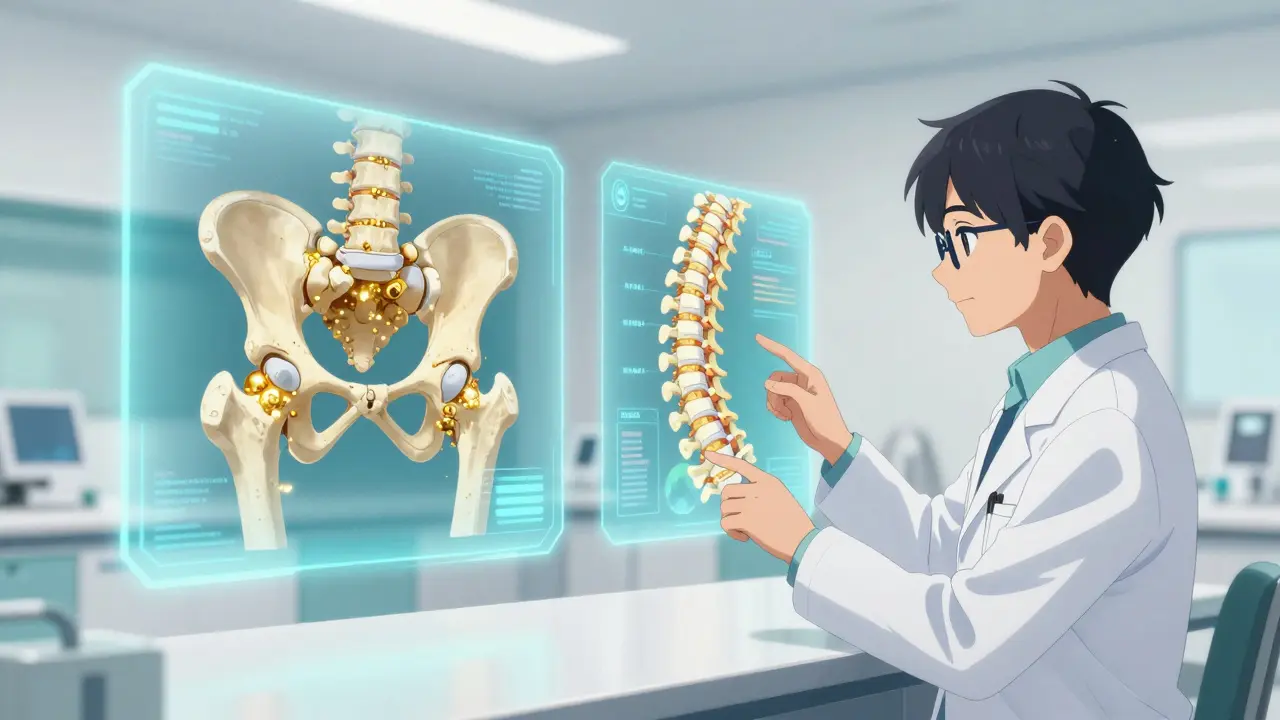
If you're choosing between these two, you're probably wondering: "Which one actually makes my bones stronger?" The answer depends on where you need the help most. Data from the ACTIVE trial shows that Abaloparatide generally takes the lead when it comes to the hip.
In that study, patients using Abaloparatide saw a 3.41% increase in total hip bone mineral density (BMD), compared to 2.04% for those on Teriparatide. This is a big deal because hip fractures are often the most debilitating. When it comes to the lumbar spine, both are incredibly effective. While Abaloparatide showed faster gains in the first six months, by the 18-month mark, the difference in spine density becomes less significant. Essentially, both will put a lot of "meat" back on your vertebrae.
The real-world impact is seen in fracture rates. A massive retrospective study of over 43,000 women found that Abaloparatide users had lower rates of hip fractures (1.1% vs 1.4%) and nonvertebral fractures compared to those using Teriparatide. If you have a high risk of a hip fracture, the evidence leans toward Abaloparatide.
| Feature | Teriparatide (Forteo) | Abaloparatide (Tymlos) |
|---|---|---|
| Primary Goal | Build new bone | Build new bone |
| Best For... | General severe osteoporosis | Severe hip osteoporosis |
| Daily Dose | 20 μg | 80 μg |
| Hip BMD Gain | Moderate (approx 2%) | Higher (approx 3.4%) |
| Hypercalcemia Risk | Higher (6.4%) | Lower (3.4%) |
| Cost | Lower (Generic available) | Higher |
Safety, Side Effects, and the "Calcium Problem"
No medication is without a trade-off. One of the biggest concerns with these agents is hypercalcemia, which is just a fancy way of saying too much calcium in your blood . This can lead to nausea, fatigue, and in severe cases, kidney issues. This is where Abaloparatide has a clear advantage. Because of its selective binding, it's less likely to spike your calcium levels. In clinical trials, only 3.4% of Abaloparatide users experienced hypercalcemia, compared to 6.4% of Teriparatide users.
However, Teriparatide is generally seen as having a slightly better overall safety profile across all minor adverse events. Some patients report dizziness or injection site reactions. For example, survey data from patient forums suggests that Teriparatide users report dizziness more often (41%) than Abaloparatide users (29%). If you are prone to vertigo or orthostatic hypotension, this is a conversation to have with your doctor.
The Cost Hurdle and Generic Options
Let's be real: the cost of these drugs can be shocking. Abaloparatide is significantly more expensive, often costing around $5,750 per month. Teriparatide is cheaper, and the introduction of generic versions in 2024 has dropped the price even further. For many, the decision isn't about which drug is 0.3% more effective at preventing a fracture, but which one the insurance company will actually cover.
If you're struggling with costs, remember that these are not lifelong drugs. They are typically used for a window of 18 to 24 months. Think of it as a "loading phase" to rebuild your skeletal foundation before switching to a maintenance drug.
How to Use Them: The Practical Side
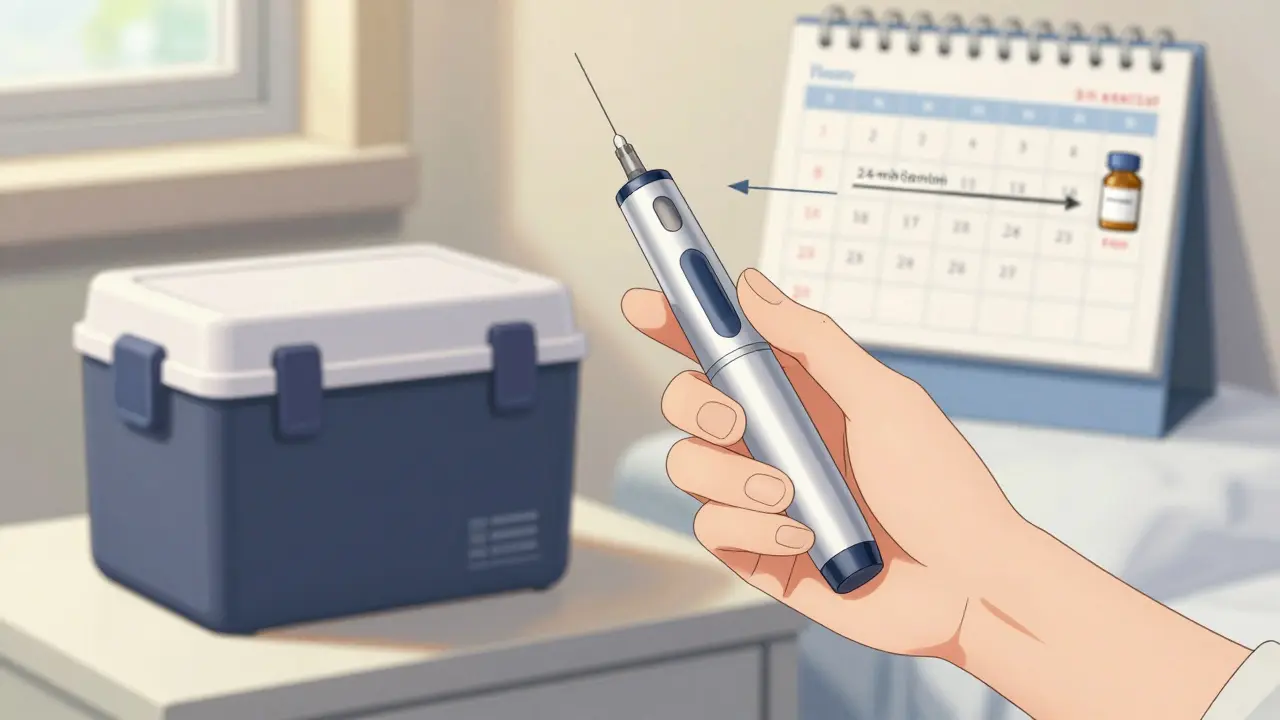
Both drugs are delivered via a daily subcutaneous injection using a pre-filled pen. If you've never done an injection before, don't panic-it's a quick process, usually in the thigh or abdomen. However, there are a few non-negotiable rules for these medications:
- Cold Storage: Both must be kept in the fridge (2-8°C). If you're traveling, you'll need a medical cooler.
- Timing: Consistency is key. Injecting at the same time every day helps keep the hormone levels steady in your system.
- The Hand-off: You cannot just stop these drugs and go back to nothing. Most doctors follow a sequential therapy plan. For example, the ACTIVE-EXTEND trial showed that switching to Alendronate (a common bisphosphonate) after 18 months of Abaloparatide helps lock in the bone gains. Without a follow-up antiresorptive drug, your body may simply reabsorb the new bone you just spent two years building.
What to Expect During Treatment
You won't feel your bones getting denser in real-time, so your doctor will rely on DXA scans (Dual-energy X-ray absorptiometry) . Typically, you'll get a scan at 6 months and 18 months. A rule of thumb used by some specialists is that if your lumbar spine BMD hasn't increased by at least 3% after six months, you might be a "non-responder," and it might be time to rethink the therapy.
For those who find daily injections tedious, there is a glimmer of hope. Research is underway for a weekly version of Abaloparatide. While not yet standard, this could solve the adherence problem that leads many patients to quit early.
Can I take Teriparatide and Abaloparatide together?
No. These are both anabolic agents that target the same receptors. Taking both would be redundant and could dangerously increase your calcium levels. You choose one based on your specific needs, such as whether you need more help with your hip or spine density.
How long do I stay on these medications?
The standard treatment duration is 18 to 24 months. Because of the way the body responds to these hormones, the bone-building effect can plateau over time. Most clinical guidelines suggest a 24-month limit to maximize safety and efficacy.
Will I have to use a needle for the rest of my life?
Not necessarily. The anabolic phase (Teriparatide or Abaloparatide) is temporary. After the 18-24 month window, most patients switch to a "maintenance" therapy. This could be a daily, weekly, or even yearly medication like a bisphosphonate or denosumab, some of which are oral tablets.
Which one is better for the spine?
Both are excellent for the lumbar spine. While Abaloparatide often shows faster initial gains, long-term results for the spine are very similar for both drugs. The choice usually comes down to hip risk, cost, and tolerance for side effects like dizziness.
What happens if I miss a dose?
Generally, if you miss a dose, you should take it as soon as you remember, unless it is almost time for your next scheduled dose. Do not "double up" to make up for a missed day, as this could spike your calcium levels. Always check with your pharmacist for the specific protocol for your brand.
Next Steps for Patients
If you are considering an anabolic agent, your first step is a detailed bone density report. If your T-score is ≤-3.0 at the hip, Abaloparatide might be the priority. If cost is the primary concern and your risk is more generalized, Teriparatide (especially the generic version) is a powerful alternative.
Prepare your insurance company early. These drugs are expensive, and "prior authorization" is almost always required. Be ready to provide your most recent DXA scan and a history of any previous fractures to prove the medical necessity of an anabolic agent over a cheaper antiresorptive drug.