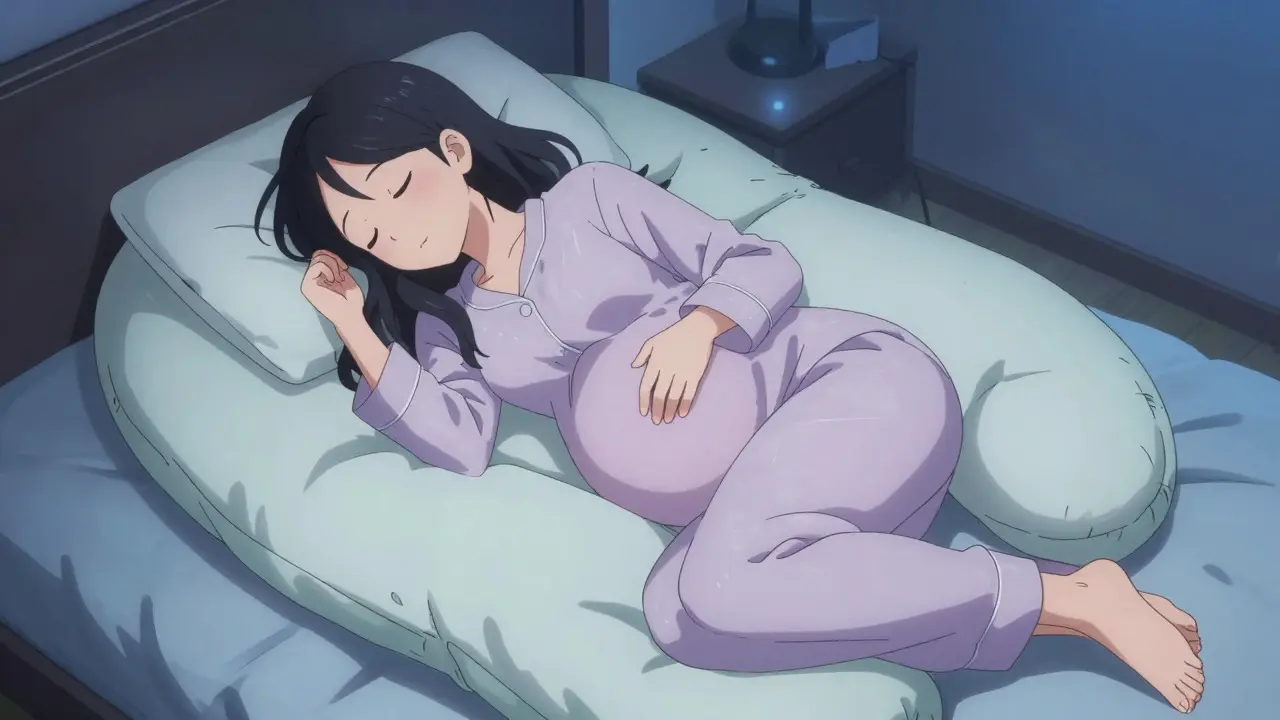
Do you wake up gasping for air or with a burning sensation in your chest? You are not alone. Sleep becomes significantly harder as your body changes, but poor rest is more than just an annoyance-it can impact both your health and your baby’s development. Many women experience new breathing issues, heartburn, or difficulty finding a comfortable position during pregnancy. Understanding how to manage these specific challenges can transform your nights from exhausting ordeals into restful periods.
Sleep-disordered breathing, particularly obstructive sleep apnea (OSA), is a condition where the upper airway partially or completely blocks during sleep, causing oxygen drops and fragmented rest, affects about 10.5% of pregnant women in their third trimester. This number jumps to nearly 27% for women with a BMI over 30. If left untreated, OSA increases the risk of preeclampsia by 2.3 times and gestational diabetes by 1.7 times. The good news is that effective treatments exist, ranging from simple positional changes to medical devices like CPAP machines.
Understanding Sleep Apnea During Pregnancy
Your body undergoes massive physiological shifts during pregnancy. Hormonal changes cause swelling in the upper airway tissues, while increased blood volume leads to nasal congestion. These factors narrow your airway, making it easier for it to collapse when you relax into sleep. This isn't just snoring; it's a serious medical condition that requires attention.
The gold standard for diagnosing this issue is overnight polysomnography, though home sleep tests are becoming more accepted for low-risk patients. According to guidelines from the American Academy of Sleep Medicine (AASM), screening should happen early. The Berlin Questionnaire is often used at the first prenatal visit to identify high-risk individuals. If you report loud snoring, witnessed pauses in breathing, or excessive daytime sleepiness, ask your provider about further testing. Early detection is crucial because starting treatment before 28 weeks gestation offers the best chance to reduce complications.
CPAP Therapy: First-Line Treatment for Moderate to Severe Cases
If you have moderate to severe sleep apnea (defined as an Apnea-Hypopnea Index, or AHI, of 15 or higher), continuous positive airway pressure (CPAP) therapy is the most effective solution. A CPAP machine delivers a steady stream of air through a mask, keeping your airway open all night. Studies show that using CPAP between 24 and 28 weeks can reduce the risk of gestational hypertension by 35% and preeclampsia by 30%.
Using a CPAP during pregnancy comes with unique challenges. Facial edema (swelling) can make standard masks leak or feel uncomfortable. Here is how to adapt:
- Switch to Nasal Pillows: Full-face masks can press against swollen cheeks and noses. Nasal pillows sit inside the nostrils, offering a less intrusive fit that accommodates facial changes better.
- Adjust Humidification: Pregnancy-related nasal congestion makes dry air unbearable. Set your heated humidifier to around 37°C to keep your passages moist without causing water buildup.
- Use Auto-Titrating Models: Your respiratory needs change as your baby grows. Auto-titrating machines adjust pressure throughout the night based on your breathing patterns, ensuring you get the right support without manual tweaks.
Adherence can be tricky, with only about 62% of women maintaining consistent use beyond four weeks. To improve this, many clinics now offer orientation sessions covering mask fitting and troubleshooting. It typically takes 7 to 14 days to fully adjust to the device. Don't give up if the first week feels awkward-most users report significant improvements in energy levels and reduced morning headaches within two weeks.
Positional Therapy and Specialized Pillows
For mild cases of sleep apnea (AHI under 15), positional therapy might be enough. Sleeping on your back allows gravity to pull the tongue and soft tissues backward, blocking the airway. Staying on your side, particularly the left side, can reduce your AHI by nearly 23%. However, staying on your side all night is surprisingly difficult without help.
This is where specialized pregnancy pillows come in. Products like the Leachco Full Body Pillow Pro or the Boppy Noggin CPAP pillow are designed to hold you in place. These pillows provide support for your belly, back, and knees, preventing you from rolling onto your back. In clinical studies, women using these supports reported an 85% adherence rate compared to lower rates with generic pillows. While they don't treat severe apnea as effectively as CPAP, they are a great non-invasive option for mild symptoms and general comfort.
| Treatment Method | Best For | Efficacy (AHI Reduction) | Key Considerations |
|---|---|---|---|
| CPAP Therapy | Moderate to Severe OSA | ~78% | Gold standard; requires adaptation period; may need mask changes due to swelling. |
| Positional Therapy | Mild OSA | ~32% | High adherence; uses specialized pillows; insufficient for severe cases. |
| Mandibular Devices | Non-Pregnant Adults | ~58% | Limited safety data for pregnancy; generally not recommended by SASM/SOAP guidelines. |
Managing Acid Reflux and Heartburn
Acid reflux is another major sleep disruptor during pregnancy. Relaxin, a hormone that loosens ligaments, also relaxes the valve between your stomach and esophagus. Combined with the physical pressure of the growing uterus, this leads to frequent heartburn, especially when lying down.
To manage reflux effectively, focus on mechanical and dietary strategies rather than relying solely on medication. Elevating the head of your bed by 6 to 8 inches is far more effective than stacking pillows, which can actually worsen apnea by bending your neck. Use wedge pillows or bed risers to achieve this angle. Avoid eating within three hours of bedtime to allow your stomach to empty. If you need medication, alginate-based antacids like Gaviscon Advance form a protective raft over stomach contents, preventing acid from rising without systemic absorption, making them a safe choice for many pregnant women.
Practical Tips for Better Sleep Hygiene
Beyond treating specific conditions, general sleep hygiene plays a vital role. Establish a consistent bedtime routine to signal your body that it's time to wind down. Keep your bedroom cool and dark. Limit screen time before bed, as blue light suppresses melatonin production. If you wake up in the middle of the night, try not to stress about lost sleep; instead, practice deep breathing or gentle stretching until drowsiness returns.
Weight management is also critical. Following Institute of Medicine (IOM) guidelines for weight gain-11.5 to 16 kg for normal-weight women and 5 to 9 kg for obese women-can significantly reduce the severity of sleep apnea and reflux. Even small lifestyle adjustments, such as reducing sodium intake to minimize fluid retention, can ease nasal congestion and improve breathing.
When to Seek Professional Help
If you experience any of the following, consult your healthcare provider immediately:
- Witnessed pauses in breathing during sleep
- Chronic daytime fatigue despite adequate time in bed
- Severe morning headaches
- Uncontrolled high blood pressure
- Persistent heartburn that doesn't respond to lifestyle changes
Remember, sleep disorders during pregnancy are common but manageable. With the right combination of medical intervention, positional support, and lifestyle adjustments, you can protect your health and enjoy more restful nights.
Is CPAP therapy safe for the baby?
Yes, CPAP therapy is considered safe for both mother and baby. In fact, it reduces risks associated with poor oxygenation, such as preeclampsia and fetal growth restriction. The air pressure delivered is gentle and specifically titrated to keep the airway open without causing harm.
Which side should I sleep on during pregnancy?
The left lateral position is generally recommended. It improves blood flow to the placenta and kidneys, reduces pressure on the liver, and helps alleviate swelling in the legs and ankles. It also helps prevent acid reflux and keeps the airway more open compared to sleeping on your back.
Can sleep apnea go away after delivery?
For many women, pregnancy-induced sleep apnea resolves after delivery as hormonal levels normalize and excess weight is lost. However, some women may have underlying predispositions that persist. A follow-up sleep study 12 weeks postpartum is often recommended to assess if continued treatment is necessary.
What is the best pillow for pregnancy sleep apnea?
Full-body pillows that support the entire length of your body, such as the Leachco Full Body Pillow Pro, are highly rated. They help maintain side-sleeping positions, which is crucial for managing mild sleep apnea. Look for pillows with firm support to prevent sinking and rolling onto your back.
How does weight affect sleep quality during pregnancy?
Excess weight gain can increase fat deposits around the neck and upper airway, worsening obstructive sleep apnea. Adhering to IOM weight gain guidelines helps minimize this risk. Additionally, managing weight can reduce the severity of acid reflux and joint pain, leading to better overall sleep quality.